Showing posts with label Pakistan. Show all posts

Monday, August 5, 2019

All Kohat Cantonment Garrison Cinemas in Pakhtunkhwa are Being turned into Cheap Commercial Projects

A commercial plaza being constructed in place of the PAF Cinema, Kohat. — Dawn

While the Cantonments in Punjab are being up Graded into Cinema's like Jinnah Park in Rawalpindi and Installed with New Dolby Cinemas , the Policy of Punjabi Establishment is Entirely opposite and they are Turning the British Era old Cinemas of Pakhtunkhwa in Peshawar and Kohat and also in other Cities  into Cheap Commercial Projects that is both Tacky and Speaks volumes about the Plan to Turn the Pakhtunkhwa and its Resident into Wahabist/ Deobandi  Terrorist's  and also the Pukhtunkwa into a Terrorism Hub Deliberately due to policies that has a Deep rooted Meaning to use the Terrorist's against the Neighboring Countries  of Iran and Afghanistan from Launching Pad of Pukhtunkwa and Baluchistan 

KOHAT: All the four cinemas in Kohat city have been demolished replaced by commercial centres, thus depriving a large number of viewers of watching the movies on the big screen.

The cinemas were a big source of relaxation for the poor class which after daylong labour had an air-conditioned environment for as cheap as Rs50.

In the beginning families were attracted by the PAF cinema but with the passage of time, it also started playing Pashto movies featuring fights and violence which resulted in its downfall.

In early days, it screened English movies during three days of the week but then abandoned the practice. Now the young boys and families go to Islamabad to enjoy movies in quality picture houses even at the cost of paying many thousands of rupees.

Mohammad Hashim, a regular visitor to Islamabad with his friends, said the luxury of watching a movie at Islamabad cinemas was unique as the sound and screen were mind-blowing.

Two famous cinemas were owned by the army and the Pakistan Air Force, with the former constructed outside the walled city by the British as auditorium for their families in 1935.

It has been demolished and now converted into a marriage hall.

The PAF cinema also vanished with the time. Constructed in 1988 at a commercially ideal place at a corner plot it has been leased out to a private group of investors who have constructed a multi-storey plaza.

Still, only the structure has been completed but the shops are being sold like hot cakes starting from Rs6 million to Rs10 million on premium with monthly rent.

The oldest of all the cinemas was started with the name of New Royal in 1932 whose name was changed to Capital Cinema. Now, at its site stand a huge plaza, a hospital, a bank, and shops.

Haji Mohammad Akram, who owned the Flex Cinema, built in1944, while narrating the history of the picture houses, termed the phenomena as a dilemma, but said the dying industry could not support their families. He said that people were more interested in building shopping plazas and nobody was ready to take the risk of constructing Peshawar or Islamabad-like cinemas with millions of rupees as nobody would pay even Rs100 per ticket.

Historian Prof Mohammad Iqbal commented that historical places should be preserved with the help of the government. He regretted that those nations who did not remember their past were forgotten forever.

Published in Dawn, June 22nd, 2019

Monday, August 13, 2018

12 August 1948 Babrra Massacre, victims' families demand justice

The author is a Peshawar-based freelance journalist in Pakistan. He tweets @theraufkhan


A few days ago, the fourteenth Dalai Lama drew a lot of flak for saying that India would have remained a united country if Muhammad Ali Jinnah would have become the first prime minister of India. He regretted his statement later but the truth remains that many incidents that led to Partition (and followed it) will probably remain buried in the shrouds of time and ignorance. The Babrra Massacre in the Khyber Pakhtunkhwa region of Pakistan is one such incident, which happened 71 years ago on this day, and is rarely mentioned in the history books of either Pakistan or India. The relatives of the victims, many of whom were part of the Khudai Khidmatgar (Servants of God or Red Shirts) led by Khan Abdul Ghaffar Khan also known as Frontier Gandhi, continue to face consequences of the incident till now, years after communal politics divided the vast Indian land into two countries on the world map, and later into three with the formation of Bangladesh in 1971.

A brief history of Khudai Khidmatgars

Back in 1946, the British imperial government were in favour of a separate Muslim land based on religious philosophy. Pakistani socialist, author and son of Khan Abdul Ghaffar Khan, Khan Abdul Wali Khan, in his book Facts are Facts — The Untold Story of India's Partition, wrote that the first British loyalists formed the Muslim League which sowed the seeds of hatred in the centuries-old pluralistic Indian land. And then with the support of feudal, parachute and planted politicians and religious clergy, the imperialists created a state (Pakistan) based on religious ideology.

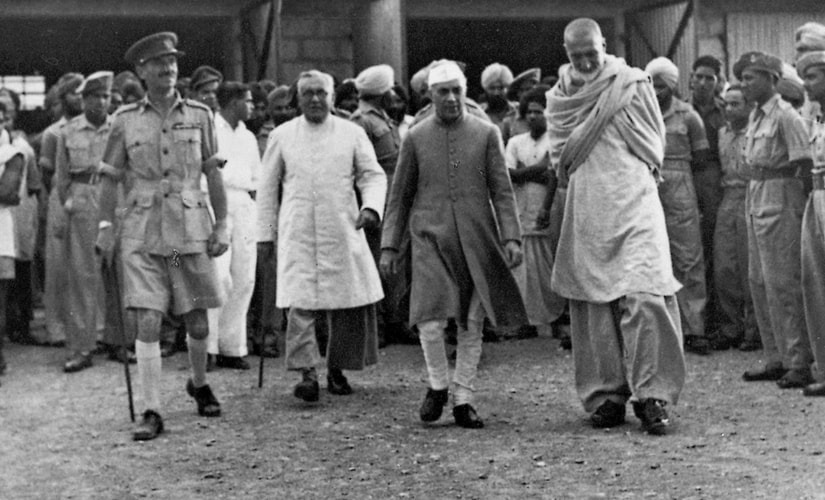
Khan Abdul Ghaffar Khan with Jawaharlal Nehru when the Indian prime minister visited NWFP in 1946. Image courtesy: Bacha Khan Markaz

Till date, the religious philosophy, upon which Pakistan was crafted in 1947, has not been implemented in the country. The philosophy was probably a mere political slogan for a secular Jinnah and his mates.

The communal tussle, which forced mass migration and killing of innumerable people on both sides of Wagah and Atari, is a part of the shared history of Pakistan and India. The new generation of Pakistanis consider Partition and the consequent violence as a bleak chapter of human history. However, for the Pashtun-dominated North West Frontier Province (NWFP), now part of Khyber Pakhtunkhwa (KP) province, the history of violence is something they will not forget for a long time to come.

In 1947, the region, neglected by the British, was caught in the power tussle between India and Pakistan, and the Khudai Khidmatgars support for United India left them desolate; on the right side of history but on the wrong side of both Indian and Pakistani governments.

The Khudai Khidmatgars led by Khan (also known locally as Bacha Khan), were always staunch supporters of United India and opposed Lord Mountbatten's plan for a Hindu majority India and a Muslim majority Pakistan.
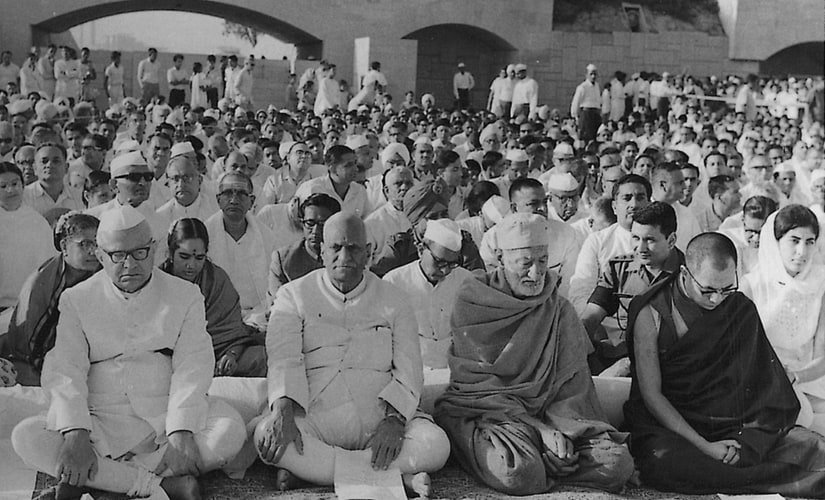
Khan Abdul Ghaffar Khan observing Mahatma Gandhi's 100 years. Image courtesy: Bacha Khan Markaz
Khan Abdul Ghaffar Khan observing Mahatma Gandhi's 100 years at New Delhi in 1969. Image courtesy: Bacha Khan Markaz
The NWFP bordered Afghanistan with most of the residents being Pashtun/Pakhtun who spoke Pashto language. The region was deliberately kept backward by the British Raj to be used as a buffer zone because the residents were known for their resistance and warrior approach. Till 1930, there was not much political awareness in the region, but after Bacha Khan launched the Khudai Khidmatgar movement, indigenous people took keen interest in politics and joined him.

In 1937, Khudai Khidmatgars won the election and later in 1946, a year before Pakistan came into being, the party of anti-Partition Khudai Khidmatgars again won with an absolute majority.

But before the official announcement of Pakistan or Partition, the Muslim League started to topple the elected government of Khudai Khidmatgars including using undemocratic ways.

The position of the Muslim League was that since the Khudai Khidmatgars, represented by Bacha Khan, then chief minister of the province, didn’t attend the flag-hoisting ceremony of the newly formed state of Pakistan on 14 August, 1947, their loyalties to the nascent country of Pakistan were questionable. This was also the reason why the Pakistan government sacked the provincial government of Bacha Khan.

Others, however, dispute that view. A letter was written by Governor Lockhart to Viceroy Lord Mountbatten, in which he stated: “The Muslim League wants to dissolve Khan’s ministry before 15 August. Hence, I, along with my colleagues, decided that Pakistan government shall find a way for it. But I will be opposing any such act and it will be harmful to Pakistan.” (National Archives, Serial No 634, 11 August, 1947, page 161, Special Branch on 7 August).

On 10 August, 1947, Mountbatten wrote to Liaquat Ali Khan, “I am instructed by the Secretary of State that dismissing Dr Khan’s government will be undemocratic and unconstitutional”.

For harsher critics of what came next, it was the beginning of “horse trading” and unconstitutional decisions in Pakistan during Jinnah’s life. It is claimed that the new government of Pakistan sacked an elected provincial government. Further, it is said, the process was spearheaded by one of Jinnah’s important leaders, Qayyum Khan, in a ruthless manner. It must be noted that until at least 1945, Qayyum Khan himself was part of the Khudai Khidmatgar movement, and even dedicated his lone book (Gold and Guns on the Frontier) to Khan in 1944; he banned in later after becoming he replaced Bacha Khan as the chief minister of the province. It made the non-violent followers of Khudai Khidmatgar (street workers) furious but they did not resort to violence.

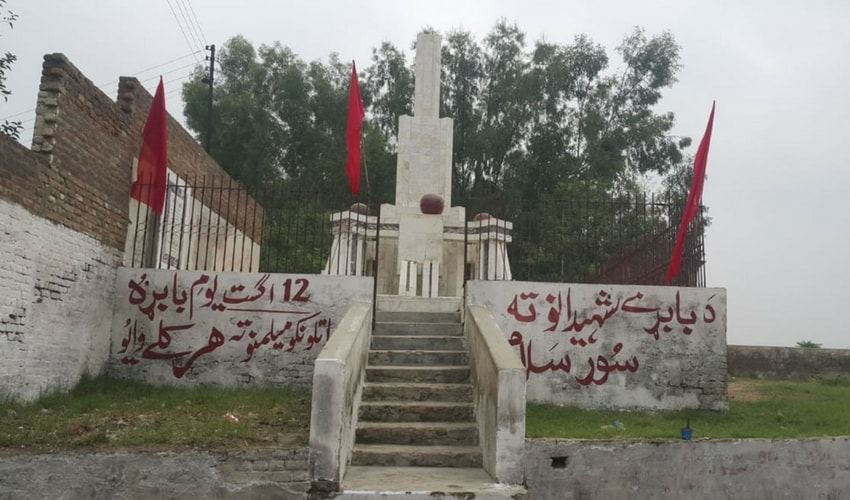
The Ghazi gul mosque from where indiscriminate firing was done on Khudai Khidmatgar protesters on 12 August, 1947. Image courtesy Abdur Rauf
Ghazi gul mosque from where indiscriminate firing was done on Khudai Khidmatgar protesters on 12 August, 1947. Image courtesy Abdur Rauf Yousafzai

In his research paper on the Babrra Massacre, Professor Minhaj-ul-Hassan wrote: “In May 1948, the renowned anti-colonial leader of the Khudai Khidmatgars, Bacha Khan, had started his annual visit to villages and towns of NWFP after the participation in Legislative Assembly. He had been arrested in district Kohat’s Bahadur Khel village for three years under 40 FCR, of British draconian Frontier Crimes Regulations. The authorities in newly-formed Pakistan alleged that Bacha Khan was working on a plan along with the separatist militant Faqir of Ipi to topple the government."

The Khudai Khidmatgars passed four resolutions where they asked the government to provide details of the amount and receipt that Bacha Khan had given to separatist Faqir of Ipi, and that if the charges were proven they would separate from him, while also demanding fresh elections in the country.

The Khudai Khidmatgars workers also announced a peaceful protest against the illegal detention of Bacha Khan.

The State organs were against the protest and the provincial government deployed paramilitary forces and police in the area. They even set their guns and other heavy weapons on different buildings of Babrra village. The Khudai Khidmatgars workers also started to gather on the specific ground.

On the day of Babrra Massacre

On 12 August, 1948, a Khudai Khidmatgar worker, Speen Malang led a protest in Charsadda district of NWFP. As Malang marched holding high a red flag along with other protesters, indiscriminate firing began from the top of Ghazi Gul mosque. Malang fell, but the firing continued killing more than 600 Pashtuns both young and old and injuring over 1,200.

When both Pakistan and India were busy preparing for their first Independence Day celebrations, the Pashtun region of Pakistan was mourning the death of their loved ones.

“You have thrown us to the wolves,” the historical sentence of Bacha Khan after Congress led by Jawaharlal Nehru voted in support of Lord Mountbatten's plan for Partition, echoed in the surrounding hills that day. No reconciliation took place, unfortunately, and the effects are felt till today.

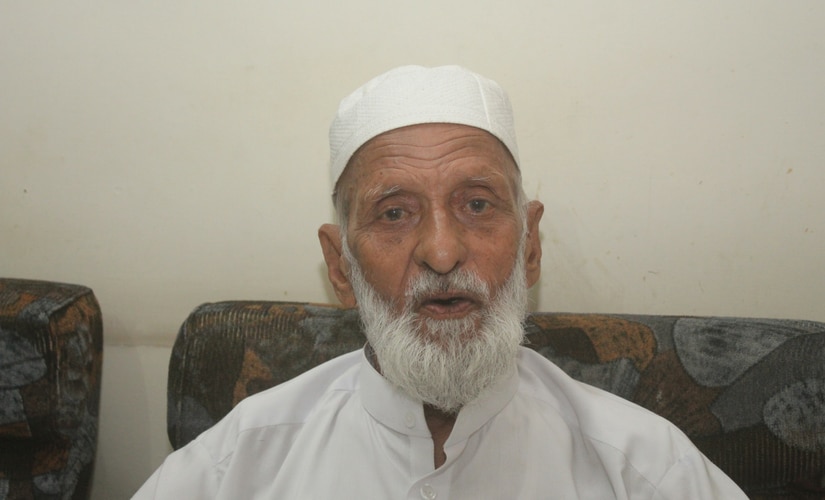
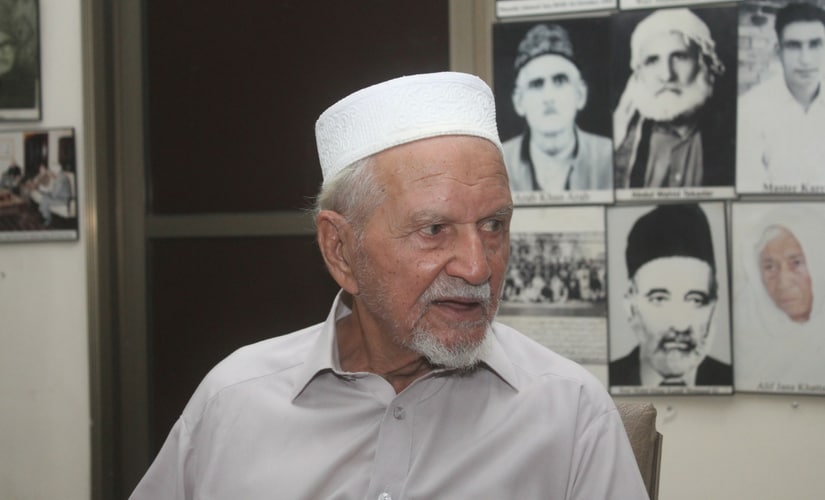
Muhammad Tahir, a fourth-grade student at the time of the massacre, narrated the tragedy to this scribe in his own words. “We were at the school playground when we heard gunfire and thundering of heavy weapons. The teachers rushed us into classrooms,” 83-year-old Tahir said.

Muhammad Tahir, a fourth-grade student at the time of the massacre, narrated the tragedy to this scribe in his own words. Images courtesy
Muhammad Tahir, a fourth-grade student at the time of the massacre, narrated the tragedy to this scribe in his own words. Image courtesy Abdur Rauf Yousafzai

The firing had taken enough time leaving everyone terrified and unaware of the outside situation, Tahir recalled. He couldn’t remember the total time the firing lasted, as the shots ceased and everyone rushed towards their homes.

After the massacre


“The main door and other room doors were open, I shouted and cried when I saw no one was inside,” Tahir said. Then Tahir ran towards the incident ground where he saw his mother tearing her shawl and bandaging the injured to stop the bleeding. Calling it doomsday, Tahir said wives, sisters, and mothers were wailing, crying and shouting on the 12 August, 1948, "the ugliest day in Pakistan’s history".

Muflis Durrani's father was a tehsildar during the British rule but he left the illustrious job and started teaching at Azad School, which was formed by Khudai Khidmatgars, and became a freedom fighter. Durrani was also studying in a nearby school. At the time of Babrra Massacre, Durrani was inside the school building. When they visited the spot after the firing had stopped, all they saw were bodies and injured persons lying everywhere, said Durrani.

Muflis Durrani's father was a tehsildar during the British rule but he left the illustrious job and started teaching at Azad School, which was formed by Khudai Khidmatgars, and became a freedom fighter. Image courtesy Abdur Rauf Yousafzai


British atrocities against Pashtuns had continued even after the formation of the State of Pakistan, Durrani informed. After the shooting, most of the bodies were taken away and thrown into the river, he revealed, explaining why most families couldn’t bury their near and dear ones.

Chairman of Pashto Department at Abdul Wali Khan University, professor Sohail Khan, during his research work, met with some of the victim's families. Sohail recounts meeting Jaypur, 83, at Nowshera district's Mohib Banda village. Jaypur's father Surrendar was a staunch supporter of Khudai Khidmatgars. He was part of the protest and never returned home. Surrendar's body could not be found, like many others, and his death left the family in dire financial straits. For many months, Jaypur visited hospitals and graveyards but couldn't find his father's body.

In Charsadda district's Prang village, 70-year-old Murad Kaka’s father Sultan Khan was among the protestors. "We were waiting for father in our mud kitchen late in the night. As the disturbing news of shooting came from Babrra, I vaguely recall my mother and grandmother wearing tense faces as father arrived at midnight. My grandmother was very angry at him when my father said that I was busy digging graves and buried more than one person in each grave," Murad Kaka said.

Sohail said that the Qayyum Administration was charging Rs 50 per grave. He added that the government had also collected the expenses for this operation, and even the bullets, from Khudai Khidmatgars workers.

"The Babrra Masssacre was the result of British policy against Red Shirts," Aimal Wali great-grandson of Bacha Khan said.

"They still stigmatise, bomb with suicide bombers and kill us but we remain determined," he said firmly.

"Bacha Khan has prepared a force of non-violent red shirts who don’t have a breaking point, don’t step back, and don’t surrender," said Aimal recalling his great-grandfather's teachings.

Sohail sheds light on the reasons behind the Babrra Massacre, “The Pakistani state was created in the name of Islamic welfare and democratic state, it wasn’t in favour of selfish politicians, feudal and generals so they introduced a narrative that Pakistan was in the danger of diverting its attention from its problems and promises. That’s why the state's baseless narrative has never been challenged and if anyone does, he/she is labelled a traitor."

The professor says that it's hypocritical how in Pakistan's history books, Jallianwala Bagh massacre is widely publicised but the Babrra tragedy is not even mentioned since the State was involved.

The Indian National Congress, and particularly Nehru and Sardar Vallabhbhai Patel's relations with Bacha Khan didn’t remain loyal till the end. Sohail says that because of their bewafai Khudai Khidmatgars faced severe consequences and are still facing it.

It was another day of mourning when Bacha Khan, freed from jail, stood at the site of the massacre with people asking him to take revenge. However, Bacha Khan told Khudai Khitmatgars' workers that all those who want violence should leave him as he has pledged non-violence till his last breath and won’t deviate from it.

The Babrra Massacre was never investigated independently, which is why officially the Babrra incident lies under layers of dust even though the Awami National Party (ANP) formed by Bacha Khan and his followers demand a free and transparent inquiry of the bloody incident.

The current editor of Pakhtoon Magazine, which was founded by Bacha Khan in 1928, Hayat Roghani arranges theatre every year to tell the young generations about the sacrifices of Khudai Khidmatgars and state cruelty.

“Unfortunately Pashtun freedom fighters are labelled as traitors by the State of Pakistan and that’s why Bacha Khan spent 17 years in prison after Partition (he had already spent over 14 years in jail before that),” says Roghani.

"Bacha Khan is also deliberately kept out of Pakistani textbooks, but we tell to our young Pashtun that he and his Khudai Khidmatgars are heroes and champion freedom fighters," Roghani added.

Every year, a monument is built at the same spot to keep the history alive and pay tribute to those killed in the massacre. The party workers gather at the famous Ghazi Gul mosque, from where the security forces fired at the protesters and recall the sacrifices for democratic rights and supremacy of the Constitution.

Party general secretary Mian Iftikhar said that for Pashtun, the Babrra massacre is not over yet, as they lost more than 800 workers including the top leaders in a long war against militants and even now in the recent two elections they were not provided a level-playing field.

Sunday, July 22, 2018

Pakhtunkhwa Police Reforms Myth and Reality


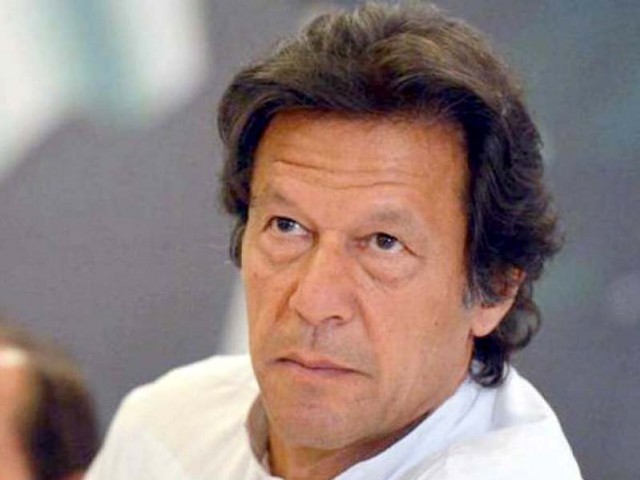
Imran Khan claims to have made KP police 'misali'. PHOTO: EXPRESS/FILE


Politics is the art of perception management. Politicians often employ the old tried and tested advertisement techniques of repeating certain phrases or sentences umpteen times till the listeners believe them as a matter of truth. “We made police misali in the K-P province” is one such piece of mythology that has become an essential part of list of achievements presented by Imran Khan. I am proud of serving the police department for almost 30 years but in my capacity as a former home secretary and having held senior positions in the K-P police, I deem it as my duty to put the record straight by differentiating the myth from reality.

The last two governments that served the province were of the PTI (2013-2018) and the ANP (2008-2013). I would, therefore, briefly review the nature of reforms introduced by these two governments and the financial injections provided in each of the tenures.

Let us first look at the situation that existed in the country and the K-P province in 2008. The Taliban outfits had established parallel governments in many districts of K-P province and were regularly attacking personnel and premises of the law-enforcement agencies. In such an environment of real and imminent danger, the then provincial ANP government rightly considered revamping and rebuilding of the police department its top priority. It, therefore, developed a “Comprehensive Development Strategy and Post Needs Crisis Assessment Programme” with the assistance of the World Bank. As money makes the mare go, the ANP government enhanced the budget of the police besides increasing its Annual Development Programme. We can notice that financial resource allocation reached its peak in 2010-11 during the ANP’s government. With more finances available, the police force acquired better human resource as the number of police personnel swelled to 75,000 in 2013 from 32,000 in 2006-7, which is a staggering increase of 134 per cent. In order to achieve reforms-related targets, a ‘Project Coordination Unit’ was also established which empowered the police force to initiate and run its developmental schemes.

Besides recruitment, capacity building was another important strategic priority for the-then ANP government. As the existing training centres could not accommodate such huge numbers, arrangements were made in collaboration with the Army for imparting training. Another strategic priority was to raise a counterterrorism force and within a short span of time a highly trained Anti-terrorism Elite Force was raised with 7,000 members. In the same period, a state-of-the art ‘Joint Training Centre’, with the assistance of the US Bureau of International Narcotics and Law Enforcement Affairs, was built in Nowshehra which is now the main training feeder for the anti-terrorism personnel. The Directorate of Counter Terrorism was established which played a crucial role in bringing hundreds of terrorists to justice and in preparing a database of 3,500 militants with 350 of them being the highly wanted terrorists. To improve the physical infrastructure, the damaged buildings of the police in the whole of Malakand were reconstructed under the US-assisted Rule of Law and Peace Building programme. In a nutshell, by 2013, a highly well-developed police system was in place to tackle the law and order situation.

Now let us turn to the 2013-18 period of the PTI government and examine what specific reforms were initiated and executed by this government. PTI leader Imran Khan, in his speeches, and also in the manifesto, had vowed that the Station House Officer (SHO) system would be replaced by the US-styled sheriff system where the SHOs would be elected by the local people. Nothing of such sort came about in the PTI’s era. We, however, did see some pictures being splashed on social media pages of the party showing a model police station on the pattern of police stations in the developed countries to create a perception that the K-P police have been modernised to an extent. The reality on ground is that the buildings of main police stations in Peshawar, let alone smaller cities, are still in dilapidated condition. People, however, did see greater presence of traffic police personnel but that was possible due to the additions made to the police force by the previous government. Therefore, the credit should go to whom it belongs. In the PTI’s tenure, the police force’s strength reached 82,000, thus registering an increase of 9 per cent which dwarfs in comparison with what the ANP government did in its tenure. The ‘Directorate of Counter Terrorism’ was renamed as ‘Counter Terrorism Department’ making it a focal agency against terrorism and thus relieving the police stations. Hence, the main channel of collecting intelligence and interaction with the community was absolved of its duties. The much-needed forensic lab got completely neglected while the safe city project did not either materialise for improving policing in the KP province.

In terms of financial support, we can see from figures that the growth momentum fell sharply and reached its lowest in 2015-2016 during the PTI’s government. Rather than introducing any substantive reforms, a high-pitched and well-organised propaganda was unleashed to create a perception that the previous government had done very little to provide peace and security to the people. The comparative analysis would, however, make it clear that myths can’t stand long when exposed to the light of facts and evidence.


Friday, March 2, 2018

How I, a Punjabi, was brainwashed with anti-Pashtun bigotry. And how I unlearnt it

When's Pakistan was being made  in 1947 , there was no Muslim League Sir  jinah or Sir Allama iqbal known in Pashton lands or  having any real power in the elected Leadership of Pashtons. Lands , or any power in elected Assemblies over then till 1947 .

Muslim league was non existent here in elected Assemblies but was represented by a few bureaucrats and servants of British like some Sahbizadas , Khan Bhudurs and Arababs etc title holders of British like Sahbizada Abdul Qayum a Qadiani of Topi Swabi or some Mullahs on pay role of British in Jameet ulema hind some Deobandi agents of British.

The only representation Muslim league had was , maybe less than 6  seats in both provinces  of Pakhtunkhwa and Baluchistan which was one and same  at that time. As name Baluchistan name did not come till 1971 when new constitution of Pakistan was made by Zulfiqar Ali Bhutto  ......

Out of hundreds of elected Pashtons in Pakhtunkhwa Assembly and Baluchistan Assmbly called state of Kalat at that time in 1947 which ,was Nationalist and reformist party of  Awami national Party of Bacha Khan, Khan Abdul Ghafar Khan is forgotten and not mentioned in text books of Pakistan but history is not taught in Pakistan but a fed lies in as Pakistan Studies ..

Muslim league that were never Voted by Pashtons and balauchis  in 1947 ,  in fact the elected Asemblies of Baluchistan was bombed with Artillery by Pakistan Army and Air force in 1947 -48 , Air force  was used to destroy the session of parliament ,when we are gifting Kashmir our human rights were being trampled.
The Pakhtunkhwa elected Asembly was discharged with out any reason in dictatorial manner by Sir jinnah in 1947 being a non elected head of newly formed Pakistan in partner ship with British was discharging and sending home elected leaders of Pashtons in Pakhtunkhwa and Baluchistan . FATA people were directly under bureaucrats as slaves in 1947 till today .

As it was British who put all the Congress people in jail and jinnah and Muslim leaguers  never went to jail and was allotted British titles as a loyalist and kept as loyal servants to British   .

We Pashtons joined Pakistan  because of our own will and for love of  Islam as we did not wanted India which was far away and not geographically joined with us with Pakistan in.between .

Afghanistan was not even  offered as a choice , by the British conducting referendum we did not love or like sir  jinnah or  sir iqbal  wearing British dresses and looked more of a Kala sahib replacing a white Gora sahib a British agent than a leader who was  working for Islam .

But we were already a  free Nation at times of partition in 1947 but we did a grave mistake in that referendum by believing in Punjabis and their leaders and we are still paying for our mistake every day every hour to this day .

We should have not  belived in Religion but should have gone for Pashton Nationalism and we did a foolish mistake that reminds us every day that why we are prejudiced and hated because of that mistake in believing in Islam .

75 years have passed but we are never Accepted as Real Pakistani by Punjabis  . We face  bias and Racism and   inequality as We don't have  a fair constitution of Pakistan over us for more than half of our Pashton population and Pashton areas .

We are treated by a special Draconian and degrading and insulting laws call FCR frontier crimes regulation a set of 40 laws made by Lord curzon viceroy of Britain in 1800 ,a , these same laws at applied by Kala sahib Punjabis  to this day on Pashtons

We gave 100 percent Kashmir as a gift  to Pakistan in 1947 and kept All of Kashmir for Pakistan  up to 1949 for Pakistan and Indian a
Army was shamed and defeated by us  , 

But the Punjabis shamelessly ,   later gave  60 % of Kahmir was given back to India  by Punjabi leader Mr Laiqat Ali  to India without a single shot being fired as a gift in 1949 what we call Indian occupied Kashmir now or IOK and that gift is with India to this day.

The shame continues ,  even today the Pakistan Army cannot take IOK ,  back to Pakistan from India ,  with its atomic power , and being 4th  largest and strongest Army in the world  , it has lost all the wars it fought over Kashmir in 1965, 71, Kargil and also war on terror it cannot be victorious but a looser Army  vet it celebrates all it as victories as defence day when it lost all th wars and it would never celebrates the 1947 war which we won and got Kashmir for Pakistan .

it supports terrorists like  Punjabi Taliban Lashkar toiba or jhangavi , over Kashmir and Afghanistan but they are killers and terrorists  loosers who cannot do thier job as We did for Pakistan as Pashtons

All Pashtons , who did not all go to war in Afghanistan and Kashmir if we all go together  the world will be at our feet as promised by God as Bani Israel when we were evicted from Israel by orders of God . But he promised any land we out our feet on and it stands true to this as it will of God .

We saved Pakistan from USSR , and we fought  alongside , Arab Jihadists and Islamist who were brought on our lands as guests  by the same Punjabis who did not offer Punjab to there foreign guests and was out of bound for Arabs and Afghans. So much for Pan Islamism bull shit ...

Punjabis  asked us to forget ourselves and become Muslims or Bedoos Nation  and promoted Pan Arabian Islamism philosophy cunningly which does not exist as we are not even considered as brother by the same gulf countries and Arabs counties and concept of Islamic brother hood  lies only in books not in reality and in world today.

Pashton are only fools who believe in Pan Islamism bull shit  even the Punjabis don't believe in it when it comes to Pashtons and Balauchis ..as Punjabis  running the country we are never Muslims in Pakistan when treated by Punjabis.

We did fight for Pakistan as after Afghanistan it was Pakistan they wanted and our lands of Pashtons were there , then Arab countries and it's oil and warm waters oil fields was the  ultimate target. We saved the Pakistan Arabs  and the Punjabis brothers and sisters with our blood and usa too from Soviets and communsim.

Pashtons destroyed Soviet union and we liberated the Europe from Iron curtain fell because of us as the  Berlin Wall and it became one United Europeans union because of us and it was no more Soviets and communists in the world because of us Pashtons .

Punjabis was saved from Soviets and Europe liberated  was made one and United with more than 3 dozen counties made as one United Europe , the  Berlin wall fell and people were United in Europe with lost families and relatives .  Americans were saved from global super power Soviet union with its Atomic weapons .

Arabs  progressed  peacefully and they made tall buildings envy of the world with our the Russians , and great progress  was made in GCC in  Dubai Saudia,  as we saved them  and what we got ? Nothing but disability deaths and poverty and we were left tp collect the garbage for Punjabis with donkey carts and drivers of transport  and security guards and boot polisher cobblers of Punjabis and Arabs in Gulf countries.

The American and the  world celebrated and Arabs who paid dollars for dollar with Americans , became victors  Liberators and heroes with Americans as their partners celebrating  and they were never called terrorists or called bad names neither was the Punjabis .. Punjabis were called brothers Allies of USA  and partners in NATO ...

.. Only The Punjabis and it's ISI declared themselves  as  victors and only Heroes victorious over Sovietes getting all the glory from us and forgetting us Pashtons  in celebrations .

We Pashtons were left in poverty neglect by all of them including Pakistani Punjabis , who started fearing us and despising and hating us as a Dog and called us Terrorists and criminals.

We were hated by Punjabis , Arabs and American and Europeans for whom we sacrificed so much even we are not involved in 9/11 or any European terrorism .

We would loose our Homes ,families brothers and sisters our lands , our business and our honour for being a patriotic Pakistani .

It's is said Give a Dog a Bad Name and Kill it and we were , exactly treated like that , worse then dogs from 1947 to now , no mention exists in Paki media or history  of our Kashmir victories and 1947 -49 was and it's  liberation in Pakistan ,

No mentions of history of Pakistan Studies of our defeat of Soviet union and  fall  of communism or the liberation of Europe because of Pashtons

Or our sacrifices then and now on fake war on terror , which is nothing but war on Pakhtons ,  we are bad Dogs and that has to be killed , hated and despised .

We become IDPs on our lands and we have become the largest on Earth or universe displaced Pashtons as IDP  and out of their homes....

and yet when Pakistan budget is passed we are given not a single extra  Rupee by Punjabis  as measure as token of sympathy or empathy or  appreciation ,.recently in latest government of PTI , that is a party made by Punjabis for the punjabi  establishment under Punjabi domiciled imme Taliban  Khan ,

half of Budget of Pakhtunkhwa was lapsed in amount of 100 Billion rupees out of 200 billion  that was given back to Punjabis as a gift by Punjabi imme Taliban  Khan Sahib back to  federation run by Punjabis and it's establishment as a policy .

PTI criminals Punjabi establishment backed right wing parties , to cover that 100 Billion deficit ,  PTI took loans that have to be paid back with huge interest  from IMF and world bank's , resulting in more taxes and poverty on just Pashtons but not on Punjabis ,

burdening  a province that is active in war , and destruction ,  being destroyed every day and blown up , this is what you get as token of appreciation.

There is no money for us but a lot of money for Army Basses on our lands snatched from Pashtons ,  who were not ready to sell and who resisted were either made Disappeared missing Persons or declared  terrorists and killed in fake police encounters

Pakistani media controlled by Punjabi establishment  looked the other way conveniently as it serves as the prostitute to the establishment as people say , it cares shit about humanity or human rights or even citizens of Pakistan as We are sometimes called by mistake .

Most of terrorists even if there are actually are Pashtons who are one as Gul Khans , who  follow the Punjabi mullahs like that of Raiwind , Mansoora and Wafiq ul madarissahs all run by Punjabi mullahs of Takht I Lahore as we call the Punjabis establishment , and Loyal puri faislabadis  ,

Terrorists Punjabi establishment  lashkars toiba lahoris or jhangavi loyal puris faisalabadi  Punjabis , are all translations of Pakistan Army as  Lashkar toiba in Arabic is translated as Pakistan Army ,

Pashtons are all misled by Punjabis mullahs with connections with Punjabis establishment , led by them to kill our own blood and Pashtons  in Af-pak area of Pakhtunkhwa , fata and Baluchistan on this side of durrand line and over other side of durrand line we kill in Pashton dominated area Afghanis for the love of Pakistan and punjabi who treat us like dogs and shit .

Half of our nation has its ID cards and Pakistani nationality blocked and we are not even considered Pakistani , and other half has had no rights since 1947 , as there is no constitution on half of our people in 7 FATA and PATA  divisions / Agencies ( total 14)  and another 6 FR areas / Districts are not even counted as citizens of Pakistan and under Article 247 , we are not entitled to Pakistani constitution at all , neither any of its human or basic rights of objective resolution allows to that half of our population at all .

Yet we are supposed to call ourselves as Pakistani and have to prove our loyality and face the bias and racism and hate of punjabi establishment ,

Same terrorists are supported by the Punjabis establishment and they have become rich riding in 20 million Land cruisers each and all of them and we real citizen of Pakistan are Facing the brunt of Racism and bias and hate , loosing our Homes and lands and our families and everything we have for what ?? For nothing

Punjabi establishment has decided that they will use the brutal methods against us Pashtons  they want to make a another division between Pakhtons and Afghanistan like  Wahga in Torkham where they Punjabis army men would show the under wears to Afghanis , when they raise their feet to sky ...........as they show to Indians at Wahaga each day at Sunset by Marching and raising their feet to the sky in a comical ceremony that has become a media spectacle .

The syllabus of Punjabis in schools is full of Hate of Pashtons. And we are traitors in books taught to children in Punjab . And they are not just books but official Text books ..

Have after 75 years Will never go away and will remains and no efforts is under way to rectify it even when we saved the Punjabis in 1965 , 71 , Kargil and in words of a Khan who gave Atomic power to Pakistan Abdul Qadir khan , "" I am not treated like equal Pakistani like the punjabis """, he was disgraced by the Punjabis establishment recently for sacrificing his life for, making us strong after humiliating defeat in 1971 war and making Pakistan Atomic power.

He said in one of his Article , that Punjabis are thinking of Enslaving Afghanistan and Pashtons as Fifth Province and dreaming about it and forgetting Alexander , Changez Khan , Romans , British , Rusians and now the Americans who lost in.Humiliation to Pashtons  , Punjabis and it's establishment may be next on the list soon as things are going .

Here is a letter of Punjabis to Pashtons , in all its sincerity , hats off to him or her who did not publish name .

Dear Pashtuns,

I am a Punjabi who has been living in the capital of Punjab for almost four years. I am studying both politics and sociology simultaneously at the University of Punjab, Lahore. I know very little about your culture and political beliefs but, for sure, I know more than any ordinary Punjabi . I am sharing my educational background and familiarity with your culture and politics to demonstrate one very important thing which I am intending to discuss in this piece: politics and social philosophy of life. 

We know your loyalty is beyond any doubt, your dedication, passion, and commitment with your assigned goals do not need any certification. And your sense of self-esteem is probably the thing the whole Pakistan is proud of.

You did a lot for Pakistan, for Afghanistan, for Saudi Arabia, for America and for the whole world. But in return you got blood, pain and a bad-name. Hold on… this is not what God has done with you. This is what humans, your so-called brothers, did with you.

There was a time when Quaid-e-Azam Muhammad Ali Jinnah, the father of the nation, trusted you and gave you both respect and responsibility. And what you returned us was probably something our strongest army wouldn't be able to give us. I, like the father of the nation, feel proud of you. 

But since 1980s you were used, misused, exploited, maimed, beheaded, murdered and ultimately declared as the biggest terrorists of the world. All this happened when you were fighting a ‘holy war’ for the capitalist America to defeat the atheistic Soviet Union under the leadership of Zia and his Saudi brothers. Americans gave dollars, Saudis surfaced ideological grounds, and Zia being a strategist devised murderous strategies to fight this war. As a result, the Soviets were white-washed, America came out as the sole superpower of the world, Zia went away to meet his awaiting- seventy two virgins and Saudis  joined Americans to celebrate their victory. 

You remember you were ‘jihadists’. You were ‘ghazis’. You were brothers of Zia. But you were so as long as there was war. At the end of the war you were zombies, terrorists, and the biggest enemies of peace of the world.

This is a sad story. This is a bitter past which dominates the bloody present. This is what your brothers did with you.  

The important question remains: who got what from this war? Both Pakistan and Afghanistan are paying the heaviest price of their bravery and love for their brothers and friends. A harsh reality of the day! 

This is what happened in history. I can’t change it. Nor can you or anyone else. We have to accept it. 

Let’s talk about other things. Why do we, Punjabis, not regard you as trustworthy friends? There is a reason behind this mistrust and awkwardness. I still remember when I was a child I used to go out almost all the time. My mother used to assert: ‘Do not go out. There are Pathans in town and they will take you with them.’ And believe me I used to be very scared of you whenever I heard about your presence. 

Then I came to Lahore and here what I initially learnt was so scary: “Pathans are dirty. They love ‘naswar’, smoke, and eat tasteless food and follow stupid things. Girls don’t like them. Most of them are gay, so try to avoid them as much as you can.” This is what I learnt from my friends, their friends and from lay public. 

Unfortunately, when I formally joined my university I had a very bad image of the Pathan in my mind. I remember in my first ever class at the campus when I saw that there were some Pathans in my class I was just thinking so many bad things about them: abductors, heartless, homosexuals…

With all this I started reading with them and reluctantly interacted with them. I started finding things contrary to what I had learnt. They were more loving than Punjabis, more loyal than anyone else in my social circle, more intelligent, more outspoken and more concerned about Pakistan than us. This is what I learnt about Pashtuns in my own classroom and through my extensive interaction with them. 

Moreover, I read about you. I was interested to learn about your culture including marriage system, badal (the concept of revenge) and everything about Pakhtunwali. I found you people with a strong sense of identity in a Pakistan where everyone else is struggling with his/herself because of identity crisis.  

I was lucky to get a chance to stay at Peshawar University when I was selected as a participant of Third International Summer School. I ate your traditional foods and took the same tea. I love Afghani Pulao and want to visit again my friends, Sajid and Abid in Peshawar. 

The bottom line is, dear Pashtun friends, you have been stereotyped in a very bad manner in Pakistan. Who did it? I really don’t know. But I know it has been done so smartly that there must always be a dividing line in Pakistan between “us” and “them”.

Image Courtesy: Pakistan Today

The sadder part is that now terrorists are being profiled on racial basis and so many Punjabis believe Pashtuns are bad people; violent extremists. Our police is issuing notices and warning us to report if we see any Pathan selling tea in their traditional outlook. I am sad to read this notice. All this made me teary-eyed. 

I wrote this letter to convey my love, not any sympathy, because I know you people neither need nor like it. I am a Punjabi who believes you people are misrepresented, misread and misused. I am a Punjabi who urges you to come here and interact with common Punjabis and let them know what they believe is absolutely incorrect. Come here and teach these people how to love, what it means to be sincere, what it means to be Pakistani and most of all tell them what it means to be Pashtun .

God bless you!

Published in the Nation newspapers , on 27 Feb 2018. By a Punjabi who did not care to mention his or her name  -     https://nation.com.pk/27-Feb-2017/how-i-a-punjabi-was-brainwashed-with-anti-pashtun-bigotry-and-how-i-unlearnt-it

Thursday, July 30, 2015

Taliban leader Mullah Omar died in a Karachi hospital in 2013, From TB


By Tahir Khan / Reuters
Published: July 29, 2015
Mullah Omar 


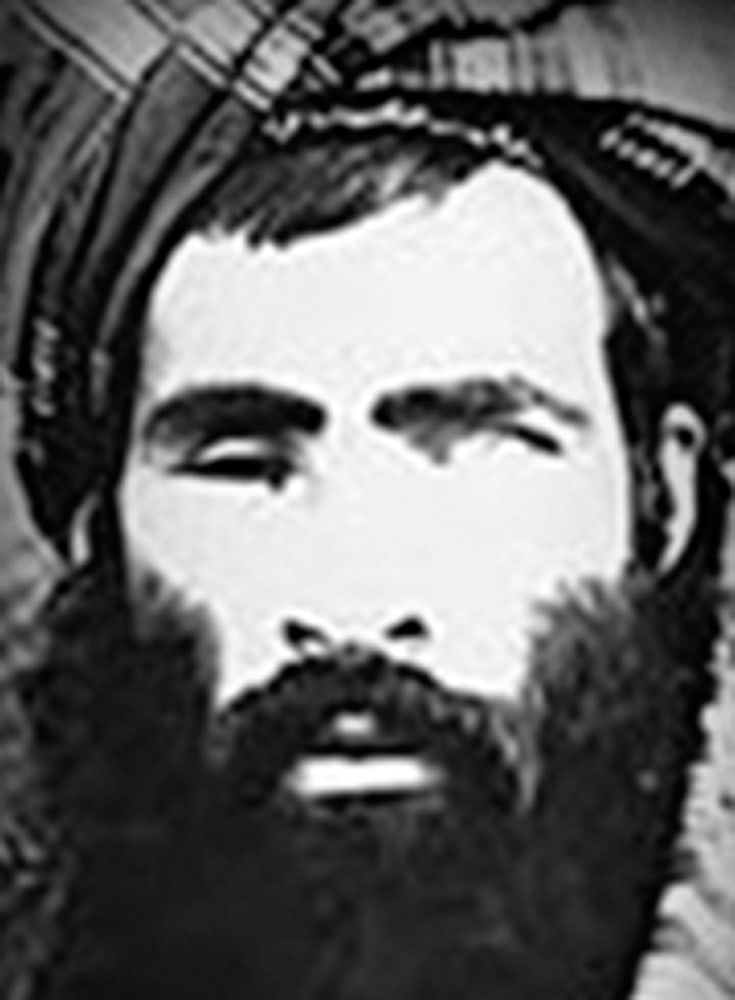
Taliban leader Mullah Omar. PHOTO: REUTERS

KABUL: Supreme leader of the Afghan Taliban Mullah Omar died suffering from tuberculosis two years ago in a Karachi hospital, Afghanistan’s top intelligence agency, the National Directorate of Security (NDS) confirmed on Wednesday.

“The Afghan government has received confirmed reports that Mullah Omar died nearly two years ago in Karachi,” NDS spokesperson Abdul Haseeb Siddiqui told BBC Pushto. “We are happy that now the foreign sources have also confirmed that Mullah Omar is no more alive.”

“We still have a lot of questions how Mullah Omar died,” he said, adding that, “We have been told that the Taliban leader died owing to an illness.”

The deputy spokesperson for the Afghan President also confirmed that Mullah Omar had died in 2013.

https://twitter.com/ZafarHashemi/status/626417739838681088

“The government of Afghanistan believes that grounds for the Afghan peace talks are more paved now than before, and thus calls on all armed opposition groups to seize the opportunity and join the peace process,” the statement added.

Earlier, a former Afghan Taliban minister and member of the central leadership council had revealed to The Express Tribune that Mullah Omar had died owing to Tuberculosis, however, he had not disclose the location of his death.

“Mullah Omar died two years and four months ago owing to Tuberculosis. He has been buried on Afghan side of the border,” the former minister had said on the condition of anonymity.

Further, he added, “Mullah Omar’s son had identified the body of his father.”

Read: Afghan Taliban release Mullah Omar biography amid growing frustration within ranks

Meanwhile, some Afghan government officials told the media in Kabul that the Pakistani government has also conveyed to them that Mullah Omar has died.

The Taliban have not yet commented on reports of Mullah Omar’s death, however, they are mulling a formal response to be release later today.

Read: Mullah Omar endorses ‘political endeavours and peaceful pathways’

Mullah Omar’s successor

The disclosure came as reports of the Afghan Taliban chief’s death sprung up yet again when the Afghan Taliban summoned a meeting on Wednesday to elect a new chief after some leaders of the militant group confirmed Mullah Omar’s death.

The former minister also disclosed that he was invited to attend the meeting.

Taliban sources told The Express Tribune that consultations for a new leader are under way and a successor will be announced before the next round of peace talks scheduled to be held in Pakistan on July 31.

Read: Afghan reconciliation: Mullah Omar’s aide likely to join peace talks

It is widely speculated that Mullah Baradar Akhund will succeed Mullah Omar as the supreme leader of the Afghan Taliban.

Mullah Omar had appointed Mullah Baradar and Mullah Ubaidullah Akhund as deputy leaders while he was alive.

Mullah Ubaidullah died in a jail in Pakistan, according to the Taliban which leaves Mullah Baradar next in line.

Mullah Baradar was reportedly released by Pakistan along with some other Taliban leaders in 2013; however, some Taliban leaders still insist he has not been allowed to rejoin his family.

Read: Doubts and divisions among commanders as Taliban talk peace

Some Taliban leaders told The Express Tribune that Mullah Baradar enjoys the support of Sayed Tayyab Agha, the head of the Afghan Taliban’s political office in Qatar.

Tayyab Agha himself was a close confidante of Mullah Omar. Further, sources say that Mullah Yaqub, the son of Mullah Omar, is also in favour of Mullah Baradar succeeding his father.

Read: Mullah Omar endorses Taliban peace talks

Other Taliban sources say that the incumbent Taliban acting chief Mullah Akhtar Mansoor, a former aviation minister, is also among the few aspiring for this position. However, sources added that Mansoor’s position in the Taliban has been widely damaged for spreading news of Mullah Omar’s death.

Read: The Taliban in Afghanistan

Another choice for Mullah Omar’s successor could be Mullah Yaqub, his son. Yaqub recently graduated from a religious school in Karachi. However, several Taliban leaders are of the view that Yaqub is too young and may be ‘unsuitable’ for the post. A Taliban leader told The Express Tribune that Mullah Omar never wished for someone from his family to succeed him.

Mullah Omar’s brother Mullah Abdul Manan has also been actively involved in Taliban affairs in recent years.

Afghanistan investigating reports of Mullah Omar’s death

An Afghan government official said that a press conference had been called on the subject of Taliban leader Mullah Omar, amid rumours of his death.

The official, who declined to be named because he was not authorised to give statements to the press, did not provide further details.

Further, the Afghan government is investigating reports of the death of Taliban supremo Mullah Omar, a presidential spokesman said.

The announcement from spokesperson Sayed Zafar Hashemi came after unnamed government and militant sources told media that the one-eyed leader died two or three years ago.

“We have seen reports in the media regarding the death of Afghan Taliban leader Mullah Omar,” Hashemi told a press conference.

“We are investigating these reports… and will comment once the accuracy of these reports are confirmed.”

The elusive leader of the militant group, which ruled Afghanistan in the late 1990s until it was toppled by a US-led offensive in 2001, has not been seen in public for years, leading to speculation he has been dead for some time.

The Taliban has been fighting an insurgency against the Western-backed government in Kabul since its ouster, killing thousands of civilians and security personnel and making significant territorial gains in recent months.

Tentative peace talks have begun aimed at ending the war, with the Taliban split between those who support dialogue and others who want to continue to fight for power.
source: http://tribune.com.pk/story/928571/afghan-taliban-leader-mullah-omar-is-dead/


Mullah Omar Father of Taliban Died inside of Pakistan in Karachi


Even in the prime of his life, at the height of his power, it was difficult for anyone to learn about, much less meet, Mullah Omar. He was simply the most reclusive, secretive leader in the world.

Word of his death Wednesday confirmed just how much of a phantom the father of the Taliban had become. Afghan officials said Omar has been dead for "a couple years."

"I can confirm that Mullah Omar is dead," the spokesman for Afghanistan's National Directorate of Security Abdul Hassib Sediqi told NBC News. "According to our intelligence Mullah Omar has died in a hospital in Pakistan a couple years ago."

Mullah Omar was rarely seen or heard. It's believed he was photographed only twice. But his legend was real enough.

He was famously one-eyed, having lost his right eye to a shrapnel injury, one of four he sustained fighting Soviet troops who occupied Afghanistan in the 1990s. He was so adept with an RPG rocket launcher against Soviet armor that he rose quickly.


Mullah Omar is shown in this undated photo from the U.S. National Counterterrorism Center. National Counterterrorism Center / Reuters

His experience as a Mujahadeen commander gave him the confidence to fight another superpower, the United States.

It also taught him to shun any easily traceable means of communication. He sent messages through trusted couriers on tiny, rolled-up pieces of paper, avoiding mobile phones, satellite phones, video recordings —anything that might identify him to an enemy.

The Taliban claim he was born in 1960 to a religious family who lost at least four members fighting the Soviets and Americans. His years fighting Soviet troops in the depths of Afghan winters led to ill health. Reports about his death suggest he had hepatitis, as well as chest and heart trouble.

Omar was one of the world's most wanted men — the U.S. government put a $10 million bounty on his head — because of his leadership of the Taliban insurgency against U.S. and coalition troops following the 2001 invasion of Afghanistan. The Taliban say his uncle was killed on the first day of the American bombardment in October 2001.

But before that he was a head of government, an enforcer and a spiritual leader.

The "Commander of the Faithful," as he became known, created the Taliban in the early 1990s to fight the warlords and the chaos tearing Afghanistan apart after the retreat of Soviet troops. Before the final victory in Kabul, Omar took a shroud thought to have been worn by the Prophet Mohammad and draped himself in it, receiving a rapturous response from fighters who, from then on, saw him as a spiritual and military leader."SIMPLE DRESS, SIMPLE FOOD, SIMPLE TALK, FRANKNESS AND INFORMALITY ARE HIS NATURAL HABITS"

He headed the Taliban council that invited Osama bin Laden, a fellow fighter against the Soviets, to be a guest of the nation in Jalalabad. After 9/11, the council met to decide how to respond to the U.S. demand to hand over bin Laden.

It decided — narrowly, it's believed — to refuse to give him up. That decision led to the overthrow of Omar's government just weeks later. He fled, first to Kandahar and then out of the country.

Little is known of his life after that. Afghan leaders and military commanders say they found it impossible to arrest or kill a man they couldn't identify. It's almost certain he lived in hiding in Pakistan, like bin Laden — probably in the city of Quetta, where he directed the council that led the insurgency against U.S. troops.

It's believed Omar lived humbly, rarely seeing visitors outside his close inner circle. Earlier this year, the Taliban produced a biography of him, claiming he had no home and almost no money but "a special sense of humor."


Mullah Omar in his Youth While in Training with ISI against Russians 

Any sense of humor was lost on a world that saw only a humorless, ruthless Taliban government that banned television, dancing and kite-flying, whose Ministry of Vice and Virtue patrolled the streets beating women for showing an inch of flesh in public.
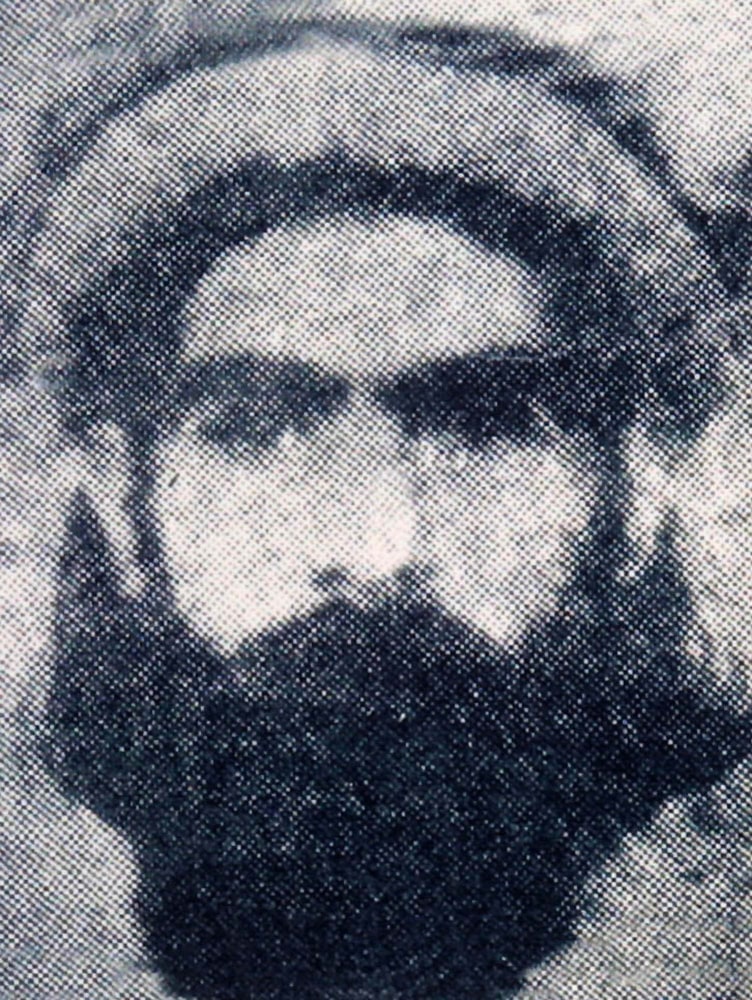
This undated file photo reportedly shows Taliban supreme leader Mullah Mohammed Omar. ASSOCIATED PRESS, file

But some, especially Omar's fellow ethnic Pashtuns, yearn for the stability he brought as Afghanistan fails to emerge cleanly from decades of corruption and conflict.

For many in the West, Omar was a cartoon villain, one-eyed and blind to the modern world. For his followers, he was, as the Taliban described him recently, "a unique and charismatic personality":

"Contrary to (other) leaders, he does not want to show off. He is not eager or excited to speak if it is unnecessary to do so. And if needed, his words ... are keen, perceptive and logical. He has adopted a simple and plain style in all aspects of his life. Simple dress, simple food, simple talk, frankness and informality are his natural habits."

Omar had been reported dead many times in recent years. The rumors began when he failed to send audio messages, although they had never been frequent. The only evidence he still was alive was an occasional statement on a Taliban website, the most recent being a comment, purported to be from him, supporting recent peace talks between the Taliban and the Afghan government. Reports he died years ago cast serious doubt on the authenticity of those statements.

The latest claim that Omar was dead is equally contentious. It's claimed he died in Quetta two years ago, probably of hepatitis. A senior member of the Afghan Taliban in Pakistan said, "I am 100 percent sure Mullah Omar is dead, but will not share other information until we have chosen his successor."

Who will that be? There appears to be a succession battle, between Omar's eldest son, Yaqoob, and his deputy Mullah Mansour. Even this is disputed: Some say the reports are part of a CIA plot to destabilize the organization at a crucial moment in peace talks and to encourage factional fighting and defections from the Taliban. Several commanders have left this year to join ISIS.

In life and in death, like bin Laden, Omar was hated and hunted by the West while an inspiration and an icon to generations of his followers — a man who stood up to both the major superpowers of the modern era and who refused to betray the guest of his nation to one.

source: http://www.nbcnews.com/news/world/mullah-omar-dead-father-afghanistans-taliban-died-pakistan-n400451

Saturday, June 6, 2015

RAW OR RAWHEEL SHARIF ???


The Pervaiz Rasheed affair

PERVEZ HOODBHOY — The writers teaches physics in Islamabad and Lahore.
PERVAIZ HOODBHOY 


When Information Minister Pervaiz Rasheed spoke at the Karachi Arts Council on May 3, he stated the self-evident. Without explicitly naming madressahs, he said large numbers of factories mass-produce ignorance in Pakistan through propagating “murda fikr” (dead knowledge). They use loudspeakers as tools, leaving well over two million young minds ignorant, confused, and confounded. The early tradition of Muslim scholars and scientists was very vibrant and different, he said. But now blind rote learning and use of books like Maut ka manzar — marnay kay baad kya hoga? (Spectre of death — what happens after you die?) is common.

That last reference made me sit up. A best-seller in Pakistan for decades, I had bought and read my copy some 40 years ago and have since re-read it from time to time. My fascination with it, as with Dante’s Inferno, comes from the carefully detailed, blood-curdling horrors that await us in the grave and then beyond. One part of the book reports upon conversations between the inhabitants of heaven and hell. Another section specifies punishments for grave dwellers guilty of treating one of two wives unequally, disobeying one’s mother, owning more houses than necessary, or urinating incorrectly. While doubtless of grave importance, the minister’s point is easy to see.

The speech was extempore, and the minister rambled. Yet he set off a firestorm. Accused of making fun of Islamic books and Islamic teachings, clerics across Pakistan competed to denounce him. Authored by an extremist sectarian outfit, the JASWJ, banners on Islamabad’s roads appeared. They demanded that Rasheed be publicly hanged. Taken down by the police, they reappeared elsewhere. The police accosted those putting them up, but withdrew after being confronted by youthful stick-bearing students from an illegally constructed madressah in Islamabad’s posh F-6/4 area — one of the scores of other such madressahs in the city. The police chief expressed his views frankly: he was not equipped to take on religious extremists and suicide bombers.
The episode involving the information minister illustrates the present condition of state and society.

The story gets curiouser. Mufti Naeem — the powerful cleric of Karachi’s Jamia Binoria who had issued the fatwa of apostasy on Mr Rasheed — was a guest on a TV television talk show broadcast live on May 24. He reaffirmed his fatwa at the outset of the conversation. The two other guests were the Punjab law minister, Rana Sanaullah, and myself. One might have expected the law minister to insist on the rule of law, and to challenge the extrajudicial sentence passed against a colleague who sits with him in the cabinet. On the contrary, Mr Sanaullah expressed his high regard for the mufti and the mufti duly returned the compliment, expressing his delight at the minister’s recent reappointment.

The pressure on Rasheed was unbearable. Many, including the minister of defence, rushed to offer explanations and excuses for his May 3 speech. Privately they agree with him but taking a public position is another matter. Mr Rasheed too has retreated since and apologised, claiming he has been misunderstood. He was later seen at a dastarbandi (graduation) ceremony at the Al-Khalil Qur’an Complex in Rawalpindi where he distributed prizes to madressah students who had memorised the Quran. By doing so, he showed his lack of keenness in following in the footsteps of governor Salmaan Taseer.

Irrespective of the final outcome, or the personality of the individual, the Pervaiz Rasheed episode starkly illustrates the present condition of state, society, and politics in Pakistan today. One takes from it some important conclusions.

First, the urban-based clerical establishment grows bolder by the day, believing it can take on even sitting ministers or, if need be, generals. They have many tanks and nuclear weapons but didn’t Islamabad’s Lal Masjid — now grandly reconstructed — finally triumph over the Pakistan Army? Even though the clerics lost 150 students and other fighters, the then army chief sits in the dock, accused of quelling an armed insurrection against Pakistan and killing one of its ringleaders. Chastened by this episode and others, the establishment now seeks to appease the mullah. Not a single voice in government defended the information minister. Like the brave Sherry Rehman, who was also abandoned by her own party in a similar crisis situation, he was left to fend for himself.

Second, by refusing to own the remarks of its own information minister the government has signalled its retreat on a critical front — madressah reform. This part of the National Action Plan to counter terrorism involves financial audits of madressahs, revealing funding sources, curriculum expansion and revision, and monitoring of activities. Some apparent urgency was injected after Interior Minister Chaudhry Nisar’s off-the-cuff remark earlier this year that about 10pc of madressahs were extremist. Even if one-third of this is true, this suggests that there are many hundreds of such seminaries. Plans for dealing with them have apparently been shelved once again.

Third, one sees that open television access was given to clerics and other hardliners who claimed that Mr Rasheed had forfeited his right to be called a Muslim. This is clear incitement to murder since a good fraction of society believes that apostates need to be eliminated. Such ideological extremism on TV is far too common these days to deserve much comment. Still, it is remarkable that a serving minister — and that too of information and communications — was allowed to be targeted. Has Pemra also fallen in the hands of extremist sympathisers?

For a while the Peshawar massacre had interrupted the deep slumber of Pakistan’s military and civil establishment. That those who slaughtered children at the Army Public School were not agents of India, Israel, or America came as a huge shock. It turned out that the killers were religious fanatics who saw their acts as paving their path to al-jannah. But dealing with this disturbing reality requires more wisdom and courage than Pakistan’s establishment can presently muster. It is lulling itself back to sleep by tossing more bombs into Waziristan, and lazily blaming five subsequent massacres upon RAW’s hidden hand. This is infinitely easier than dealing with the enemy within. Unfortunately it cannot work.

SOURCE : http://www.dawn.com/news/1186434

Sunday, February 1, 2015

Ashraf Ghani and the Pashtun Dilemma

Ashraf Ghani and the Pashtun Dilemma
Ashraf Ghani and the Pashtun Dilemma, If he is to succeed, Afghanistan’s president will need to come to grips with the country’s ethnic tensions. 
By Ali Reza Sarwar


With his impressive background, which includes a stint as a senior official at the World Bank and a ministerial post, Afghan President Ashraf Ghani would not appear to be short of qualifications for leadership. Yet, the president appears on course to be just another Afghan leader who is unable to rule the troubled country. When Ghani delivered his lofty inaugural speech on September 29, 2014, following a disputed election and power-sharing deal, expectations were high. The president made a strong argument in support of what he called the “triangle of stability” – economy, security and human resources – promising to restore Afghanistan’s valuable ancient geopolitical and economic position as the “crossroads of Asia.”

More than 100 days after taking the office, however, and Ghani is bogged down in a serious political crisis, one that draws a gloomy picture of the fragile unity government. He has only in the last few days been able to form a cabinet, leaving Afghanistan’s major public institutions, including ministries, independent departments, and commissions without leaders for months. A recent survey conducted by Afghanistan’s popular private TOLO TV and an independent civil society, shows that Ghani’s popularity has fallen dramatically, with only 27.5 percent of respondents satisfied with his leadership. With insecurity and political uncertainty looming, a number of parliamentarians have asked for Ghani’s impeachment for “treason,” blaming him for Afghanistan’s current state of disarray.

What has gone wrong? Why is this impressively credentialed leader unable to fix Afghanistan? Traditionally, Afghanistan’s woes have been blamed on crippling corruption, weak governance, dismal economic conditions, and worsening security coupled with foreign intervention. While these are certainly painful realities, the root cause of political crisis lies in ethnic politics and the breakdown of consensus among diverse ethnicities in regard to the persistent Pashtun dilemma.

The Pashtun Dilemma

Constituting around 40 percent of the population, Pashtuns are the largest ethnic group in Afghanistan and are on the front lines of the war on terrorism, both as perpetrators and victims. The Taliban that is behind the bulk of the brutal militancy both in Afghanistan and Pakistan are mainly Pashtuns and derive their support from strongholds in tribal areas across Afghanistan and Pakistan’s borders. The mainstream Pashtun intelligentsia in both countries have been mostly uncertain over whether to sympathize with the Taliban as a nationalist movement seeking to restore traditional Pashtun dominance in Afghan politics and to some extent in Pakistan, or to condemn them as an extremist and externally infiltrated militancy that have dragged Pashtuns into an asymmetric confrontations with the U.S.-led coalition at a massive cost in human life.

Despite the Taliban’s indiscriminate attacks on Pashtun areas, including the last year’s suicide bombing in a market in Paktika province that killed 89 people, some leading Pashtun thinkers support the Taliban as a nationalist movement that could restore Pashtun dominance in Afghanistan, which they believe declined following the fall of the Afghan monarchy in 1973 and the following decades of the Soviet invasion and civil wars. For instance, in his article, the decline of Pashtuns in Afghanistan, Anwar Ul-Haq Ahady, a former finance and commerce minister under Karzai and an influential Pashtun thinker, believes that the decline of Pashtuns in Afghanistan after the fall of Najibullah in 1992, was “more significant than the fall of communism. The rise of the Taliban generated optimism among the Pashtuns about the reversal of their decline.”

The view that the Taliban could serve as a powerful Pashtun nationalist movement with the ability to reverse the post-Taliban inter-ethnic relations and political landscape of Afghanistan remained largely visible in during the administration of President Hamid Karzai. Karzai was frequently criticized by the opposition for his lenience towards the Taliban, yet he continued to compromise and push for negotiation. For its part, the Taliban categorically rejected talks, humiliating Karzai as a “puppet and unauthorized” to negotiate. At the grassroots level, particularly in non-Pashtun circles, there has been a difficult debate over whether Karzai would have been as willing to compromise if the Taliban had been a non-Pashtun movement.

Ghani’s Test of Leadership 

Ghani, a Pashtun himself, already seems incapacitated by the Pashtun factor. If he is to get to grips with the problem, he will need to address several important issues.

First, it should be realized that the war on terror is being fought mainly in Pashtun areas of Afghanistan and Pakistan, and this reality constrains the political status of Pashtun in both countries. To overcome this, Pashtun leaders and intelligentsia, including Ghani himself, need to draw a stark line between the Taliban as a radical movement linked to global terrorist networks, and the legitimate cause of Pashtuns for justice. Fail to do that and Pashtuns will only be more isolated in both Afghanistan and Pakistan, and forever in conflict with non-Pashtun groups and the international community. Breaking with the Taliban should also not be limited to the official level; the debate should move to the heart of Pashtun tribes and traditions that continue to provide the Taliban with sanctuaries and new recruits.

Second, the dynamics of ethnic relations and politics have fundamentally changed in Afghanistan and Pashtuns must face the reality that the time for a despotic monarchy or factional regime like that of the Taliban has passed. In the worst possible scenario, the collapse of Afghanistan’s fledgling democracy and unity government could lead to chaotic civil war, but it will not permit the emergence of a Pashtun-dominated government, just as it will not allow a government that excludes Pashtuns. Pashtuns will need to renegotiate their relationship with other ethnic groups in Afghanistan and this will inevitably mean giving up some of the privileges they enjoyed in earlier times.

Ghani could play a pivotal role in pushing this message among Pashtuns, but he seems to be replicating the failings of his predecessor. Like Karzai, Ghani is uncertain whether to consider the Taliban enemies or political dissidents. For the moment, he believes they are political opponents, a designation that would baffle many Pashtuns and all non-Pashtuns who have suffered under the Taliban’s violence. Ghani has been clear on his desire to reach a diplomatic settlement with Pakistan, and has also increased his contacts with nationalist Pashtun leaders in Pakistan. In fact, he recently hosted them in Kabul, a risky move that will have infuriated Pakistan’s government and intelligence agency given Pakistan’s long obsession with Pashtun nationalism.

Clearly, there will be no peace in Afghanistan, Pakistan, or the region without the genuine participation of Pashtuns. Yet Pashtuns’ failure to engage constructively with non-Pashtuns in a democratic process that rejects the Taliban will only lead to their isolation. Ghani is the one man who could achieve this engagement, and he will need to do so if he desires to escape the fate of other Afghan rulers.

Ali Reza Sarwar is a Fulbright Graduate Fellow at Texas A&M University, Bush School of Government and Public Service where he is completing a master’s degree in Intelligence and National Security. Reza graduated from the American University of Afghanistan (AUAF) where he was also in charge of the university’s enrollment management plan.

source: http://thediplomat.com/2015/01/ashraf-ghani-and-the-pashtun-dilemma/


Monday, January 5, 2015

School attack exposes Pakistan's flawed anti-terror strategy


An attack on Istaqlal Lyceum Kabul Occurred by Pakistan Sponsored Taliban in Kabul on 13th December 2014 , and 3 days Later on 16 Dec 2014 , another Attack Occurred on Peshawar Army public School who supports the Same Taliban as Tit for Tat response , represent a Flawed State Policy of Pakistan .  

More than 150 children have been killed in a Taliban attack on a school in the Pakistani city of Peshawar. Analysts say the school siege proves the country's counter-terrorism policies have failed.
Attacking Schools in Afghanistan can Lead to Same Attacks in Pakistan as it Occurred in Peshawar 


For months, Pakistani army officials, including Army Chief Raheel Rharif, claimed that the military's operation against the Taliban – known as Zarb-e-Azb – in the country's northwestern areas had been extremely successful in destroying the militants' sanctuaries. But the Islamists' attack on an army-run school in Peshawar, the capital city of the Khyber Pakhtunkhwa (KP) province, on December 16, tells a completely different story. 141 people, mostly children, were slain in the attack. All six attackers were also killed.

The Islamist Tehreek-e-Taliban Pakistan (TTP) outfit claimed responsibility for the assault as a military operation to rescue the hostages ended after several hours. "This attack is a response to Zarb-e-Azb military offensive and the killing of Taliban fighters and the harassment of their families," TTP spokesman Muhammad Khorasani told AFP news agency.


PM Sharif: 'The students who died in the attack are like my own children'

The gunmen stormed the Army Public School in the morning hours and started firing at random, according to police officer Javed Khan. Army commandos quickly arrived at the scene and exchanged fire with the gunmen, he added.

"They (the assailants) include target killers and suicide attackers. They have been ordered to shoot the older students but not the children," said Khorasani.

The siege is over

DW correspondent in Islamabad, Shakoor Rahim, says the gunmen held pupils and school staff inside the principal's office for many hours after the attack. "The security forces and extremists traded gunfire until the army finally managed to end the siege," Rahim said, adding that Prime Minister Nawaz Sharif immediately went to Peshawar to oversee the rescue operation.

Rahim quoted an eyewitness as saying that the gunmen were clad in white dresses and were speaking Arabic. Omar Hamid, head of Asia Pacific Country Risk at the global analytics firm IHS in London, told DW that the school represented a soft target that directly impacted the Pakistani army. "As the TTP spokesperson has said, he wanted the military to feel their pain," Hamid said.

Militants still strong and Have Backing of Punjabi Establishment : 

Maqsood Ahmad Jan, an analysts based in Charsadda near Peshawar, says that despite the ongoing military operation in the North Waziristan - close to the Afghan border - the Taliban still have the capacity to launch large attacks. "I don't think that any military offensive can fully eliminate the Islamists. They just change positions," Jan told DW.


The much-touted success of Operation Zarb-e-Azb is very much in question

There had been a relative lull in terrorist attacks in Pakistan since June when the South Asian country's army began an offensive against militants in its restive Waziristan area. Since then, the government has been claiming that operation "Zarb-e-Azb" has crippled the Pakistani Taliban and the numerous al Qaeda affiliated groups. It also says that the capacity of these banned outfits to launch attacks - which have lost 1,100 militants over the past six months - has also been significantly reduced.

"The TTP has been weakened, but retains the ability to carry out attacks like this. it would probably be harder for them to launch attacks further away from their area of operations, say in the eastern Punjab province, but Peshawar is very accessible from the tribal areas and would be an obvious target, as the army formation running the operation is based there," Hamid pointed out.

Islamabad-based journalist for Dawn newspaper, Irfan Haider, says that the North Waziristan military offensive has not been effective due to a lack of coordination between the civil and military intelligence agencies.

"The militant organizations are operating with different names, making it difficult for the federal and provincial governments to deal with them," Haider told DW.

However, Pakistani analyst Abdul Agha is of the view that his country's powerful army is responsible for the continuing strength of the TTP. "They are nurturing and supporting a number of militant groups. The result is that they are still very active," he told DW.

Commenting on the army operation, Agha said that "the government is going after the [militant groups] that have turned against the state, or who don't agree with its long-term plans vis-à-vis Afghanistan. Pakistan wants to eliminate some and will preserve some for the future."

The lawless northwestern tribal region of Pakistan is believed to be a Taliban and al Qaeda stronghold


Political distraction

Jan criticized the KP government, headed by cricketer-turned-politician Imran Khan's conservative Pakistan Tehreek-e-Insaf (PTI) party, for its pro-Islamist stance. "Khan has a soft spot for the Taliban. His party's provincial government has failed to protect the common people from the extremists. The school siege is proof," Jan commented.

Since August, the PTI has been holding country-wide demonstrations to topple PM Sharif's central government, which Khan and his party officials claim came into power in May 2013 through rigged parliamentary elections. Experts say that since the embattled premier is busy fighting a political war in the capital Islamabad, he is not in a position to focus on the terrorism issues.

"It is no secret that the PTI is a sympathizer of the Taliban insurgency as the party has repeatedly denounced military action against the extremists on the pretext of opposing American interference. Since Khan started demonstrations against Sharif's government, his party has remained largely silent on Zarb-e-Azb," Islamabad-based political commentator, Khayyam Mushir, told DW, adding that the ongoing anti-government protests were a major distraction for the PM Sharif who is further conflicted on what position to take on the terror issue.

No change in policy regarding to keep Taliban as Pakistan State Proxies for War in Afghanistan 
Islamist militants demand the imposition of Shariah Law in Pakistan


"In the past, the military launched several offensives against the Taliban, but we know that the militants are still operating in the country," Agha said, underlining yet another opinion analysts hold, namely that there has never been any clear-cut strategy to uproot terrorist organizations from the country because the Pakistani establishment still considers Islamist extremists an important ally.

Islamabad wants to use them in Afghanistan after the NATO drawdown in the coming days, some say, while others assert that the Pakistani military hopes to regain the influence in Kabul it once enjoyed before the US and its allies toppled the pro-Pakistan Taliban government in 2001.

IHS analyst Hamid believes the Taliban issue in Pakistan is tied up to Afghanistan. He argues it is likely that Islamabad will demand US and Afghan action to target the TPP leadership in eastern Afghanistan, as a quid pro quo to supporting or pushing the Afghan Taliban towards peace talks.

source: http://www.dw.de/school-attack-exposes-pakistans-flawed-anti-terror-strategy/a-18134205