Showing posts with label Taliban. Show all posts

Thursday, July 30, 2015

Taliban leader Mullah Omar died in a Karachi hospital in 2013, From TB


By Tahir Khan / Reuters
Published: July 29, 2015
Mullah Omar 


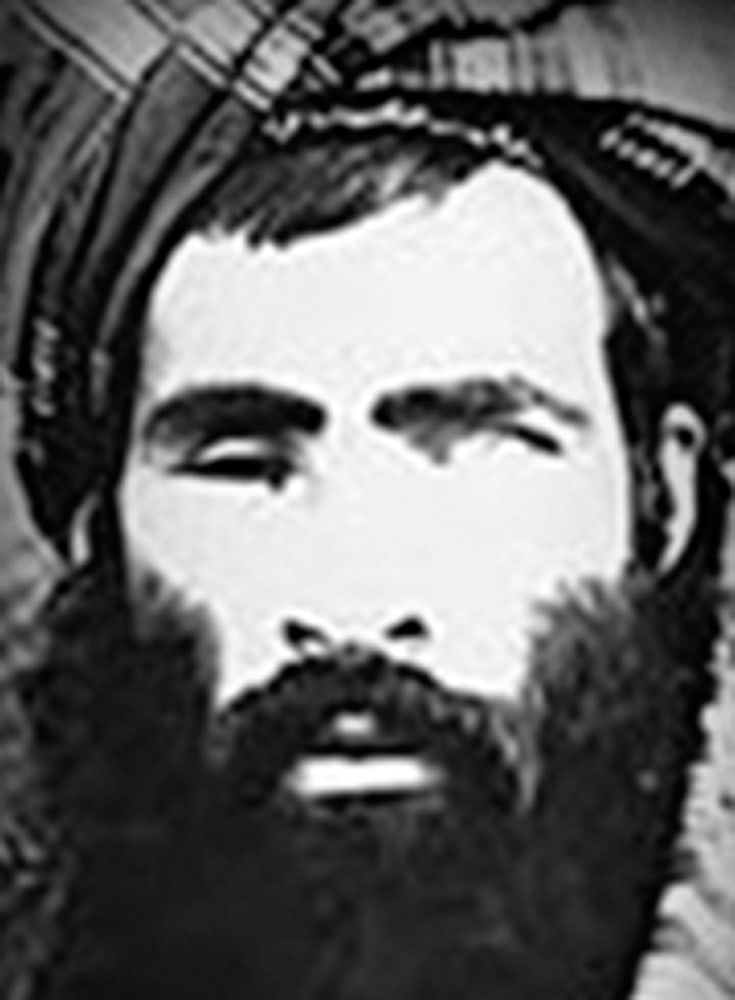
Taliban leader Mullah Omar. PHOTO: REUTERS

KABUL: Supreme leader of the Afghan Taliban Mullah Omar died suffering from tuberculosis two years ago in a Karachi hospital, Afghanistan’s top intelligence agency, the National Directorate of Security (NDS) confirmed on Wednesday.

“The Afghan government has received confirmed reports that Mullah Omar died nearly two years ago in Karachi,” NDS spokesperson Abdul Haseeb Siddiqui told BBC Pushto. “We are happy that now the foreign sources have also confirmed that Mullah Omar is no more alive.”

“We still have a lot of questions how Mullah Omar died,” he said, adding that, “We have been told that the Taliban leader died owing to an illness.”

The deputy spokesperson for the Afghan President also confirmed that Mullah Omar had died in 2013.

https://twitter.com/ZafarHashemi/status/626417739838681088

“The government of Afghanistan believes that grounds for the Afghan peace talks are more paved now than before, and thus calls on all armed opposition groups to seize the opportunity and join the peace process,” the statement added.

Earlier, a former Afghan Taliban minister and member of the central leadership council had revealed to The Express Tribune that Mullah Omar had died owing to Tuberculosis, however, he had not disclose the location of his death.

“Mullah Omar died two years and four months ago owing to Tuberculosis. He has been buried on Afghan side of the border,” the former minister had said on the condition of anonymity.

Further, he added, “Mullah Omar’s son had identified the body of his father.”

Read: Afghan Taliban release Mullah Omar biography amid growing frustration within ranks

Meanwhile, some Afghan government officials told the media in Kabul that the Pakistani government has also conveyed to them that Mullah Omar has died.

The Taliban have not yet commented on reports of Mullah Omar’s death, however, they are mulling a formal response to be release later today.

Read: Mullah Omar endorses ‘political endeavours and peaceful pathways’

Mullah Omar’s successor

The disclosure came as reports of the Afghan Taliban chief’s death sprung up yet again when the Afghan Taliban summoned a meeting on Wednesday to elect a new chief after some leaders of the militant group confirmed Mullah Omar’s death.

The former minister also disclosed that he was invited to attend the meeting.

Taliban sources told The Express Tribune that consultations for a new leader are under way and a successor will be announced before the next round of peace talks scheduled to be held in Pakistan on July 31.

Read: Afghan reconciliation: Mullah Omar’s aide likely to join peace talks

It is widely speculated that Mullah Baradar Akhund will succeed Mullah Omar as the supreme leader of the Afghan Taliban.

Mullah Omar had appointed Mullah Baradar and Mullah Ubaidullah Akhund as deputy leaders while he was alive.

Mullah Ubaidullah died in a jail in Pakistan, according to the Taliban which leaves Mullah Baradar next in line.

Mullah Baradar was reportedly released by Pakistan along with some other Taliban leaders in 2013; however, some Taliban leaders still insist he has not been allowed to rejoin his family.

Read: Doubts and divisions among commanders as Taliban talk peace

Some Taliban leaders told The Express Tribune that Mullah Baradar enjoys the support of Sayed Tayyab Agha, the head of the Afghan Taliban’s political office in Qatar.

Tayyab Agha himself was a close confidante of Mullah Omar. Further, sources say that Mullah Yaqub, the son of Mullah Omar, is also in favour of Mullah Baradar succeeding his father.

Read: Mullah Omar endorses Taliban peace talks

Other Taliban sources say that the incumbent Taliban acting chief Mullah Akhtar Mansoor, a former aviation minister, is also among the few aspiring for this position. However, sources added that Mansoor’s position in the Taliban has been widely damaged for spreading news of Mullah Omar’s death.

Read: The Taliban in Afghanistan

Another choice for Mullah Omar’s successor could be Mullah Yaqub, his son. Yaqub recently graduated from a religious school in Karachi. However, several Taliban leaders are of the view that Yaqub is too young and may be ‘unsuitable’ for the post. A Taliban leader told The Express Tribune that Mullah Omar never wished for someone from his family to succeed him.

Mullah Omar’s brother Mullah Abdul Manan has also been actively involved in Taliban affairs in recent years.

Afghanistan investigating reports of Mullah Omar’s death

An Afghan government official said that a press conference had been called on the subject of Taliban leader Mullah Omar, amid rumours of his death.

The official, who declined to be named because he was not authorised to give statements to the press, did not provide further details.

Further, the Afghan government is investigating reports of the death of Taliban supremo Mullah Omar, a presidential spokesman said.

The announcement from spokesperson Sayed Zafar Hashemi came after unnamed government and militant sources told media that the one-eyed leader died two or three years ago.

“We have seen reports in the media regarding the death of Afghan Taliban leader Mullah Omar,” Hashemi told a press conference.

“We are investigating these reports… and will comment once the accuracy of these reports are confirmed.”

The elusive leader of the militant group, which ruled Afghanistan in the late 1990s until it was toppled by a US-led offensive in 2001, has not been seen in public for years, leading to speculation he has been dead for some time.

The Taliban has been fighting an insurgency against the Western-backed government in Kabul since its ouster, killing thousands of civilians and security personnel and making significant territorial gains in recent months.

Tentative peace talks have begun aimed at ending the war, with the Taliban split between those who support dialogue and others who want to continue to fight for power.
source: http://tribune.com.pk/story/928571/afghan-taliban-leader-mullah-omar-is-dead/


Mullah Omar Father of Taliban Died inside of Pakistan in Karachi


Even in the prime of his life, at the height of his power, it was difficult for anyone to learn about, much less meet, Mullah Omar. He was simply the most reclusive, secretive leader in the world.

Word of his death Wednesday confirmed just how much of a phantom the father of the Taliban had become. Afghan officials said Omar has been dead for "a couple years."

"I can confirm that Mullah Omar is dead," the spokesman for Afghanistan's National Directorate of Security Abdul Hassib Sediqi told NBC News. "According to our intelligence Mullah Omar has died in a hospital in Pakistan a couple years ago."

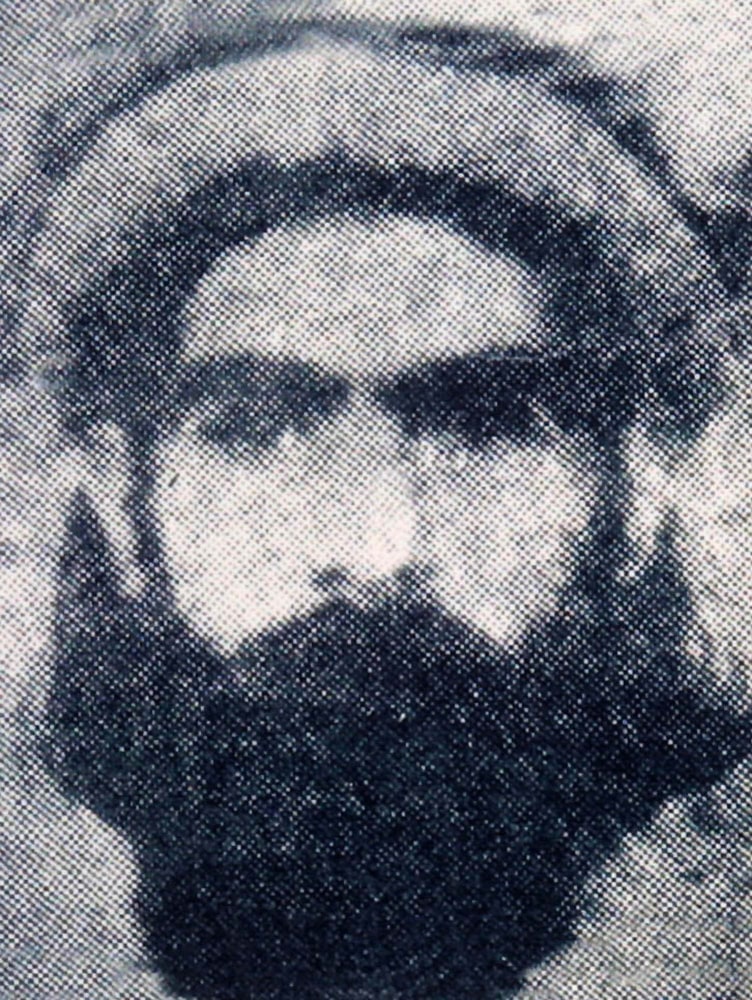
Mullah Omar was rarely seen or heard. It's believed he was photographed only twice. But his legend was real enough.

He was famously one-eyed, having lost his right eye to a shrapnel injury, one of four he sustained fighting Soviet troops who occupied Afghanistan in the 1990s. He was so adept with an RPG rocket launcher against Soviet armor that he rose quickly.


Mullah Omar is shown in this undated photo from the U.S. National Counterterrorism Center. National Counterterrorism Center / Reuters

His experience as a Mujahadeen commander gave him the confidence to fight another superpower, the United States.

It also taught him to shun any easily traceable means of communication. He sent messages through trusted couriers on tiny, rolled-up pieces of paper, avoiding mobile phones, satellite phones, video recordings —anything that might identify him to an enemy.

The Taliban claim he was born in 1960 to a religious family who lost at least four members fighting the Soviets and Americans. His years fighting Soviet troops in the depths of Afghan winters led to ill health. Reports about his death suggest he had hepatitis, as well as chest and heart trouble.

Omar was one of the world's most wanted men — the U.S. government put a $10 million bounty on his head — because of his leadership of the Taliban insurgency against U.S. and coalition troops following the 2001 invasion of Afghanistan. The Taliban say his uncle was killed on the first day of the American bombardment in October 2001.

But before that he was a head of government, an enforcer and a spiritual leader.

The "Commander of the Faithful," as he became known, created the Taliban in the early 1990s to fight the warlords and the chaos tearing Afghanistan apart after the retreat of Soviet troops. Before the final victory in Kabul, Omar took a shroud thought to have been worn by the Prophet Mohammad and draped himself in it, receiving a rapturous response from fighters who, from then on, saw him as a spiritual and military leader."SIMPLE DRESS, SIMPLE FOOD, SIMPLE TALK, FRANKNESS AND INFORMALITY ARE HIS NATURAL HABITS"

He headed the Taliban council that invited Osama bin Laden, a fellow fighter against the Soviets, to be a guest of the nation in Jalalabad. After 9/11, the council met to decide how to respond to the U.S. demand to hand over bin Laden.

It decided — narrowly, it's believed — to refuse to give him up. That decision led to the overthrow of Omar's government just weeks later. He fled, first to Kandahar and then out of the country.

Little is known of his life after that. Afghan leaders and military commanders say they found it impossible to arrest or kill a man they couldn't identify. It's almost certain he lived in hiding in Pakistan, like bin Laden — probably in the city of Quetta, where he directed the council that led the insurgency against U.S. troops.

It's believed Omar lived humbly, rarely seeing visitors outside his close inner circle. Earlier this year, the Taliban produced a biography of him, claiming he had no home and almost no money but "a special sense of humor."


Mullah Omar in his Youth While in Training with ISI against Russians 

Any sense of humor was lost on a world that saw only a humorless, ruthless Taliban government that banned television, dancing and kite-flying, whose Ministry of Vice and Virtue patrolled the streets beating women for showing an inch of flesh in public.
This undated file photo reportedly shows Taliban supreme leader Mullah Mohammed Omar. ASSOCIATED PRESS, file

But some, especially Omar's fellow ethnic Pashtuns, yearn for the stability he brought as Afghanistan fails to emerge cleanly from decades of corruption and conflict.

For many in the West, Omar was a cartoon villain, one-eyed and blind to the modern world. For his followers, he was, as the Taliban described him recently, "a unique and charismatic personality":

"Contrary to (other) leaders, he does not want to show off. He is not eager or excited to speak if it is unnecessary to do so. And if needed, his words ... are keen, perceptive and logical. He has adopted a simple and plain style in all aspects of his life. Simple dress, simple food, simple talk, frankness and informality are his natural habits."

Omar had been reported dead many times in recent years. The rumors began when he failed to send audio messages, although they had never been frequent. The only evidence he still was alive was an occasional statement on a Taliban website, the most recent being a comment, purported to be from him, supporting recent peace talks between the Taliban and the Afghan government. Reports he died years ago cast serious doubt on the authenticity of those statements.

The latest claim that Omar was dead is equally contentious. It's claimed he died in Quetta two years ago, probably of hepatitis. A senior member of the Afghan Taliban in Pakistan said, "I am 100 percent sure Mullah Omar is dead, but will not share other information until we have chosen his successor."

Who will that be? There appears to be a succession battle, between Omar's eldest son, Yaqoob, and his deputy Mullah Mansour. Even this is disputed: Some say the reports are part of a CIA plot to destabilize the organization at a crucial moment in peace talks and to encourage factional fighting and defections from the Taliban. Several commanders have left this year to join ISIS.

In life and in death, like bin Laden, Omar was hated and hunted by the West while an inspiration and an icon to generations of his followers — a man who stood up to both the major superpowers of the modern era and who refused to betray the guest of his nation to one.

source: http://www.nbcnews.com/news/world/mullah-omar-dead-father-afghanistans-taliban-died-pakistan-n400451

Myth of Taliban Leader Mullah Omar and Was he Really a Leader ?


Mullah Omar
Mullah Muhammad Omar Taliban Founder of Nookar of Punjabi Establishment 

Whether or not Mullah Omar is dead or alive, his long absence from public view is posing a growing threat to the strength of his splintering Afghan Taliban movement.

"Where is Mullah Omar?" is a question sources say is being increasingly and angrily directed at the commander regarded as the acting head, Akhtar Mohammad Mansour.

Commander Mansour has long been reported to be fighting off threats to his authority from more hardline Taliban opposed to any peace talks, including Abdul Qayum Zakir.

The Taliban are also facing a growing challenge from the still small, but increasingly significant presence of the so-called Islamic State in Afghanistan. Videos have emerged of disgruntled Taliban fighters swearing allegiance to the IS's self-declared Caliph Abu Bakr al-Baghdadi.

The Iraqi cleric, who also declared a modern day caliphate in areas under IS control in Iraq and Syria, has publicly mocked the religious and political leadership of Mullah Omar.


Baghdadi ISIS Leader 


Abu Bakr al-Baghdadi, the leader of the Islamic State militia, has ridiculed Mullah Omar's leadership
Fragile unity

In a Taliban movement said to be founded on a pledge of allegiance to the Amir ul-Mumineen (Commander of the Faithful), Mullah Omar's authority was regarded as a binding force of political and military strength.

"I really hope peace talks are concluded before Mullah Omar dies," a former senior Taliban official nervously remarked to me several years ago with unexpected candour about the movement's leader. "When he's gone, it will be much harder to maintain Taliban unity," he admitted with palpable concern.

Our conversation, outside Afghanistan, took place at a time when Nato-led forces were killing many mid-level Taliban commanders in their operations in southern Afghanistan. That was raising concern that younger, more radicalised fighters, without a strong allegiance to the Taliban leader, would rise through the ranks and be hard to keep in line.

In 2010, when US diplomats first engaged in face-to-face talks with the Taliban through what later became known as the movement's Political Office in the Gulf state of Qatar, they first sought to establish that the Talibs were acting with Mullah Omar's authority. At the time, US diplomats involved in the process told me credible assurances were received that Syed Tayyab Agha, his former personal secretary, had his blessing.

That green light was, however, said to be strictly limited to negotiations with the Americans about Taliban prisoners and the presence of foreign troops in Afghanistan.

They eventually resulted in last year's swap of the remaining American soldier in Taliban captivity, Bowe Bergdahl, for five Taliban members held at Guantanamo Bay.


Taliban Office in Qatar 


Negotiations through the Taliban's political office in Qatar had to be approved by Mullah Omar
Seal of legitimacy

This year, in the midst of a series of unprecedented informal meetings between the Taliban's Political Office and Afghan government officials, Taliban sources emphasised they still did not have formal authorisation from Mullah Omar to negotiate officially and openly with the Afghan government.

That again raised the most salient issue: how to get a ruling from a leader who has not been seen in public since late 2001 when the Taliban movement was ousted in Afghanistan after the attacks of 11 September. Even his recorded messages stopped several years ago.

Taliban officials often insisted their leader had to keep an exceptionally low profile because of US efforts to kill or capture him. But he was widely rumoured to be in Pakistan, despite Islamabad's denials. A senior Afghan official told me a few years ago that the Americans had confirmed to him that Mullah Omar was living in the southern Pakistani city of Karachi.

This month, a written message from Mullah Omar suddenly appeared, to mark the Islamic Eid Festival. It did not directly refer to a new separate process of peace talks being organised by the Pakistani government which represented the first publicly recognised formal talks.

But the text said "peaceful interactions with the enemies is not prohibited" under Islamic tradition. It led to speculation over whether the message had been written by Mullah Omar himself, or someone who wanted his seal of legitimacy.

Reports of the Taliban leader's death have circulated for years but these latest ones have now emerged just days before another round of peace talks in Pakistan is about to get under way at the end of this month.

They also come at a time of disagreement over who should represent the Taliban in any negotiations with the Afghan government.

Sources say Pakistani military intelligence officers, who have long had close ties to the Taliban, are urging Taliban field commanders they have worked with to come to the table instead of members of the Political Office in Qatar with whom they have had difficult relations.
Powerful figurehead

Afghan President Ashraf Ghani, who has adopted a new policy of working closely with the Pakistan government and military on Taliban issues, is said to be giving Islamabad considerable leeway in a negotiating process making slow and indeterminate progress.

Before the first round of talks in the Pakistani hill resort of Murree in early July, Mr Ghani was said to be under mounting pressure to abandon his approach to Pakistan, which was markedly different from his predecessor Hamid Karzai's strained relations with Islamabad.

And there's the larger question of how committed Taliban commanders are to a political process when they continue to conduct bloody attacks not just against military and police targets but also brazen assaults on Afghan civilians everywhere from crowded markets to the country's national assembly.

Numerous countries are known to have been involved for years in secret and not so secret efforts to bring the Taliban to the table including China, Norway, Britain, and some private mediation groups.

The legitimacy conveyed by the mythical Mullah Omar was always regarded as essential even if the reclusive leader had long ceased to be involved in the day-to-day running of the movement.

Now the issue of who can replace such a powerful figurehead is emerging as one of the most significant challenges to its survival as a cohesive political and military force.

source: http://www.bbc.com/news/world-asia-33701790


Friday, February 6, 2015

Why Punjabi Establishment wants to Sell Taliban as Pashtuns Resistance erroneously.

Kaptan Taliban Khan PTI 


With a mix of horror and disbelief I watched the footage from Matanai where a school van was ambushed by militants. Even for senses numbed by scores of bombings every year, this came as a shock because the victims were children (aged between 8 to 14 years), and were deliberately targeted. One would think that even the most shameless of villains would not be low enough to own these killings, but within hours the Tehreek I Taliban Pakistan (TTP) proudly claimed full responsibility. Bravo!

The footage of the aftermath showed faces smitten with fear, a little girl, hardly six or seven lay in a state of shock; her blank expression and her blood soaked shirt spoke volumes about the horrors that she went through. Some of the survivors did speak to the media and the noticeable thing about their interviews was that they were either in Pashtu or in heavily accented Urdu.

It is important to highlight the accents and thus ethnicity of these children because the same are often ignored by those who perceive Taliban violence as a Pashtun backlash. Take the Chairman of the Pakistan Tehreek I Insaaf (PTI) for instance; in one of his sermons on YouTube titled “Imran Khan Explains War of Terror and Pakistani Taliban”, he declares the Taliban to be a “Pashtun Resistance”. But, how exactly does a Pashtun Resistance claim mostly Pashtun victims is something that Mr. Khan didn’t elaborate upon.

To prove this argument, references are often made to episodes of Pashtun resistance from the past. But the difference between Taliban leadership and historical figures such as Faqir of Ipi becomes very obvious if one considers their respective target selection. Mullah Powindah, Pir Roshan and Faqir of Ipi were not known for targeting Pashtuns, as all of them had a strong nationalistic bias; i.e. a Pashtun bias. The Taliban however, do not have any of that as proven by the fact that their victims are predominantly Pashtun. It should be obvious that when an insurgency fights in the name of an ethnicity then it does NOT target that ethnicity; the ETA is not known for killing Basques and neither was the Tamil Tigers known for killing Tamils. For this reason, it is downright disrespectful to term Taliban violence as a “Pashtun backlash”, because the Pashtuns themselves are its biggest victims.

While one feels disappointed with the former cricketer, one is absolutely horrified when the same logic is echoed by a group of Pakistan’s “Foreign Policy Elites” (FPE). A recent report by the Jinnah Institute (JI) and the US Institute for Peace (USIP), titled “Pakistan, the United States and the end game in Afghanistan” builds its case on the very same assumption. While the FPE rightly point out that a settlement in Afghanistan should not result in “negative spillovers” or cause “resentment” among Pakistani Pashtuns, their recommendation for ensuring that is quite perplexing, as they want inclusion of the Haqqani Network and the Quetta Shura in any post US setups in Afghanistan.

If such an arrangement is considered necessary for appeasing Pakistani Pashtuns, then the FPE need to move beyond books of history & genealogy, and instead concentrate on recent news reports, electoral results, and opinion surveys. The Pashtuns of Pakistan have been categoric in rejecting the Taliban; in 2008’s general election, the Province of Khyber Pakhtunkhwa (KP) voted overwhelmingly for anti Taliban parties i.e. the ANP and the PPP. The PEW research survey for 2010 predicts that only 7% of KP approve of the Taliban, while the same is 15% for Pakistan and 22% for Punjab. Furthermore, TTP’s targeting of elected leaders in KP as well as that of the tribal elders of FATA, clearly indicates that the Taliban feel threatened by those who represent Pashtun consensus. This anti Taliban sentiment should be expected, given the chaos and destruction that the TTP has brought upon Pashtun lands.

If our FPE think that the alliance between the Taliban in Pakistan and Afghanistan can be taken care of through some strategic parlaying, then they are sadly mistaken. Whether it’s supporting the Uighars in China, or the refusal to handover Osama, the Afghani Taliban have proven that when it comes to the Global Jihadi fraternity, strategic concerns are not that important to them. Thus, it should be obvious that if the Taliban get strengthened in Afghanistan, then the strengthening of the Pakistani ones is inevitable.

Lest one forgets, this September had quite a few reminders of what that strengthening could entail. Besides the attack on the 13th in Matanai that killed 5, on the 16th a suicide bombing in Dir claimed 27 lives, on the 19th another 8 were killed in Karachi, and on the same day 6 died in an attack on CD shops in Peshawar, and if that was not enough, then on the 20th they lined up 26 Shias in Mastung and gunned them down; and then ambushed two more who were on their way to the scene of the massacre. A sum total of 74 Pakistanis killed in 7 days for the “crimes” of working for the Government, listening to music and being Shia.

The underlying motivation for this violence is ideological, and this ideology is not likely to change whether the United States leaves Afghanistan tomorrow or doesn’t in the next ten years. It is also an ideology that declares a majority of us Pakistanis i.e. the Barelvis and the Shias to be Wajib Ul Qatal (dead men walking), and legitimizes the destructions of schools, shrines, Imam Bargahs and mosques. With the Quetta Shura and the Haqqani Network espousing the same ideology, their strengthening in Afghanistan should raise alarm bells for anyone concerned about Pakistan’s security interests.

If the potential “resentment” of Pakistani Pashtuns weighed heavily on the minds of our FPE, then the safety of the same Pakistanis should have had an even bigger impact, an impact that is certainly not evident in the conclusions to this report. For this reason, the Foreign Policy Elites need to reconsider their definition of Pakistan’s national interest. It is recommended however that before doing so, this group puts itself in the shoes of the parents of Matanai, it is very likely that the word “pragmatism” might have a different meaning then.

SOURCE: https://iopyne.wordpress.com/2011/09/30/elitist-misconceptions/

Sunday, February 1, 2015

Making the Sacrifices in Afghanistan Worthwhile will the Natural Resources of Afghanistan be Used for Afghans ?

Making the Sacrifices in Afghanistan Worthwhile
Ahead of a major conference, what needs to be done to justify the sacrifices made in Afghanistan?


By Ikram Afzali


As David Cameron prepares to welcome the nations of the world to the first major conference on Afghanistan since its tumultuous election earlier this year, many of his fellow-citizens will be asking themselves if the 13 years of U.K. military engagement in Afghanistan have been worth it.

As an Afghan, I would give the prime minister a simple answer: “It depends.” It depends on what happens in the next few years and whether we are able together to finally make progress on building the foundation that is needed for a stable, prosperous and democratic Afghanistan. And one of the most important parts of this foundation, will be tackling the cancer of corruption and the systemic abuse of my country’s natural resources.

Afghanistan is rich. Experts estimate we have around $1 trillion of minerals, as well as plentiful reserves of oil and gas. Our mountains produce a rainbow of precious stones, from rubies and lapis to emeralds. We have oil and gas, lithium, copper, gold and iron. This is a treasure that belongs to all Afghans.

Enormous hope has been invested in these resources to fund the Afghan government and fuel the Afghan economy. The international community is relying on them to free them from the burden of funding the Afghan government and especially the Afghan military. Afghans are relying on them to provide desperately needed jobs, development and growth. But there is a great danger that these riches will instead be a poison for Afghanistan.

Across the country, widespread illegal mining continues to fund the Taliban and armed militias involved in terrible abuses. The income minerals should be producing for the national budget instead lines the pockets of corrupt officials, politicians, commanders and mining companies. Scratch under the surface in some parts of the country and the fighting is much more a result of competition to control the mines than it is of competing ideologies. There is a great danger that these resources will lead to a chronic cycle of conflict and humanitarian crisis.

If we want our natural resources to fulfil their promise, we should surely be taking every available measure to mitigate this clear and present danger. And that is exactly what a coalition of more than 40 Afghan and international civil society organisations, are asking Afghanistan’s President Ashraf Ghani and Afghanistan’s donors to do.

Cameron, as the co-host of the London conference, must step up and take the lead for the international community. In a letter to the Prime Minister ahead of the conference, we’ve made the case that “stronger natural resource governance is not a side issue: it is a critical precondition for the stability and prosperity we are all working for.”

We’ve asked both him and Ghani to re-enforce their promises to create strong laws and strong policies to regulate our natural resources. We’ve asked them to put some flesh on the bones of that promise, by agreeing some of the basic measures that will go into fulfilling it. We’ve asked for transparency, we’ve asked for accountability, we’ve asked for the rights of communities living in mining areas to be respected.

These are basic protections: publication of contracts, of payments between companies and the government, and of the true, beneficial owners of mining companies. This is about introducing rules to allocate mining concessions fairly and transparently; ensuring communities are involved in the benefits of mining and can have their concerns addressed; preventing environmental and social damage, and making sure abusive armed groups are kept out of any involvement in the sector.

We believe our new government is serious about making sure Afghans are not robbed of the resources that are their birth right, but they now need to deliver on their commitments. We want to be open to businesses and investment, but not to exploitation and abuse. We want to develop our natural resources – but from a position of pride and strength, not by lowering our standards and ignoring abuses.

And Cameron also needs to deliver on his commitments. He has already said he will push the agenda of greater transparency and honesty in Afghanistan’s extractive industries “as far and as fast as we can.” Now there is a chance to get agreement on practical, concrete measures to do exactly that.

Just last month, Cameron said that Britain has ”paid a very high price” for the war in Afghanistan. Afghans themselves have paid an even higher price. The only justification for all this sacrifice is if it can provide the space for Afghans to build a lasting peace. Afghanistan can still pull itself out of decades of conflict, but we need the international community to help us seize that chance. We need them to help us to build up our abilities and back us in the fight against corruption and conflict.

Tackling this challenge is not easy. But Cameron should know that, in the end, it is the only thing that will make the great sacrifices we have all made truly worthwhile.

Ikram Afzali is the Director of Integrity Watch Afghanistan, an Afghan civil society organisation campaigning against conflict and corruption.

source: http://thediplomat.com/2014/12/making-the-sacrifices-in-afghanistan-worthwhile/


Ashraf Ghani and the Pashtun Dilemma

Ashraf Ghani and the Pashtun Dilemma
Ashraf Ghani and the Pashtun Dilemma, If he is to succeed, Afghanistan’s president will need to come to grips with the country’s ethnic tensions. 
By Ali Reza Sarwar


With his impressive background, which includes a stint as a senior official at the World Bank and a ministerial post, Afghan President Ashraf Ghani would not appear to be short of qualifications for leadership. Yet, the president appears on course to be just another Afghan leader who is unable to rule the troubled country. When Ghani delivered his lofty inaugural speech on September 29, 2014, following a disputed election and power-sharing deal, expectations were high. The president made a strong argument in support of what he called the “triangle of stability” – economy, security and human resources – promising to restore Afghanistan’s valuable ancient geopolitical and economic position as the “crossroads of Asia.”

More than 100 days after taking the office, however, and Ghani is bogged down in a serious political crisis, one that draws a gloomy picture of the fragile unity government. He has only in the last few days been able to form a cabinet, leaving Afghanistan’s major public institutions, including ministries, independent departments, and commissions without leaders for months. A recent survey conducted by Afghanistan’s popular private TOLO TV and an independent civil society, shows that Ghani’s popularity has fallen dramatically, with only 27.5 percent of respondents satisfied with his leadership. With insecurity and political uncertainty looming, a number of parliamentarians have asked for Ghani’s impeachment for “treason,” blaming him for Afghanistan’s current state of disarray.

What has gone wrong? Why is this impressively credentialed leader unable to fix Afghanistan? Traditionally, Afghanistan’s woes have been blamed on crippling corruption, weak governance, dismal economic conditions, and worsening security coupled with foreign intervention. While these are certainly painful realities, the root cause of political crisis lies in ethnic politics and the breakdown of consensus among diverse ethnicities in regard to the persistent Pashtun dilemma.

The Pashtun Dilemma

Constituting around 40 percent of the population, Pashtuns are the largest ethnic group in Afghanistan and are on the front lines of the war on terrorism, both as perpetrators and victims. The Taliban that is behind the bulk of the brutal militancy both in Afghanistan and Pakistan are mainly Pashtuns and derive their support from strongholds in tribal areas across Afghanistan and Pakistan’s borders. The mainstream Pashtun intelligentsia in both countries have been mostly uncertain over whether to sympathize with the Taliban as a nationalist movement seeking to restore traditional Pashtun dominance in Afghan politics and to some extent in Pakistan, or to condemn them as an extremist and externally infiltrated militancy that have dragged Pashtuns into an asymmetric confrontations with the U.S.-led coalition at a massive cost in human life.

Despite the Taliban’s indiscriminate attacks on Pashtun areas, including the last year’s suicide bombing in a market in Paktika province that killed 89 people, some leading Pashtun thinkers support the Taliban as a nationalist movement that could restore Pashtun dominance in Afghanistan, which they believe declined following the fall of the Afghan monarchy in 1973 and the following decades of the Soviet invasion and civil wars. For instance, in his article, the decline of Pashtuns in Afghanistan, Anwar Ul-Haq Ahady, a former finance and commerce minister under Karzai and an influential Pashtun thinker, believes that the decline of Pashtuns in Afghanistan after the fall of Najibullah in 1992, was “more significant than the fall of communism. The rise of the Taliban generated optimism among the Pashtuns about the reversal of their decline.”

The view that the Taliban could serve as a powerful Pashtun nationalist movement with the ability to reverse the post-Taliban inter-ethnic relations and political landscape of Afghanistan remained largely visible in during the administration of President Hamid Karzai. Karzai was frequently criticized by the opposition for his lenience towards the Taliban, yet he continued to compromise and push for negotiation. For its part, the Taliban categorically rejected talks, humiliating Karzai as a “puppet and unauthorized” to negotiate. At the grassroots level, particularly in non-Pashtun circles, there has been a difficult debate over whether Karzai would have been as willing to compromise if the Taliban had been a non-Pashtun movement.

Ghani’s Test of Leadership 

Ghani, a Pashtun himself, already seems incapacitated by the Pashtun factor. If he is to get to grips with the problem, he will need to address several important issues.

First, it should be realized that the war on terror is being fought mainly in Pashtun areas of Afghanistan and Pakistan, and this reality constrains the political status of Pashtun in both countries. To overcome this, Pashtun leaders and intelligentsia, including Ghani himself, need to draw a stark line between the Taliban as a radical movement linked to global terrorist networks, and the legitimate cause of Pashtuns for justice. Fail to do that and Pashtuns will only be more isolated in both Afghanistan and Pakistan, and forever in conflict with non-Pashtun groups and the international community. Breaking with the Taliban should also not be limited to the official level; the debate should move to the heart of Pashtun tribes and traditions that continue to provide the Taliban with sanctuaries and new recruits.

Second, the dynamics of ethnic relations and politics have fundamentally changed in Afghanistan and Pashtuns must face the reality that the time for a despotic monarchy or factional regime like that of the Taliban has passed. In the worst possible scenario, the collapse of Afghanistan’s fledgling democracy and unity government could lead to chaotic civil war, but it will not permit the emergence of a Pashtun-dominated government, just as it will not allow a government that excludes Pashtuns. Pashtuns will need to renegotiate their relationship with other ethnic groups in Afghanistan and this will inevitably mean giving up some of the privileges they enjoyed in earlier times.

Ghani could play a pivotal role in pushing this message among Pashtuns, but he seems to be replicating the failings of his predecessor. Like Karzai, Ghani is uncertain whether to consider the Taliban enemies or political dissidents. For the moment, he believes they are political opponents, a designation that would baffle many Pashtuns and all non-Pashtuns who have suffered under the Taliban’s violence. Ghani has been clear on his desire to reach a diplomatic settlement with Pakistan, and has also increased his contacts with nationalist Pashtun leaders in Pakistan. In fact, he recently hosted them in Kabul, a risky move that will have infuriated Pakistan’s government and intelligence agency given Pakistan’s long obsession with Pashtun nationalism.

Clearly, there will be no peace in Afghanistan, Pakistan, or the region without the genuine participation of Pashtuns. Yet Pashtuns’ failure to engage constructively with non-Pashtuns in a democratic process that rejects the Taliban will only lead to their isolation. Ghani is the one man who could achieve this engagement, and he will need to do so if he desires to escape the fate of other Afghan rulers.

Ali Reza Sarwar is a Fulbright Graduate Fellow at Texas A&M University, Bush School of Government and Public Service where he is completing a master’s degree in Intelligence and National Security. Reza graduated from the American University of Afghanistan (AUAF) where he was also in charge of the university’s enrollment management plan.

source: http://thediplomat.com/2015/01/ashraf-ghani-and-the-pashtun-dilemma/


Tuesday, January 6, 2015

Taliban Khan Biggest Supporter of Monsters Taliban made by Punjabi Establishment

Liberal Pakistanis have criticized cricketer-turned-politician Imran Khan's opposition to a military operation against the Taliban. His alleged support to the Islamists has earned him the title, 'Taliban Khan.'


Imran Khan:Aka Taliban Khan  Flirting with the Taliban


Recently, when the Pakistani Taliban nominated Imran Khan to engage in peace talks with Islamabad, liberal sections of society exclaimed, "See, we always said that Khan was one of the Islamists!"

Although Khan immediately refused to take part in the talks, the controversial "Taliban Khan" tag that he has earned over the years, got another endorsement.

Imran Khan is now one of the key players in Pakistani politics. His party came third in the May 2013 parliamentary elections and now rules the northwestern Khyber Pakhtunkhwa province bordering Afghanistan. He wants Islamabad to make peace with the Tehrik-i-Taliban Pakistan (TTP) and sever its alliance with the US in the "war against terror."


Power and Money Hungry : Imran Khan married Jewish Jemima Goldsmith in 1995


"We will win this war if we disengage from the US," Khan recently told the media. "As long as the Taliban believe we are fighting the US war, they would declare jihad on us. This would be a never ending war," he added.

This is certainly a very different image of a liberal person who studied at the University of Oxford and played in the English cricket league in the 1980s. Back then, Khan was discussed in the British press as much for his sporting talent as for his alleged love affairs.

Khan went on to become one of the most successful cricketers Pakistan has ever produced, under whose leadership the nation won its first Cricket World Cup in 1992. He later engaged in philanthropic work in Pakistan and married British writer and campaigner Jemima Goldsmith. The wedlock, however, didn't last long.

Khan entered politics in the late 1990s, forming a party called Pakistan Tehrik-e-Insaf (PTI). Although he was worshipped by millions in the country as a great cricketer, Khan was never considered a serious politician, even by his ardent fans, until 2011.


Cant be Away from Cameras ?? Cricketer Play boy and now Taliban Khan 


But now, for many of his fellow contrymen, the 60-year-old is the "last hope" in a country which is facing innumerable problems ranging from a non-functional economy to a protracted Islamist insurgency. For others, he is a right-wing politician who wants to appease the Taliban.

Who really is Imran Khan?

Play Boy and Play Girl Perfect Couple now Deceiving Pashtuns 

So how did a person, who was doubted even by members of his own political party as a political alternative to the two main political families, the Bhuttos and the Sharifs, become a force to reckon with in the Islamic Republic? Was it because of the support of the ubiquitous Pakistani army and its Inter-Services Intelligence agency (ISI), as his critics claim, or was it the relentless political campaigning that Khan has been doing for more than 16 years? Khan's supporters believe it is the latter.

"Khan's stance on corruption, terrorism and nepotism in Pakistani politics has struck a chord with the masses, which are fed up with the traditional ruling elite. He has no corruption charges on him, no foreign assets," claims PTI activist in Islamabad, Khawar Sohail.


Imran Khan Rise to Power by Punjabi Establishment / GHQ and its Made Taliban

But some observers argue that Khan is backed by Pakistan's right-wing groups, in particular the military establishment, because of his "soft" stance on the Taliban and other Islamist militants. His rise in Pakistani politics, they claim, is due to his "good relations" with the ISI. Khan agrees with the organization's position on matters such as Afghanistan and Pakistan's national security, they say.

Amima Sayeed, a development researcher from Karachi, believes that Khan, most definitely, supports right-wing extremists. He has not made it secret.


Need any ID Card ??


"When the Swat peace deal between the government and the Taliban was introduced in 2009, Imran Khan was the first politician to support it. His collaboration with the Islamic Jamaat-e-Islami party is also a proof of his right-wing agenda," she told DW.

"He might not sound like a religious political leader of the Jamaat-e-Islami or the Jamiat Ulema-e-Islam, but his views about the region, the world, and in particular about the militant groups in Pakistan, are sympathetic if not supportive of the religious right," Owais Tohid, a journalist for the Wall Street Journal in Karachi, agrees. "He opposes a military crackdown on the militants and dismisses the idea that there has been an increase in the homegrown jihadist culture in Pakistan over the years."

Eight months of Failed Government  in power

But some analysts say that the debate about Khan's Islamist or liberal credentials is actually taking the spotlight away from his performance as a politician and the leader of a party which governs an important province of the country.

Khan promised speedy justice and an end to corruption in the Khyber Pakhtunkhwa province after taking its reins. During the election campaign, he also said his party would curb violence and bring peace.
Chief Trainer of Taliban Mullah Sami and Iran Siddique a Taliban Sympathizer in Paki Media 


Representatives of the Pakistani government and the Taliban met in Islamabad for peace talks

Khan's PTI has been in power for almost , 1 year and eight months, yet critics state that most of his election promises have not been fulfilled.

"The government in the Khyber Pakhtunkhwa province has not delivered anything to people. Corruption and nepotism are rampant and there hasn't been any significant development work in the past eight months," said Qasim Jan, a student in the northwestern city of Peshawar.

"Khan has only focused on protesting US drone strikes in the northwestern tribal areas, blocking the NATO supply route to Afghanistan, and coming up with all sorts of excuses in support of the militants," he added.

Pakhtunkhwa Governance 


Islamabad-based writer, Arshad Mahmood, agrees: "Things are pretty much the same as they were in the past. Khan's party workers consider themselves to be above the law and won't cooperate with the administration. If the PTI officials don't obey the law, how will the governance be improved?," asked Mahmood.

But Khan's supporters, which comprise mainly the Pakistani youth, feel his administration is being unfairly criticized.

"The government has made great strides into a faster and more effective judicial system. The education budget of the province is much bigger than in other provinces. Yes, there are problems, but things are improving," Zakria Zubair, a young entrepreneur in Islamabad, told DW. The 29-year-old PTI supporter also says that Imran Khan is playing the role of a competent opposition leader in the country's lower house of parliament.

source ; http://www.dw.de/pakistan-school-massacre-to-further-strengthen-armys-resolve-to-fight-ttp/a-18134203

Monday, January 5, 2015

School attack exposes Pakistan's flawed anti-terror strategy


An attack on Istaqlal Lyceum Kabul Occurred by Pakistan Sponsored Taliban in Kabul on 13th December 2014 , and 3 days Later on 16 Dec 2014 , another Attack Occurred on Peshawar Army public School who supports the Same Taliban as Tit for Tat response , represent a Flawed State Policy of Pakistan .  

More than 150 children have been killed in a Taliban attack on a school in the Pakistani city of Peshawar. Analysts say the school siege proves the country's counter-terrorism policies have failed.
Attacking Schools in Afghanistan can Lead to Same Attacks in Pakistan as it Occurred in Peshawar 


For months, Pakistani army officials, including Army Chief Raheel Rharif, claimed that the military's operation against the Taliban – known as Zarb-e-Azb – in the country's northwestern areas had been extremely successful in destroying the militants' sanctuaries. But the Islamists' attack on an army-run school in Peshawar, the capital city of the Khyber Pakhtunkhwa (KP) province, on December 16, tells a completely different story. 141 people, mostly children, were slain in the attack. All six attackers were also killed.

The Islamist Tehreek-e-Taliban Pakistan (TTP) outfit claimed responsibility for the assault as a military operation to rescue the hostages ended after several hours. "This attack is a response to Zarb-e-Azb military offensive and the killing of Taliban fighters and the harassment of their families," TTP spokesman Muhammad Khorasani told AFP news agency.


PM Sharif: 'The students who died in the attack are like my own children'

The gunmen stormed the Army Public School in the morning hours and started firing at random, according to police officer Javed Khan. Army commandos quickly arrived at the scene and exchanged fire with the gunmen, he added.

"They (the assailants) include target killers and suicide attackers. They have been ordered to shoot the older students but not the children," said Khorasani.

The siege is over

DW correspondent in Islamabad, Shakoor Rahim, says the gunmen held pupils and school staff inside the principal's office for many hours after the attack. "The security forces and extremists traded gunfire until the army finally managed to end the siege," Rahim said, adding that Prime Minister Nawaz Sharif immediately went to Peshawar to oversee the rescue operation.

Rahim quoted an eyewitness as saying that the gunmen were clad in white dresses and were speaking Arabic. Omar Hamid, head of Asia Pacific Country Risk at the global analytics firm IHS in London, told DW that the school represented a soft target that directly impacted the Pakistani army. "As the TTP spokesperson has said, he wanted the military to feel their pain," Hamid said.

Militants still strong and Have Backing of Punjabi Establishment : 

Maqsood Ahmad Jan, an analysts based in Charsadda near Peshawar, says that despite the ongoing military operation in the North Waziristan - close to the Afghan border - the Taliban still have the capacity to launch large attacks. "I don't think that any military offensive can fully eliminate the Islamists. They just change positions," Jan told DW.


The much-touted success of Operation Zarb-e-Azb is very much in question

There had been a relative lull in terrorist attacks in Pakistan since June when the South Asian country's army began an offensive against militants in its restive Waziristan area. Since then, the government has been claiming that operation "Zarb-e-Azb" has crippled the Pakistani Taliban and the numerous al Qaeda affiliated groups. It also says that the capacity of these banned outfits to launch attacks - which have lost 1,100 militants over the past six months - has also been significantly reduced.

"The TTP has been weakened, but retains the ability to carry out attacks like this. it would probably be harder for them to launch attacks further away from their area of operations, say in the eastern Punjab province, but Peshawar is very accessible from the tribal areas and would be an obvious target, as the army formation running the operation is based there," Hamid pointed out.

Islamabad-based journalist for Dawn newspaper, Irfan Haider, says that the North Waziristan military offensive has not been effective due to a lack of coordination between the civil and military intelligence agencies.

"The militant organizations are operating with different names, making it difficult for the federal and provincial governments to deal with them," Haider told DW.

However, Pakistani analyst Abdul Agha is of the view that his country's powerful army is responsible for the continuing strength of the TTP. "They are nurturing and supporting a number of militant groups. The result is that they are still very active," he told DW.

Commenting on the army operation, Agha said that "the government is going after the [militant groups] that have turned against the state, or who don't agree with its long-term plans vis-à-vis Afghanistan. Pakistan wants to eliminate some and will preserve some for the future."

The lawless northwestern tribal region of Pakistan is believed to be a Taliban and al Qaeda stronghold


Political distraction

Jan criticized the KP government, headed by cricketer-turned-politician Imran Khan's conservative Pakistan Tehreek-e-Insaf (PTI) party, for its pro-Islamist stance. "Khan has a soft spot for the Taliban. His party's provincial government has failed to protect the common people from the extremists. The school siege is proof," Jan commented.

Since August, the PTI has been holding country-wide demonstrations to topple PM Sharif's central government, which Khan and his party officials claim came into power in May 2013 through rigged parliamentary elections. Experts say that since the embattled premier is busy fighting a political war in the capital Islamabad, he is not in a position to focus on the terrorism issues.

"It is no secret that the PTI is a sympathizer of the Taliban insurgency as the party has repeatedly denounced military action against the extremists on the pretext of opposing American interference. Since Khan started demonstrations against Sharif's government, his party has remained largely silent on Zarb-e-Azb," Islamabad-based political commentator, Khayyam Mushir, told DW, adding that the ongoing anti-government protests were a major distraction for the PM Sharif who is further conflicted on what position to take on the terror issue.

No change in policy regarding to keep Taliban as Pakistan State Proxies for War in Afghanistan 
Islamist militants demand the imposition of Shariah Law in Pakistan


"In the past, the military launched several offensives against the Taliban, but we know that the militants are still operating in the country," Agha said, underlining yet another opinion analysts hold, namely that there has never been any clear-cut strategy to uproot terrorist organizations from the country because the Pakistani establishment still considers Islamist extremists an important ally.

Islamabad wants to use them in Afghanistan after the NATO drawdown in the coming days, some say, while others assert that the Pakistani military hopes to regain the influence in Kabul it once enjoyed before the US and its allies toppled the pro-Pakistan Taliban government in 2001.

IHS analyst Hamid believes the Taliban issue in Pakistan is tied up to Afghanistan. He argues it is likely that Islamabad will demand US and Afghan action to target the TPP leadership in eastern Afghanistan, as a quid pro quo to supporting or pushing the Afghan Taliban towards peace talks.

source: http://www.dw.de/school-attack-exposes-pakistans-flawed-anti-terror-strategy/a-18134205


Military courts are not for Taliban Terrorist they will be Used Against You for Sure.


Why Military courts are being Asked for ???  when there is FCR Frontier Crimes Regulations in FATA  ( In Human with God Like Power to Bureaucracy in FATA that can be Applied to Tribal Areas where most of Terrorists are ) , and also Protection of Pakistan Ordinance and Many Brutal Laws and Even Article 245 which has Implemented Martial law in Pakistan in Some Areas ?. 

These Military Courts is beginning of End of Pakistan Federation it seems , and these Will be Used for Political Powers and Civil Society and also against Intellectuals and some Freedom Seekers who will Labeled as Terrorists for sure . 

The Punjabi Establishment is not Interested in Eradicating Taliban for sure as Mullah Military Alliance Which it made Itself as Means to Conquer AF-Pak and has made Jihadi Economy as Most Profitable Business with almost 5 Trillion Rupees Flowing Towards Punjab while the Blood is being run like Rivers in Pakhtunkhwa + FATA and Baluchistan .


Gul Bukhari


The agencies are not interested in convictions of extremist guys.” Every week, the prosecutors would get a visit from ISI and military intelligence officers to discuss the terrorism cases, to find out how many were being tried, how many pending. “And always they’d say, ‘Why are you going after good Muslims?’ or ‘What is the case against [Lashkar-e-Janghvi leader] Akram Lahori? He is working for Islam. Why are you working against him?’” – Buriro, prosecutor of Sindh ATC to the Committee to Protect Journalists (CPJ) on prosecuting terrorists.

“Buriro produced the video in open court. He cross-examined the defendants’ witness, an ISI colonel. The prosecutors withstood anonymous phone threats; they turned down bribes to let the case return to the regular courts, where it would fade away. The security apparatus was especially furious that uniformed men were being tried in the anti-terrorism court. ‘During the process of the case I was threatened by the naval agencies. I was threatened by the ISI,’ Buriro said. The prosecutors were excoriated for not damaging evidence in the case as instructed.” - Buriro to CPJ on his prosecution of Rangers men for shooting to death unarmed Sarfaraz Shah in a park in Karachi in 2011. They were caught on camera and the case became a publicized one.

CPJ’s full report on the roots of impunity in Pakistan is a horrifying, heart-stopping indictment of primarily the military and its intelligence agencies. Political parties and governments, in particular the MQM, are not spared either, but the clear illustration of how intelligence agencies perpetrate atrocities and prevent justice through civilian law enforcement and courts is petrifying. 

The blood runs cold reading how journalist Mukarram Khan Aatif reporting on a Taliban hideout being only two kilometers from the Salala Checkpost on the Pak-Afghan border was murdered. 

Mukarram’s reports on Deewa Radio were pointing to the possible reason the Americans attacked the Salala checkpost killing 24 Pakistan Army soldiers. His reports came too close to exposing the military-militant nexus, and the military’s double games. 

The people of the country were rightly angry the Americans had killed innocent soldiers of the Pakistan Army, unprovoked. However, the people of Pakistan were to be prevented from understanding what actually led to the accident.

Yet, in response to the massacre of 140 children in the APC Peshawar attack, the most significant anti-terror measures announced by the Prime Minister, and acquiesced to by the rest of the parliamentary parties, is to cede ‘justice’ to the military and to lift the moratorium on death penalty for terrorists. Both were dictated by the military.

‘All day on Wednesday, according to a participant of the meeting held at the PM House, the military leadership stressed the need to set up military courts as the “(civilian) justice system had failed to deliver.” – front page of Dawn, December 25th.

 In light of the CPJ report, which merely acts to confirm what many of us have known, are military courts then the solution? Is the military the solution or part of the problem? The narrative being built for the justification of military courts is wrong: that the civilian judges and law enforcement agencies are too weak, inept, and cowardly to convict terrorists. 

All, I repeat all, terror groups, be they of the Taliban ilk (whom the military has for sometime turned against) or sectarian in nature like the SSP and LeJ, were formed by the military for its various domestic and foreign security policies.

 And the police’s and courts’ intimidation by the military intelligence agencies is in no small part responsible for the broken civilian justice system. One cannot exonerate the political elite for not trying to strengthen the policing and courts systems, but in the face of the powerful army, and with having to watch over their shoulders’ every moment for the next coup, one cannot blame them entirely either.

The decision to lift the moratorium on death penalty also reeks of vengeance and of being seen to be tough on terrorists. 

However, the manner in which non-terror related crimes or ordinary civilians are being charged and tried in anti-terror courts, bodes ill for the cause of justice. People like Imran Khan and Maulana Fazlur Rehman have been charged under the Anti Terrorism Act, so vaguely is terrorism defined in the act. 

How then, is lifting the moratorium a wise step? The case of Shafqat Hussain perhaps is the ideal example of the flaws existing in the system, due to which such knee jerk measures really only serve to right one wrong with another.

 He was sentenced to death when he was 14 years old. An extract from Reprieve’s report reads, ‘(Hussain) is set to be among the first executed as Pakistan lifts its moratorium on the death penalty.… although Pakistan’s Prime Minister has said those to be executed will be “terrorists,” Shafqat was convicted of involuntary manslaughter (by an ATC), what the courts described as an accidental death in the course of a kidnapping. 

The conviction was based on a forced ‘confession’ extracted from him after nine days of police torture – he was beaten, and the scars are still visible where he was burned with cigarettes. The case has nothing to do with terrorism.”

How does killing an innocent person, already a terrible victim of the broken justice system of this country, serve the purpose of fighting terrorism? What is really required is to provide training to police in forensics, evidence preservation, framing of charges etc.; provision of foolproof protection to judges, lawyers, prosecutors and witnesses; depoliticizing and making independent the police service. 

Yes, these are long term measures, but the Prime Minister’s plan does not even mention this as a long-term goal. Instead, it delegitimizes and disenfranchises the civilian setup further by ceding all control to the military.

The important issue here is that even if the decision is now done, the parliament must debate very carefully and at length the issue of military courts and civilian oversight and ultimate authority over these courts. 

Even more importantly, the government and all political parties must at the same time work on a war footing to fix the justice system and lay the groundwork for bringing back terror cases under their own purview. 

The military must also acknowledge its own role in this terrible tragedy that Pakistan is today, and begin to make amends and support the civilian democratic project as at least one act of penance.

The writer is a human rights worker and freelance columnist. She can be contacted at gulnbukhari@gmail.com. Follow her on Twitter

source: http://nation.com.pk/columns/28-Dec-2014/military-courts


Sunday, January 4, 2015

Peshawar School Massacre Suspiciously too Convenient Timing.

By Tahir Mehdi

Was Peshawar School  Massacre a Pre-Planned 9/11 like Event Needed by Pakistan after  Abolishment as Money was Drying up after, Kerry Lugar Bill finished in 2014 and it was extended on Request of General Raheel Sharif after his Visit  it received more then 30 Billion US Dollars in Last Decade Equaling 30,000 Billion  Pakistani rupees that was Mostly spend on Punjab and Punjabi Establishment in Shape of Arms and Ammunitions from China and USA . The timing of Peshawar School is too Convenient to be Ignored 

No Money from USA for Adventures in Mountains and Terrorist Like Taliban Made in Pakistan.  


Over 15 days have passed since the gruesome Peshawar carnage shook up the entire country. The atmosphere is still somber as a flurry of activity continues in government quarters.

So has the situation reached tipping point?

Do the authorities intend real, meaningful action or are they still looking to stage manage some mass catharsis and bid their time before returning to their old ways?

A slew of senior analysts remain skeptical, and they have good reason to be, given recent history.

Nevertheless, I for one shall not be carried away by past experiences and lose sight of new factors that suggest that Pakistan may have turned the corner. There is more at play than meets the eye.
US troops are going home and so is US money

When the US military campaign in Afghanistan came knocking at our door, the country was under a host of economic and military sanctions imposed by none other than the US itself.

The Pressler Amendment of 1985 had bound the US president to annually certify that a country receiving military or economic aid from US was not pursuing a nuclear program. For five years, President Regan and then President Bush (Senior) signed the certificate, up until the Soviets finally withdrew from Afghanistan.

The period 1983-1990 saw US military aid stand at an average of around half a billion dollars (in 2009 constant dollar).

But the Soviet withdrawal from Afghanistan in 1989 drew a rather abrupt drop scene of this decade long Pak-US military friendship.

Then in May 1998, Pakistan defied international pressure and went ahead with nuclear tests. President Clinton imposed further sanctions under Symington Amendment and Glenn Amendment.

When General Musharraf toppled the elected government in October 1999, US Congress invoked Section 508 of the Foreign Assistance Act prohibiting all aid to Pakistan; these were termed as ‘democracy sanctions’.

The US non-military aid to Pakistan for the period 1991-2001 averaged just $75 million per year, while the total military aid during the eleven year period was a paltry $7 million.

All of this changed in September 2001. President Bush (Junior) waived Pressler, Symington and Glenn Amendments and the US Congress voted to allow the President to waive ‘democracy sanctions’. This broke loose a flood of US money.

US military aid to Pakistan in the first year of the new war, 2002, was a staggering $1.74 billion. The non-military economic assistance that year was $937 million.

See Sixty years of US aid to Pakistan

The US has certainly not been the only donor. As shown in a report by Center for Global Development, the US financial assistance worth $ 1.3 billion was just 30 per cent of the gross Official Development Assistance (ODA) that flowed into Pakistan in 2011, totaling $4.15 billion.

See Aid to Pakistan by the Numbers

Assistance from US and allies to Pakistan has maintained a high level since then despite many challenges.

For a broad comparison, consider that Pakistan’s total current expenditure for 2010-11 was Rs 2,296 billion and out of this Defense Affairs and Services (not total military budget) was Rs 445 billion.

The Coalition Support Fund (which reimburses expenses incurred by US allies against the war on terrorism) for the year 2010 was $1.22 billion (in 2009 constant) or roughly Rs100 billion; in other words, over a fifth of military’s current expenditure. It has remained at this level for a good 13 year period. This is a long time to stay hooked on to something.

Bloomberg quotes Congressional Research Service claiming, the U.S. paid Pakistan $11 billion out of the Pentagon’s Coalition Support Fund budget as of 2013. Including other military and economic aid, the US has given Pakistan about $28 billion during the 12 years through 2014.

General Raheel Sharif got an extension in the Coalition Support Fund for 2015 worth $1 billion during his recent visit to the US. But by 2016, US will be completely out of its combat status in Afghanistan.

In November 2016, during the next US presidential elections, Democrats would like to take pride in having successfully concluded the longest war in US history.

So while budgetary supports and civilian aid from the US and others will continue, though at a reduced level, military aid will slide down sharply, if not dry up completely after 2015.

Pakistan needs to keep around 150,000 troops in North Waziristan until at least 2017.

The monster of terrorism looming large at the western border at the time when resources are shrinking is no good news.

The time to act has arrived as Pakistan’s military strategists can no longer (financially) afford to let matters linger on its western borders.

The Kerry-Lugar bill had tried to use the US aid as a lever to create a new civil-military balance in Pakistan in 2009. The brazen attempt to give the newly elected government supremacy over military affairs had annoyed the army and was effectively blunted as aid to both civilian and military continued unabated.

The new reality is that the aid pipelines are drying up, especially the ones that directly supplied our military. It is bound to create a new civil-military power equation.

The civil-military hostility of 1990s can at least partly be attributed to the sudden reduction in size of the budget pie. We are again facing a similar moment in our history.

The only way to sustain previous levels of allocations is to increase the size of the national budget. That can come through measures like expansion in tax base, foreign investments and the overall growth in GDP of the country.

Peace is a pre-requisite to growth and it is only possible if terrorism is uprooted and we embark on a new era of regional cooperation.
Pakistan cannot afford to lose China as a friend


The recent upsurge in terror acts is blamed on the Operation Zarb-e-Azb, which, despite its shortcomings, the world has come to recognise as a step forward in the fight against terrorism.

Two weeks before the launch of Zarb-e-Azb, (on June 15, 2014), General Raheel Sharif paid a visit to China, holding meetings with political and military leadership of the new global power.

Since then, there has been a crisscross of meetings between US, China, Afghanistan, Pakistan and India.

China has advised Pakistan to settle its disputes with India through talks. It has also exhorted ‘neighbours of Afghanistan’ to not meddle in its internal affairs. It has come out in support of the new government in Kabul and has signed economic cooperation agreements worth tens of billions of dollar with Afghanistan, Pakistan and India.

A new economy is emerging in the region, and China is a dominant player in it.

China and Pakistan have close cooperation in almost every sector of defense. According to SIPRI, during the five-year period 2009-13, Pakistan was the world’s third biggest importer of arms in the world (having a 5 per cent share in total international arms imports) and 54 per cent of Pakistan’s imports came from China.

Looking at it from the other side, China became the world’s fourth largest arms exporter during the same period and 47 per cent of its total exports were bought by Pakistan.

China has three main stakes in the region that are related to Pakistan.

One: it sees the militancy in Pakistan and Afghanistan as a source of unrest in its home province Xinjiang, and it has zero tolerance for religious extremism.

Islamic militancy in Pakistan and Afghanistan is a constant source of inspiration, if not support, for ethnic Uighurs of Xinjiang and a major irritant for Beijing.

Two: Xinjiang is important for China from more than one aspect. It has a fifth of that country’s oil reserves and its largest coal and natural gas reserves. It also serves as the distribution hub of the gas China imports from Central Asia.

Beijing has recently said it is investing $300 billion in the region and a good part of this is going in developing roads and railways that will link China with Europe and other regions. One important route shall pass through Pakistan and China wants its merchandise to flow on it, but is wary of religious extremism traveling back into its already troubled region.

See: China Invests in Region Rich in Oil, Coal and Also Strife

Three: China has stakes in the region’s economy. It already has a $3.5 billion copper mining contract at Mes Aynak near Kabul. China's appetite for mineral resources is insatiable.

Besides that, many of the Chinese investments in other countries of the region can materialise or optimise if there are no cross-country hindrances. This provides “once-in-a-lifetime opportunity to kick-start the two redundant economies of Pakistan and Afghanistan.”

Also read: Can China bring peace to Afghanistan?

Pakistan’s western allies have been exhorting it to ‘do more’ in the war against terrorism with frustratingly limited success. The pressure to walk the last mile now may not be coming from the wily West but from ‘all-weather friend’ China.

Given the ‘unreliability’ of the US, Pakistan is trying to diversify. Its recent overtures to Russia are part of this effort but these are unlikely to yield anything substantial given the uncertainties faced by that country’s economy especially in the face of the current slump in oil prices.

So Pakistan is left with China as the only reliable military partner – and it certainly cannot afford to lose or annoy her.


source : http://www.dawn.com/news/1153849/the-other-factors-reshaping-pakistans-war-on-terror