The author is a Peshawar-based freelance journalist in Pakistan. He tweets @theraufkhan
A brief history of Khudai Khidmatgars
Till date, the religious philosophy, upon which Pakistan was crafted in 1947, has not been implemented in the country. The philosophy was probably a mere political slogan for a secular Jinnah and his mates.
The communal tussle, which forced mass migration and killing of innumerable people on both sides of Wagah and Atari, is a part of the shared history of Pakistan and India. The new generation of Pakistanis consider Partition and the consequent violence as a bleak chapter of human history. However, for the Pashtun-dominated North West Frontier Province (NWFP), now part of Khyber Pakhtunkhwa (KP) province, the history of violence is something they will not forget for a long time to come.
In 1947, the region, neglected by the British, was caught in the power tussle between India and Pakistan, and the Khudai Khidmatgars support for United India left them desolate; on the right side of history but on the wrong side of both Indian and Pakistani governments.
The Khudai Khidmatgars led by Khan (also known locally as Bacha Khan), were always staunch supporters of United India and opposed Lord Mountbatten's plan for a Hindu majority India and a Muslim majority Pakistan.
The NWFP bordered Afghanistan with most of the residents being Pashtun/Pakhtun who spoke Pashto language. The region was deliberately kept backward by the British Raj to be used as a buffer zone because the residents were known for their resistance and warrior approach. Till 1930, there was not much political awareness in the region, but after Bacha Khan launched the Khudai Khidmatgar movement, indigenous people took keen interest in politics and joined him.
In 1937, Khudai Khidmatgars won the election and later in 1946, a year before Pakistan came into being, the party of anti-Partition Khudai Khidmatgars again won with an absolute majority.
But before the official announcement of Pakistan or Partition, the Muslim League started to topple the elected government of Khudai Khidmatgars including using undemocratic ways.
The position of the Muslim League was that since the Khudai Khidmatgars, represented by Bacha Khan, then chief minister of the province, didn’t attend the flag-hoisting ceremony of the newly formed state of Pakistan on 14 August, 1947, their loyalties to the nascent country of Pakistan were questionable. This was also the reason why the Pakistan government sacked the provincial government of Bacha Khan.
Others, however, dispute that view. A letter was written by Governor Lockhart to Viceroy Lord Mountbatten, in which he stated: “The Muslim League wants to dissolve Khan’s ministry before 15 August. Hence, I, along with my colleagues, decided that Pakistan government shall find a way for it. But I will be opposing any such act and it will be harmful to Pakistan.” (National Archives, Serial No 634, 11 August, 1947, page 161, Special Branch on 7 August).
On 10 August, 1947, Mountbatten wrote to Liaquat Ali Khan, “I am instructed by the Secretary of State that dismissing Dr Khan’s government will be undemocratic and unconstitutional”.
In his research paper on the Babrra Massacre, Professor Minhaj-ul-Hassan wrote: “In May 1948, the renowned anti-colonial leader of the Khudai Khidmatgars, Bacha Khan, had started his annual visit to villages and towns of NWFP after the participation in Legislative Assembly. He had been arrested in district Kohat’s Bahadur Khel village for three years under 40 FCR, of British draconian Frontier Crimes Regulations. The authorities in newly-formed Pakistan alleged that Bacha Khan was working on a plan along with the separatist militant Faqir of Ipi to topple the government."
The Khudai Khidmatgars workers also announced a peaceful protest against the illegal detention of Bacha Khan.
On the day of Babrra Massacre
On 12 August, 1948, a Khudai Khidmatgar worker, Speen Malang led a protest in Charsadda district of NWFP. As Malang marched holding high a red flag along with other protesters, indiscriminate firing began from the top of Ghazi Gul mosque. Malang fell, but the firing continued killing more than 600 Pashtuns both young and old and injuring over 1,200.
When both Pakistan and India were busy preparing for their first Independence Day celebrations, the Pashtun region of Pakistan was mourning the death of their loved ones.
“You have thrown us to the wolves,” the historical sentence of Bacha Khan after Congress led by Jawaharlal Nehru voted in support of Lord Mountbatten's plan for Partition, echoed in the surrounding hills that day. No reconciliation took place, unfortunately, and the effects are felt till today.
The firing had taken enough time leaving everyone terrified and unaware of the outside situation, Tahir recalled. He couldn’t remember the total time the firing lasted, as the shots ceased and everyone rushed towards their homes.
After the massacre
“The main door and other room doors were open, I shouted and cried when I saw no one was inside,” Tahir said. Then Tahir ran towards the incident ground where he saw his mother tearing her shawl and bandaging the injured to stop the bleeding. Calling it doomsday, Tahir said wives, sisters, and mothers were wailing, crying and shouting on the 12 August, 1948, "the ugliest day in Pakistan’s history".
Muflis Durrani's father was a tehsildar during the British rule but he left the illustrious job and started teaching at Azad School, which was formed by Khudai Khidmatgars, and became a freedom fighter. Durrani was also studying in a nearby school. At the time of Babrra Massacre, Durrani was inside the school building. When they visited the spot after the firing had stopped, all they saw were bodies and injured persons lying everywhere, said Durrani.
A few days ago, the fourteenth Dalai Lama drew a lot of flak for saying that India would have remained a united country if Muhammad Ali Jinnah would have become the first prime minister of India. He regretted his statement later but the truth remains that many incidents that led to Partition (and followed it) will probably remain buried in the shrouds of time and ignorance. The Babrra Massacre in the Khyber Pakhtunkhwa region of Pakistan is one such incident, which happened 71 years ago on this day, and is rarely mentioned in the history books of either Pakistan or India. The relatives of the victims, many of whom were part of the Khudai Khidmatgar (Servants of God or Red Shirts) led by Khan Abdul Ghaffar Khan also known as Frontier Gandhi, continue to face consequences of the incident till now, years after communal politics divided the vast Indian land into two countries on the world map, and later into three with the formation of Bangladesh in 1971.
Back in 1946, the British imperial government were in favour of a separate Muslim land based on religious philosophy. Pakistani socialist, author and son of Khan Abdul Ghaffar Khan, Khan Abdul Wali Khan, in his book Facts are Facts — The Untold Story of India's Partition, wrote that the first British loyalists formed the Muslim League which sowed the seeds of hatred in the centuries-old pluralistic Indian land. And then with the support of feudal, parachute and planted politicians and religious clergy, the imperialists created a state (Pakistan) based on religious ideology.
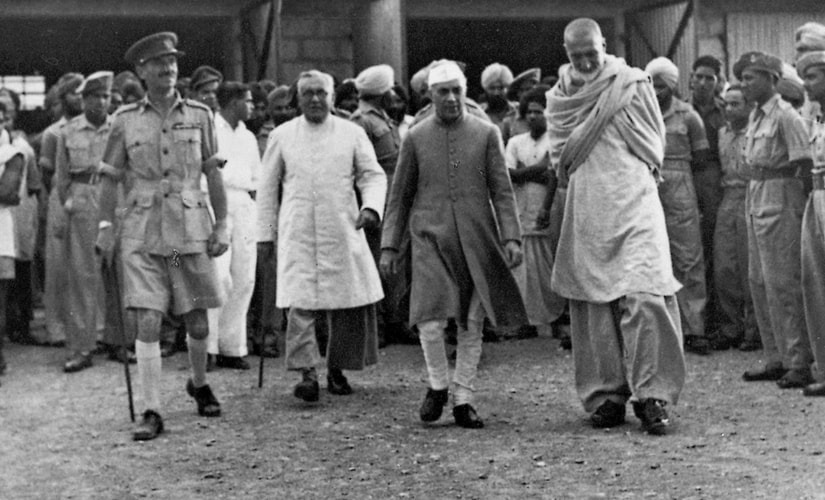 |
| Khan Abdul Ghaffar Khan with Jawaharlal Nehru when the Indian prime minister visited NWFP in 1946. Image courtesy: Bacha Khan Markaz |
The communal tussle, which forced mass migration and killing of innumerable people on both sides of Wagah and Atari, is a part of the shared history of Pakistan and India. The new generation of Pakistanis consider Partition and the consequent violence as a bleak chapter of human history. However, for the Pashtun-dominated North West Frontier Province (NWFP), now part of Khyber Pakhtunkhwa (KP) province, the history of violence is something they will not forget for a long time to come.
In 1947, the region, neglected by the British, was caught in the power tussle between India and Pakistan, and the Khudai Khidmatgars support for United India left them desolate; on the right side of history but on the wrong side of both Indian and Pakistani governments.
The Khudai Khidmatgars led by Khan (also known locally as Bacha Khan), were always staunch supporters of United India and opposed Lord Mountbatten's plan for a Hindu majority India and a Muslim majority Pakistan.
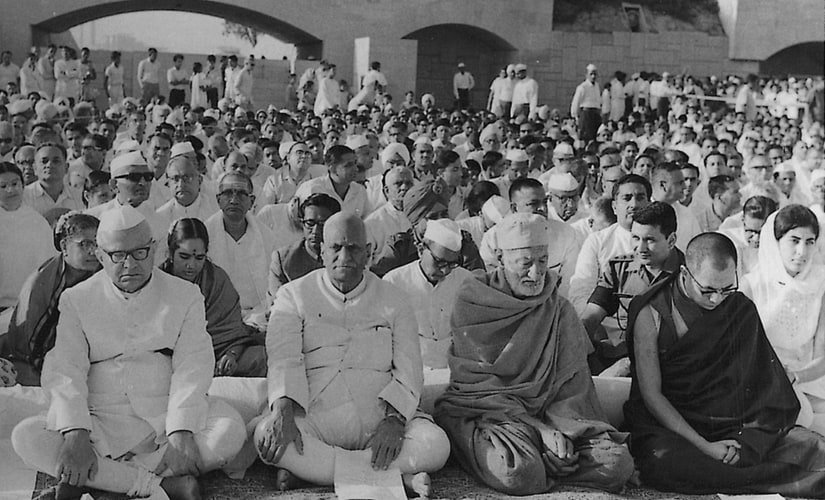 |
| Khan Abdul Ghaffar Khan observing Mahatma Gandhi's 100 years at New Delhi in 1969. Image courtesy: Bacha Khan Markaz |
In 1937, Khudai Khidmatgars won the election and later in 1946, a year before Pakistan came into being, the party of anti-Partition Khudai Khidmatgars again won with an absolute majority.
But before the official announcement of Pakistan or Partition, the Muslim League started to topple the elected government of Khudai Khidmatgars including using undemocratic ways.
The position of the Muslim League was that since the Khudai Khidmatgars, represented by Bacha Khan, then chief minister of the province, didn’t attend the flag-hoisting ceremony of the newly formed state of Pakistan on 14 August, 1947, their loyalties to the nascent country of Pakistan were questionable. This was also the reason why the Pakistan government sacked the provincial government of Bacha Khan.
On 10 August, 1947, Mountbatten wrote to Liaquat Ali Khan, “I am instructed by the Secretary of State that dismissing Dr Khan’s government will be undemocratic and unconstitutional”.
For harsher critics of what came next, it was the beginning of “horse trading” and unconstitutional decisions in Pakistan during Jinnah’s life. It is claimed that the new government of Pakistan sacked an elected provincial government. Further, it is said, the process was spearheaded by one of Jinnah’s important leaders, Qayyum Khan, in a ruthless manner. It must be noted that until at least 1945, Qayyum Khan himself was part of the Khudai Khidmatgar movement, and even dedicated his lone book (Gold and Guns on the Frontier) to Khan in 1944; he banned in later after becoming he replaced Bacha Khan as the chief minister of the province. It made the non-violent followers of Khudai Khidmatgar (street workers) furious but they did not resort to violence.
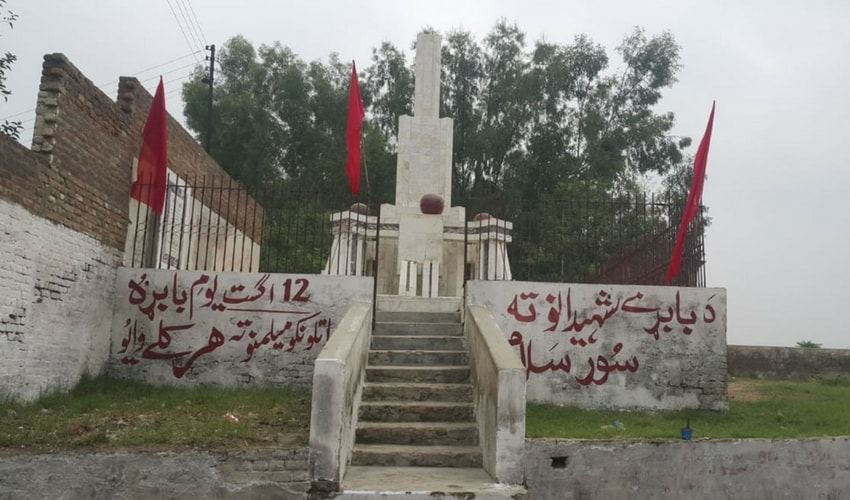 |
| Ghazi gul mosque from where indiscriminate firing was done on Khudai Khidmatgar protesters on 12 August, 1947. Image courtesy Abdur Rauf Yousafzai |
The Khudai Khidmatgars passed four resolutions where they asked the government to provide details of the amount and receipt that Bacha Khan had given to separatist Faqir of Ipi, and that if the charges were proven they would separate from him, while also demanding fresh elections in the country.
The State organs were against the protest and the provincial government deployed paramilitary forces and police in the area. They even set their guns and other heavy weapons on different buildings of Babrra village. The Khudai Khidmatgars workers also started to gather on the specific ground.
On 12 August, 1948, a Khudai Khidmatgar worker, Speen Malang led a protest in Charsadda district of NWFP. As Malang marched holding high a red flag along with other protesters, indiscriminate firing began from the top of Ghazi Gul mosque. Malang fell, but the firing continued killing more than 600 Pashtuns both young and old and injuring over 1,200.
When both Pakistan and India were busy preparing for their first Independence Day celebrations, the Pashtun region of Pakistan was mourning the death of their loved ones.
“You have thrown us to the wolves,” the historical sentence of Bacha Khan after Congress led by Jawaharlal Nehru voted in support of Lord Mountbatten's plan for Partition, echoed in the surrounding hills that day. No reconciliation took place, unfortunately, and the effects are felt till today.
Muhammad Tahir, a fourth-grade student at the time of the massacre, narrated the tragedy to this scribe in his own words. “We were at the school playground when we heard gunfire and thundering of heavy weapons. The teachers rushed us into classrooms,” 83-year-old Tahir said.
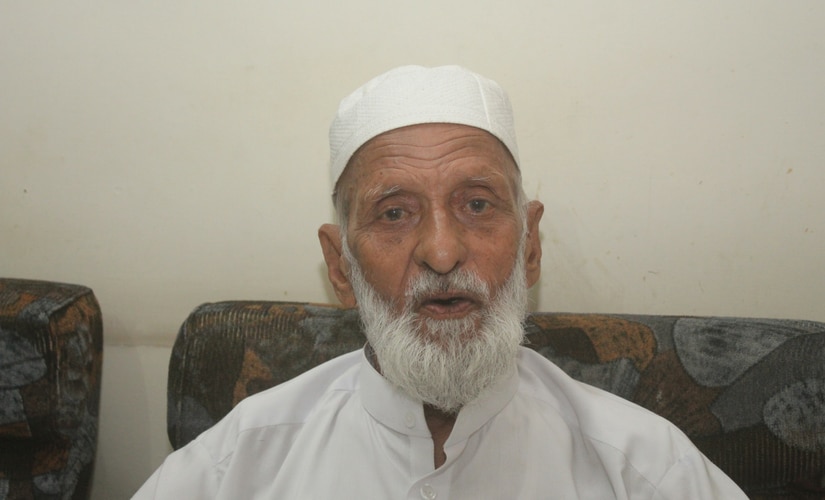 |
| Muhammad Tahir, a fourth-grade student at the time of the massacre, narrated the tragedy to this scribe in his own words. Image courtesy Abdur Rauf Yousafzai |
The firing had taken enough time leaving everyone terrified and unaware of the outside situation, Tahir recalled. He couldn’t remember the total time the firing lasted, as the shots ceased and everyone rushed towards their homes.
After the massacre
“The main door and other room doors were open, I shouted and cried when I saw no one was inside,” Tahir said. Then Tahir ran towards the incident ground where he saw his mother tearing her shawl and bandaging the injured to stop the bleeding. Calling it doomsday, Tahir said wives, sisters, and mothers were wailing, crying and shouting on the 12 August, 1948, "the ugliest day in Pakistan’s history".
Muflis Durrani's father was a tehsildar during the British rule but he left the illustrious job and started teaching at Azad School, which was formed by Khudai Khidmatgars, and became a freedom fighter. Durrani was also studying in a nearby school. At the time of Babrra Massacre, Durrani was inside the school building. When they visited the spot after the firing had stopped, all they saw were bodies and injured persons lying everywhere, said Durrani.
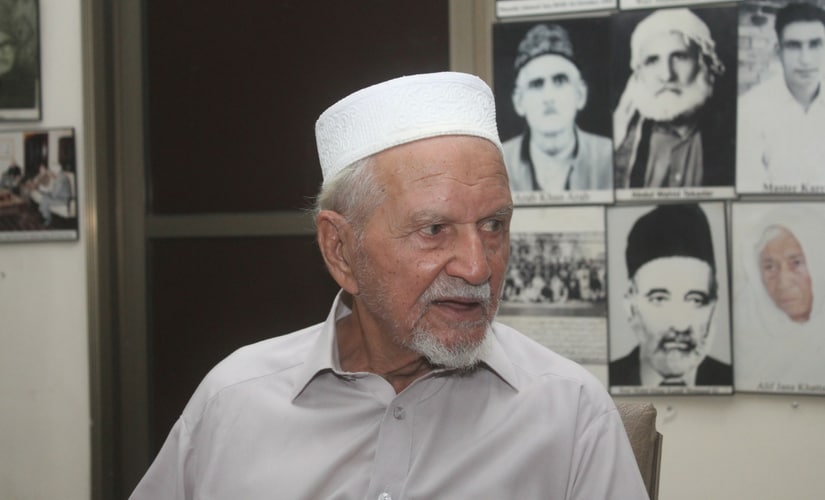 |
| Muflis Durrani's father was a tehsildar during the British rule but he left the illustrious job and started teaching at Azad School, which was formed by Khudai Khidmatgars, and became a freedom fighter. Image courtesy Abdur Rauf Yousafzai |
British atrocities against Pashtuns had continued even after the formation of the State of Pakistan, Durrani informed. After the shooting, most of the bodies were taken away and thrown into the river, he revealed, explaining why most families couldn’t bury their near and dear ones.
Chairman of Pashto Department at Abdul Wali Khan University, professor Sohail Khan, during his research work, met with some of the victim's families. Sohail recounts meeting Jaypur, 83, at Nowshera district's Mohib Banda village. Jaypur's father Surrendar was a staunch supporter of Khudai Khidmatgars. He was part of the protest and never returned home. Surrendar's body could not be found, like many others, and his death left the family in dire financial straits. For many months, Jaypur visited hospitals and graveyards but couldn't find his father's body.
In Charsadda district's Prang village, 70-year-old Murad Kaka’s father Sultan Khan was among the protestors. "We were waiting for father in our mud kitchen late in the night. As the disturbing news of shooting came from Babrra, I vaguely recall my mother and grandmother wearing tense faces as father arrived at midnight. My grandmother was very angry at him when my father said that I was busy digging graves and buried more than one person in each grave," Murad Kaka said.
Sohail said that the Qayyum Administration was charging Rs 50 per grave. He added that the government had also collected the expenses for this operation, and even the bullets, from Khudai Khidmatgars workers.
"The Babrra Masssacre was the result of British policy against Red Shirts," Aimal Wali great-grandson of Bacha Khan said.
"They still stigmatise, bomb with suicide bombers and kill us but we remain determined," he said firmly.
"Bacha Khan has prepared a force of non-violent red shirts who don’t have a breaking point, don’t step back, and don’t surrender," said Aimal recalling his great-grandfather's teachings.
Sohail sheds light on the reasons behind the Babrra Massacre, “The Pakistani state was created in the name of Islamic welfare and democratic state, it wasn’t in favour of selfish politicians, feudal and generals so they introduced a narrative that Pakistan was in the danger of diverting its attention from its problems and promises. That’s why the state's baseless narrative has never been challenged and if anyone does, he/she is labelled a traitor."
The professor says that it's hypocritical how in Pakistan's history books, Jallianwala Bagh massacre is widely publicised but the Babrra tragedy is not even mentioned since the State was involved.
The Indian National Congress, and particularly Nehru and Sardar Vallabhbhai Patel's relations with Bacha Khan didn’t remain loyal till the end. Sohail says that because of their bewafai Khudai Khidmatgars faced severe consequences and are still facing it.
It was another day of mourning when Bacha Khan, freed from jail, stood at the site of the massacre with people asking him to take revenge. However, Bacha Khan told Khudai Khitmatgars' workers that all those who want violence should leave him as he has pledged non-violence till his last breath and won’t deviate from it.
The Babrra Massacre was never investigated independently, which is why officially the Babrra incident lies under layers of dust even though the Awami National Party (ANP) formed by Bacha Khan and his followers demand a free and transparent inquiry of the bloody incident.
The current editor of Pakhtoon Magazine, which was founded by Bacha Khan in 1928, Hayat Roghani arranges theatre every year to tell the young generations about the sacrifices of Khudai Khidmatgars and state cruelty.
“Unfortunately Pashtun freedom fighters are labelled as traitors by the State of Pakistan and that’s why Bacha Khan spent 17 years in prison after Partition (he had already spent over 14 years in jail before that),” says Roghani.
"Bacha Khan is also deliberately kept out of Pakistani textbooks, but we tell to our young Pashtun that he and his Khudai Khidmatgars are heroes and champion freedom fighters," Roghani added.
Every year, a monument is built at the same spot to keep the history alive and pay tribute to those killed in the massacre. The party workers gather at the famous Ghazi Gul mosque, from where the security forces fired at the protesters and recall the sacrifices for democratic rights and supremacy of the Constitution.
Party general secretary Mian Iftikhar said that for Pashtun, the Babrra massacre is not over yet, as they lost more than 800 workers including the top leaders in a long war against militants and even now in the recent two elections they were not provided a level-playing field.
Chairman of Pashto Department at Abdul Wali Khan University, professor Sohail Khan, during his research work, met with some of the victim's families. Sohail recounts meeting Jaypur, 83, at Nowshera district's Mohib Banda village. Jaypur's father Surrendar was a staunch supporter of Khudai Khidmatgars. He was part of the protest and never returned home. Surrendar's body could not be found, like many others, and his death left the family in dire financial straits. For many months, Jaypur visited hospitals and graveyards but couldn't find his father's body.
In Charsadda district's Prang village, 70-year-old Murad Kaka’s father Sultan Khan was among the protestors. "We were waiting for father in our mud kitchen late in the night. As the disturbing news of shooting came from Babrra, I vaguely recall my mother and grandmother wearing tense faces as father arrived at midnight. My grandmother was very angry at him when my father said that I was busy digging graves and buried more than one person in each grave," Murad Kaka said.
Sohail said that the Qayyum Administration was charging Rs 50 per grave. He added that the government had also collected the expenses for this operation, and even the bullets, from Khudai Khidmatgars workers.
"The Babrra Masssacre was the result of British policy against Red Shirts," Aimal Wali great-grandson of Bacha Khan said.
"They still stigmatise, bomb with suicide bombers and kill us but we remain determined," he said firmly.
"Bacha Khan has prepared a force of non-violent red shirts who don’t have a breaking point, don’t step back, and don’t surrender," said Aimal recalling his great-grandfather's teachings.
Sohail sheds light on the reasons behind the Babrra Massacre, “The Pakistani state was created in the name of Islamic welfare and democratic state, it wasn’t in favour of selfish politicians, feudal and generals so they introduced a narrative that Pakistan was in the danger of diverting its attention from its problems and promises. That’s why the state's baseless narrative has never been challenged and if anyone does, he/she is labelled a traitor."
The professor says that it's hypocritical how in Pakistan's history books, Jallianwala Bagh massacre is widely publicised but the Babrra tragedy is not even mentioned since the State was involved.
The Indian National Congress, and particularly Nehru and Sardar Vallabhbhai Patel's relations with Bacha Khan didn’t remain loyal till the end. Sohail says that because of their bewafai Khudai Khidmatgars faced severe consequences and are still facing it.
It was another day of mourning when Bacha Khan, freed from jail, stood at the site of the massacre with people asking him to take revenge. However, Bacha Khan told Khudai Khitmatgars' workers that all those who want violence should leave him as he has pledged non-violence till his last breath and won’t deviate from it.
The Babrra Massacre was never investigated independently, which is why officially the Babrra incident lies under layers of dust even though the Awami National Party (ANP) formed by Bacha Khan and his followers demand a free and transparent inquiry of the bloody incident.
The current editor of Pakhtoon Magazine, which was founded by Bacha Khan in 1928, Hayat Roghani arranges theatre every year to tell the young generations about the sacrifices of Khudai Khidmatgars and state cruelty.
“Unfortunately Pashtun freedom fighters are labelled as traitors by the State of Pakistan and that’s why Bacha Khan spent 17 years in prison after Partition (he had already spent over 14 years in jail before that),” says Roghani.
"Bacha Khan is also deliberately kept out of Pakistani textbooks, but we tell to our young Pashtun that he and his Khudai Khidmatgars are heroes and champion freedom fighters," Roghani added.
Every year, a monument is built at the same spot to keep the history alive and pay tribute to those killed in the massacre. The party workers gather at the famous Ghazi Gul mosque, from where the security forces fired at the protesters and recall the sacrifices for democratic rights and supremacy of the Constitution.
Party general secretary Mian Iftikhar said that for Pashtun, the Babrra massacre is not over yet, as they lost more than 800 workers including the top leaders in a long war against militants and even now in the recent two elections they were not provided a level-playing field.


