Showing posts with label War on Terror. Show all posts

Friday, March 2, 2018

How I, a Punjabi, was brainwashed with anti-Pashtun bigotry. And how I unlearnt it

When's Pakistan was being made  in 1947 , there was no Muslim League Sir  jinah or Sir Allama iqbal known in Pashton lands or  having any real power in the elected Leadership of Pashtons. Lands , or any power in elected Assemblies over then till 1947 .

Muslim league was non existent here in elected Assemblies but was represented by a few bureaucrats and servants of British like some Sahbizadas , Khan Bhudurs and Arababs etc title holders of British like Sahbizada Abdul Qayum a Qadiani of Topi Swabi or some Mullahs on pay role of British in Jameet ulema hind some Deobandi agents of British.

The only representation Muslim league had was , maybe less than 6  seats in both provinces  of Pakhtunkhwa and Baluchistan which was one and same  at that time. As name Baluchistan name did not come till 1971 when new constitution of Pakistan was made by Zulfiqar Ali Bhutto  ......

Out of hundreds of elected Pashtons in Pakhtunkhwa Assembly and Baluchistan Assmbly called state of Kalat at that time in 1947 which ,was Nationalist and reformist party of  Awami national Party of Bacha Khan, Khan Abdul Ghafar Khan is forgotten and not mentioned in text books of Pakistan but history is not taught in Pakistan but a fed lies in as Pakistan Studies ..

Muslim league that were never Voted by Pashtons and balauchis  in 1947 ,  in fact the elected Asemblies of Baluchistan was bombed with Artillery by Pakistan Army and Air force in 1947 -48 , Air force  was used to destroy the session of parliament ,when we are gifting Kashmir our human rights were being trampled.
The Pakhtunkhwa elected Asembly was discharged with out any reason in dictatorial manner by Sir jinnah in 1947 being a non elected head of newly formed Pakistan in partner ship with British was discharging and sending home elected leaders of Pashtons in Pakhtunkhwa and Baluchistan . FATA people were directly under bureaucrats as slaves in 1947 till today .

As it was British who put all the Congress people in jail and jinnah and Muslim leaguers  never went to jail and was allotted British titles as a loyalist and kept as loyal servants to British   .

We Pashtons joined Pakistan  because of our own will and for love of  Islam as we did not wanted India which was far away and not geographically joined with us with Pakistan in.between .

Afghanistan was not even  offered as a choice , by the British conducting referendum we did not love or like sir  jinnah or  sir iqbal  wearing British dresses and looked more of a Kala sahib replacing a white Gora sahib a British agent than a leader who was  working for Islam .

But we were already a  free Nation at times of partition in 1947 but we did a grave mistake in that referendum by believing in Punjabis and their leaders and we are still paying for our mistake every day every hour to this day .

We should have not  belived in Religion but should have gone for Pashton Nationalism and we did a foolish mistake that reminds us every day that why we are prejudiced and hated because of that mistake in believing in Islam .

75 years have passed but we are never Accepted as Real Pakistani by Punjabis  . We face  bias and Racism and   inequality as We don't have  a fair constitution of Pakistan over us for more than half of our Pashton population and Pashton areas .

We are treated by a special Draconian and degrading and insulting laws call FCR frontier crimes regulation a set of 40 laws made by Lord curzon viceroy of Britain in 1800 ,a , these same laws at applied by Kala sahib Punjabis  to this day on Pashtons

We gave 100 percent Kashmir as a gift  to Pakistan in 1947 and kept All of Kashmir for Pakistan  up to 1949 for Pakistan and Indian a
Army was shamed and defeated by us  , 

But the Punjabis shamelessly ,   later gave  60 % of Kahmir was given back to India  by Punjabi leader Mr Laiqat Ali  to India without a single shot being fired as a gift in 1949 what we call Indian occupied Kashmir now or IOK and that gift is with India to this day.

The shame continues ,  even today the Pakistan Army cannot take IOK ,  back to Pakistan from India ,  with its atomic power , and being 4th  largest and strongest Army in the world  , it has lost all the wars it fought over Kashmir in 1965, 71, Kargil and also war on terror it cannot be victorious but a looser Army  vet it celebrates all it as victories as defence day when it lost all th wars and it would never celebrates the 1947 war which we won and got Kashmir for Pakistan .

it supports terrorists like  Punjabi Taliban Lashkar toiba or jhangavi , over Kashmir and Afghanistan but they are killers and terrorists  loosers who cannot do thier job as We did for Pakistan as Pashtons

All Pashtons , who did not all go to war in Afghanistan and Kashmir if we all go together  the world will be at our feet as promised by God as Bani Israel when we were evicted from Israel by orders of God . But he promised any land we out our feet on and it stands true to this as it will of God .

We saved Pakistan from USSR , and we fought  alongside , Arab Jihadists and Islamist who were brought on our lands as guests  by the same Punjabis who did not offer Punjab to there foreign guests and was out of bound for Arabs and Afghans. So much for Pan Islamism bull shit ...

Punjabis  asked us to forget ourselves and become Muslims or Bedoos Nation  and promoted Pan Arabian Islamism philosophy cunningly which does not exist as we are not even considered as brother by the same gulf countries and Arabs counties and concept of Islamic brother hood  lies only in books not in reality and in world today.

Pashton are only fools who believe in Pan Islamism bull shit  even the Punjabis don't believe in it when it comes to Pashtons and Balauchis ..as Punjabis  running the country we are never Muslims in Pakistan when treated by Punjabis.

We did fight for Pakistan as after Afghanistan it was Pakistan they wanted and our lands of Pashtons were there , then Arab countries and it's oil and warm waters oil fields was the  ultimate target. We saved the Pakistan Arabs  and the Punjabis brothers and sisters with our blood and usa too from Soviets and communsim.

Pashtons destroyed Soviet union and we liberated the Europe from Iron curtain fell because of us as the  Berlin Wall and it became one United Europeans union because of us and it was no more Soviets and communists in the world because of us Pashtons .

Punjabis was saved from Soviets and Europe liberated  was made one and United with more than 3 dozen counties made as one United Europe , the  Berlin wall fell and people were United in Europe with lost families and relatives .  Americans were saved from global super power Soviet union with its Atomic weapons .

Arabs  progressed  peacefully and they made tall buildings envy of the world with our the Russians , and great progress  was made in GCC in  Dubai Saudia,  as we saved them  and what we got ? Nothing but disability deaths and poverty and we were left tp collect the garbage for Punjabis with donkey carts and drivers of transport  and security guards and boot polisher cobblers of Punjabis and Arabs in Gulf countries.

The American and the  world celebrated and Arabs who paid dollars for dollar with Americans , became victors  Liberators and heroes with Americans as their partners celebrating  and they were never called terrorists or called bad names neither was the Punjabis .. Punjabis were called brothers Allies of USA  and partners in NATO ...

.. Only The Punjabis and it's ISI declared themselves  as  victors and only Heroes victorious over Sovietes getting all the glory from us and forgetting us Pashtons  in celebrations .

We Pashtons were left in poverty neglect by all of them including Pakistani Punjabis , who started fearing us and despising and hating us as a Dog and called us Terrorists and criminals.

We were hated by Punjabis , Arabs and American and Europeans for whom we sacrificed so much even we are not involved in 9/11 or any European terrorism .

We would loose our Homes ,families brothers and sisters our lands , our business and our honour for being a patriotic Pakistani .

It's is said Give a Dog a Bad Name and Kill it and we were , exactly treated like that , worse then dogs from 1947 to now , no mention exists in Paki media or history  of our Kashmir victories and 1947 -49 was and it's  liberation in Pakistan ,

No mentions of history of Pakistan Studies of our defeat of Soviet union and  fall  of communism or the liberation of Europe because of Pashtons

Or our sacrifices then and now on fake war on terror , which is nothing but war on Pakhtons ,  we are bad Dogs and that has to be killed , hated and despised .

We become IDPs on our lands and we have become the largest on Earth or universe displaced Pashtons as IDP  and out of their homes....

and yet when Pakistan budget is passed we are given not a single extra  Rupee by Punjabis  as measure as token of sympathy or empathy or  appreciation ,.recently in latest government of PTI , that is a party made by Punjabis for the punjabi  establishment under Punjabi domiciled imme Taliban  Khan ,

half of Budget of Pakhtunkhwa was lapsed in amount of 100 Billion rupees out of 200 billion  that was given back to Punjabis as a gift by Punjabi imme Taliban  Khan Sahib back to  federation run by Punjabis and it's establishment as a policy .

PTI criminals Punjabi establishment backed right wing parties , to cover that 100 Billion deficit ,  PTI took loans that have to be paid back with huge interest  from IMF and world bank's , resulting in more taxes and poverty on just Pashtons but not on Punjabis ,

burdening  a province that is active in war , and destruction ,  being destroyed every day and blown up , this is what you get as token of appreciation.

There is no money for us but a lot of money for Army Basses on our lands snatched from Pashtons ,  who were not ready to sell and who resisted were either made Disappeared missing Persons or declared  terrorists and killed in fake police encounters

Pakistani media controlled by Punjabi establishment  looked the other way conveniently as it serves as the prostitute to the establishment as people say , it cares shit about humanity or human rights or even citizens of Pakistan as We are sometimes called by mistake .

Most of terrorists even if there are actually are Pashtons who are one as Gul Khans , who  follow the Punjabi mullahs like that of Raiwind , Mansoora and Wafiq ul madarissahs all run by Punjabi mullahs of Takht I Lahore as we call the Punjabis establishment , and Loyal puri faislabadis  ,

Terrorists Punjabi establishment  lashkars toiba lahoris or jhangavi loyal puris faisalabadi  Punjabis , are all translations of Pakistan Army as  Lashkar toiba in Arabic is translated as Pakistan Army ,

Pashtons are all misled by Punjabis mullahs with connections with Punjabis establishment , led by them to kill our own blood and Pashtons  in Af-pak area of Pakhtunkhwa , fata and Baluchistan on this side of durrand line and over other side of durrand line we kill in Pashton dominated area Afghanis for the love of Pakistan and punjabi who treat us like dogs and shit .

Half of our nation has its ID cards and Pakistani nationality blocked and we are not even considered Pakistani , and other half has had no rights since 1947 , as there is no constitution on half of our people in 7 FATA and PATA  divisions / Agencies ( total 14)  and another 6 FR areas / Districts are not even counted as citizens of Pakistan and under Article 247 , we are not entitled to Pakistani constitution at all , neither any of its human or basic rights of objective resolution allows to that half of our population at all .

Yet we are supposed to call ourselves as Pakistani and have to prove our loyality and face the bias and racism and hate of punjabi establishment ,

Same terrorists are supported by the Punjabis establishment and they have become rich riding in 20 million Land cruisers each and all of them and we real citizen of Pakistan are Facing the brunt of Racism and bias and hate , loosing our Homes and lands and our families and everything we have for what ?? For nothing

Punjabi establishment has decided that they will use the brutal methods against us Pashtons  they want to make a another division between Pakhtons and Afghanistan like  Wahga in Torkham where they Punjabis army men would show the under wears to Afghanis , when they raise their feet to sky ...........as they show to Indians at Wahaga each day at Sunset by Marching and raising their feet to the sky in a comical ceremony that has become a media spectacle .

The syllabus of Punjabis in schools is full of Hate of Pashtons. And we are traitors in books taught to children in Punjab . And they are not just books but official Text books ..

Have after 75 years Will never go away and will remains and no efforts is under way to rectify it even when we saved the Punjabis in 1965 , 71 , Kargil and in words of a Khan who gave Atomic power to Pakistan Abdul Qadir khan , "" I am not treated like equal Pakistani like the punjabis """, he was disgraced by the Punjabis establishment recently for sacrificing his life for, making us strong after humiliating defeat in 1971 war and making Pakistan Atomic power.

He said in one of his Article , that Punjabis are thinking of Enslaving Afghanistan and Pashtons as Fifth Province and dreaming about it and forgetting Alexander , Changez Khan , Romans , British , Rusians and now the Americans who lost in.Humiliation to Pashtons  , Punjabis and it's establishment may be next on the list soon as things are going .

Here is a letter of Punjabis to Pashtons , in all its sincerity , hats off to him or her who did not publish name .

Dear Pashtuns,

I am a Punjabi who has been living in the capital of Punjab for almost four years. I am studying both politics and sociology simultaneously at the University of Punjab, Lahore. I know very little about your culture and political beliefs but, for sure, I know more than any ordinary Punjabi . I am sharing my educational background and familiarity with your culture and politics to demonstrate one very important thing which I am intending to discuss in this piece: politics and social philosophy of life. 

We know your loyalty is beyond any doubt, your dedication, passion, and commitment with your assigned goals do not need any certification. And your sense of self-esteem is probably the thing the whole Pakistan is proud of.

You did a lot for Pakistan, for Afghanistan, for Saudi Arabia, for America and for the whole world. But in return you got blood, pain and a bad-name. Hold on… this is not what God has done with you. This is what humans, your so-called brothers, did with you.

There was a time when Quaid-e-Azam Muhammad Ali Jinnah, the father of the nation, trusted you and gave you both respect and responsibility. And what you returned us was probably something our strongest army wouldn't be able to give us. I, like the father of the nation, feel proud of you. 

But since 1980s you were used, misused, exploited, maimed, beheaded, murdered and ultimately declared as the biggest terrorists of the world. All this happened when you were fighting a ‘holy war’ for the capitalist America to defeat the atheistic Soviet Union under the leadership of Zia and his Saudi brothers. Americans gave dollars, Saudis surfaced ideological grounds, and Zia being a strategist devised murderous strategies to fight this war. As a result, the Soviets were white-washed, America came out as the sole superpower of the world, Zia went away to meet his awaiting- seventy two virgins and Saudis  joined Americans to celebrate their victory. 

You remember you were ‘jihadists’. You were ‘ghazis’. You were brothers of Zia. But you were so as long as there was war. At the end of the war you were zombies, terrorists, and the biggest enemies of peace of the world.

This is a sad story. This is a bitter past which dominates the bloody present. This is what your brothers did with you.  

The important question remains: who got what from this war? Both Pakistan and Afghanistan are paying the heaviest price of their bravery and love for their brothers and friends. A harsh reality of the day! 

This is what happened in history. I can’t change it. Nor can you or anyone else. We have to accept it. 

Let’s talk about other things. Why do we, Punjabis, not regard you as trustworthy friends? There is a reason behind this mistrust and awkwardness. I still remember when I was a child I used to go out almost all the time. My mother used to assert: ‘Do not go out. There are Pathans in town and they will take you with them.’ And believe me I used to be very scared of you whenever I heard about your presence. 

Then I came to Lahore and here what I initially learnt was so scary: “Pathans are dirty. They love ‘naswar’, smoke, and eat tasteless food and follow stupid things. Girls don’t like them. Most of them are gay, so try to avoid them as much as you can.” This is what I learnt from my friends, their friends and from lay public. 

Unfortunately, when I formally joined my university I had a very bad image of the Pathan in my mind. I remember in my first ever class at the campus when I saw that there were some Pathans in my class I was just thinking so many bad things about them: abductors, heartless, homosexuals…

With all this I started reading with them and reluctantly interacted with them. I started finding things contrary to what I had learnt. They were more loving than Punjabis, more loyal than anyone else in my social circle, more intelligent, more outspoken and more concerned about Pakistan than us. This is what I learnt about Pashtuns in my own classroom and through my extensive interaction with them. 

Moreover, I read about you. I was interested to learn about your culture including marriage system, badal (the concept of revenge) and everything about Pakhtunwali. I found you people with a strong sense of identity in a Pakistan where everyone else is struggling with his/herself because of identity crisis.  

I was lucky to get a chance to stay at Peshawar University when I was selected as a participant of Third International Summer School. I ate your traditional foods and took the same tea. I love Afghani Pulao and want to visit again my friends, Sajid and Abid in Peshawar. 

The bottom line is, dear Pashtun friends, you have been stereotyped in a very bad manner in Pakistan. Who did it? I really don’t know. But I know it has been done so smartly that there must always be a dividing line in Pakistan between “us” and “them”.

Image Courtesy: Pakistan Today

The sadder part is that now terrorists are being profiled on racial basis and so many Punjabis believe Pashtuns are bad people; violent extremists. Our police is issuing notices and warning us to report if we see any Pathan selling tea in their traditional outlook. I am sad to read this notice. All this made me teary-eyed. 

I wrote this letter to convey my love, not any sympathy, because I know you people neither need nor like it. I am a Punjabi who believes you people are misrepresented, misread and misused. I am a Punjabi who urges you to come here and interact with common Punjabis and let them know what they believe is absolutely incorrect. Come here and teach these people how to love, what it means to be sincere, what it means to be Pakistani and most of all tell them what it means to be Pashtun .

God bless you!

Published in the Nation newspapers , on 27 Feb 2018. By a Punjabi who did not care to mention his or her name  -     https://nation.com.pk/27-Feb-2017/how-i-a-punjabi-was-brainwashed-with-anti-pashtun-bigotry-and-how-i-unlearnt-it

Sunday, February 1, 2015

Ashraf Ghani and the Pashtun Dilemma

Ashraf Ghani and the Pashtun Dilemma
Ashraf Ghani and the Pashtun Dilemma, If he is to succeed, Afghanistan’s president will need to come to grips with the country’s ethnic tensions. 
By Ali Reza Sarwar


With his impressive background, which includes a stint as a senior official at the World Bank and a ministerial post, Afghan President Ashraf Ghani would not appear to be short of qualifications for leadership. Yet, the president appears on course to be just another Afghan leader who is unable to rule the troubled country. When Ghani delivered his lofty inaugural speech on September 29, 2014, following a disputed election and power-sharing deal, expectations were high. The president made a strong argument in support of what he called the “triangle of stability” – economy, security and human resources – promising to restore Afghanistan’s valuable ancient geopolitical and economic position as the “crossroads of Asia.”

More than 100 days after taking the office, however, and Ghani is bogged down in a serious political crisis, one that draws a gloomy picture of the fragile unity government. He has only in the last few days been able to form a cabinet, leaving Afghanistan’s major public institutions, including ministries, independent departments, and commissions without leaders for months. A recent survey conducted by Afghanistan’s popular private TOLO TV and an independent civil society, shows that Ghani’s popularity has fallen dramatically, with only 27.5 percent of respondents satisfied with his leadership. With insecurity and political uncertainty looming, a number of parliamentarians have asked for Ghani’s impeachment for “treason,” blaming him for Afghanistan’s current state of disarray.

What has gone wrong? Why is this impressively credentialed leader unable to fix Afghanistan? Traditionally, Afghanistan’s woes have been blamed on crippling corruption, weak governance, dismal economic conditions, and worsening security coupled with foreign intervention. While these are certainly painful realities, the root cause of political crisis lies in ethnic politics and the breakdown of consensus among diverse ethnicities in regard to the persistent Pashtun dilemma.

The Pashtun Dilemma

Constituting around 40 percent of the population, Pashtuns are the largest ethnic group in Afghanistan and are on the front lines of the war on terrorism, both as perpetrators and victims. The Taliban that is behind the bulk of the brutal militancy both in Afghanistan and Pakistan are mainly Pashtuns and derive their support from strongholds in tribal areas across Afghanistan and Pakistan’s borders. The mainstream Pashtun intelligentsia in both countries have been mostly uncertain over whether to sympathize with the Taliban as a nationalist movement seeking to restore traditional Pashtun dominance in Afghan politics and to some extent in Pakistan, or to condemn them as an extremist and externally infiltrated militancy that have dragged Pashtuns into an asymmetric confrontations with the U.S.-led coalition at a massive cost in human life.

Despite the Taliban’s indiscriminate attacks on Pashtun areas, including the last year’s suicide bombing in a market in Paktika province that killed 89 people, some leading Pashtun thinkers support the Taliban as a nationalist movement that could restore Pashtun dominance in Afghanistan, which they believe declined following the fall of the Afghan monarchy in 1973 and the following decades of the Soviet invasion and civil wars. For instance, in his article, the decline of Pashtuns in Afghanistan, Anwar Ul-Haq Ahady, a former finance and commerce minister under Karzai and an influential Pashtun thinker, believes that the decline of Pashtuns in Afghanistan after the fall of Najibullah in 1992, was “more significant than the fall of communism. The rise of the Taliban generated optimism among the Pashtuns about the reversal of their decline.”

The view that the Taliban could serve as a powerful Pashtun nationalist movement with the ability to reverse the post-Taliban inter-ethnic relations and political landscape of Afghanistan remained largely visible in during the administration of President Hamid Karzai. Karzai was frequently criticized by the opposition for his lenience towards the Taliban, yet he continued to compromise and push for negotiation. For its part, the Taliban categorically rejected talks, humiliating Karzai as a “puppet and unauthorized” to negotiate. At the grassroots level, particularly in non-Pashtun circles, there has been a difficult debate over whether Karzai would have been as willing to compromise if the Taliban had been a non-Pashtun movement.

Ghani’s Test of Leadership 

Ghani, a Pashtun himself, already seems incapacitated by the Pashtun factor. If he is to get to grips with the problem, he will need to address several important issues.

First, it should be realized that the war on terror is being fought mainly in Pashtun areas of Afghanistan and Pakistan, and this reality constrains the political status of Pashtun in both countries. To overcome this, Pashtun leaders and intelligentsia, including Ghani himself, need to draw a stark line between the Taliban as a radical movement linked to global terrorist networks, and the legitimate cause of Pashtuns for justice. Fail to do that and Pashtuns will only be more isolated in both Afghanistan and Pakistan, and forever in conflict with non-Pashtun groups and the international community. Breaking with the Taliban should also not be limited to the official level; the debate should move to the heart of Pashtun tribes and traditions that continue to provide the Taliban with sanctuaries and new recruits.

Second, the dynamics of ethnic relations and politics have fundamentally changed in Afghanistan and Pashtuns must face the reality that the time for a despotic monarchy or factional regime like that of the Taliban has passed. In the worst possible scenario, the collapse of Afghanistan’s fledgling democracy and unity government could lead to chaotic civil war, but it will not permit the emergence of a Pashtun-dominated government, just as it will not allow a government that excludes Pashtuns. Pashtuns will need to renegotiate their relationship with other ethnic groups in Afghanistan and this will inevitably mean giving up some of the privileges they enjoyed in earlier times.

Ghani could play a pivotal role in pushing this message among Pashtuns, but he seems to be replicating the failings of his predecessor. Like Karzai, Ghani is uncertain whether to consider the Taliban enemies or political dissidents. For the moment, he believes they are political opponents, a designation that would baffle many Pashtuns and all non-Pashtuns who have suffered under the Taliban’s violence. Ghani has been clear on his desire to reach a diplomatic settlement with Pakistan, and has also increased his contacts with nationalist Pashtun leaders in Pakistan. In fact, he recently hosted them in Kabul, a risky move that will have infuriated Pakistan’s government and intelligence agency given Pakistan’s long obsession with Pashtun nationalism.

Clearly, there will be no peace in Afghanistan, Pakistan, or the region without the genuine participation of Pashtuns. Yet Pashtuns’ failure to engage constructively with non-Pashtuns in a democratic process that rejects the Taliban will only lead to their isolation. Ghani is the one man who could achieve this engagement, and he will need to do so if he desires to escape the fate of other Afghan rulers.

Ali Reza Sarwar is a Fulbright Graduate Fellow at Texas A&M University, Bush School of Government and Public Service where he is completing a master’s degree in Intelligence and National Security. Reza graduated from the American University of Afghanistan (AUAF) where he was also in charge of the university’s enrollment management plan.

source: http://thediplomat.com/2015/01/ashraf-ghani-and-the-pashtun-dilemma/


Sunday, January 4, 2015

Peshawar School Massacre Suspiciously too Convenient Timing.

By Tahir Mehdi

Was Peshawar School  Massacre a Pre-Planned 9/11 like Event Needed by Pakistan after  Abolishment as Money was Drying up after, Kerry Lugar Bill finished in 2014 and it was extended on Request of General Raheel Sharif after his Visit  it received more then 30 Billion US Dollars in Last Decade Equaling 30,000 Billion  Pakistani rupees that was Mostly spend on Punjab and Punjabi Establishment in Shape of Arms and Ammunitions from China and USA . The timing of Peshawar School is too Convenient to be Ignored 

No Money from USA for Adventures in Mountains and Terrorist Like Taliban Made in Pakistan.  


Over 15 days have passed since the gruesome Peshawar carnage shook up the entire country. The atmosphere is still somber as a flurry of activity continues in government quarters.

So has the situation reached tipping point?

Do the authorities intend real, meaningful action or are they still looking to stage manage some mass catharsis and bid their time before returning to their old ways?

A slew of senior analysts remain skeptical, and they have good reason to be, given recent history.

Nevertheless, I for one shall not be carried away by past experiences and lose sight of new factors that suggest that Pakistan may have turned the corner. There is more at play than meets the eye.
US troops are going home and so is US money

When the US military campaign in Afghanistan came knocking at our door, the country was under a host of economic and military sanctions imposed by none other than the US itself.

The Pressler Amendment of 1985 had bound the US president to annually certify that a country receiving military or economic aid from US was not pursuing a nuclear program. For five years, President Regan and then President Bush (Senior) signed the certificate, up until the Soviets finally withdrew from Afghanistan.

The period 1983-1990 saw US military aid stand at an average of around half a billion dollars (in 2009 constant dollar).

But the Soviet withdrawal from Afghanistan in 1989 drew a rather abrupt drop scene of this decade long Pak-US military friendship.

Then in May 1998, Pakistan defied international pressure and went ahead with nuclear tests. President Clinton imposed further sanctions under Symington Amendment and Glenn Amendment.

When General Musharraf toppled the elected government in October 1999, US Congress invoked Section 508 of the Foreign Assistance Act prohibiting all aid to Pakistan; these were termed as ‘democracy sanctions’.

The US non-military aid to Pakistan for the period 1991-2001 averaged just $75 million per year, while the total military aid during the eleven year period was a paltry $7 million.

All of this changed in September 2001. President Bush (Junior) waived Pressler, Symington and Glenn Amendments and the US Congress voted to allow the President to waive ‘democracy sanctions’. This broke loose a flood of US money.

US military aid to Pakistan in the first year of the new war, 2002, was a staggering $1.74 billion. The non-military economic assistance that year was $937 million.

See Sixty years of US aid to Pakistan

The US has certainly not been the only donor. As shown in a report by Center for Global Development, the US financial assistance worth $ 1.3 billion was just 30 per cent of the gross Official Development Assistance (ODA) that flowed into Pakistan in 2011, totaling $4.15 billion.

See Aid to Pakistan by the Numbers

Assistance from US and allies to Pakistan has maintained a high level since then despite many challenges.

For a broad comparison, consider that Pakistan’s total current expenditure for 2010-11 was Rs 2,296 billion and out of this Defense Affairs and Services (not total military budget) was Rs 445 billion.

The Coalition Support Fund (which reimburses expenses incurred by US allies against the war on terrorism) for the year 2010 was $1.22 billion (in 2009 constant) or roughly Rs100 billion; in other words, over a fifth of military’s current expenditure. It has remained at this level for a good 13 year period. This is a long time to stay hooked on to something.

Bloomberg quotes Congressional Research Service claiming, the U.S. paid Pakistan $11 billion out of the Pentagon’s Coalition Support Fund budget as of 2013. Including other military and economic aid, the US has given Pakistan about $28 billion during the 12 years through 2014.

General Raheel Sharif got an extension in the Coalition Support Fund for 2015 worth $1 billion during his recent visit to the US. But by 2016, US will be completely out of its combat status in Afghanistan.

In November 2016, during the next US presidential elections, Democrats would like to take pride in having successfully concluded the longest war in US history.

So while budgetary supports and civilian aid from the US and others will continue, though at a reduced level, military aid will slide down sharply, if not dry up completely after 2015.

Pakistan needs to keep around 150,000 troops in North Waziristan until at least 2017.

The monster of terrorism looming large at the western border at the time when resources are shrinking is no good news.

The time to act has arrived as Pakistan’s military strategists can no longer (financially) afford to let matters linger on its western borders.

The Kerry-Lugar bill had tried to use the US aid as a lever to create a new civil-military balance in Pakistan in 2009. The brazen attempt to give the newly elected government supremacy over military affairs had annoyed the army and was effectively blunted as aid to both civilian and military continued unabated.

The new reality is that the aid pipelines are drying up, especially the ones that directly supplied our military. It is bound to create a new civil-military power equation.

The civil-military hostility of 1990s can at least partly be attributed to the sudden reduction in size of the budget pie. We are again facing a similar moment in our history.

The only way to sustain previous levels of allocations is to increase the size of the national budget. That can come through measures like expansion in tax base, foreign investments and the overall growth in GDP of the country.

Peace is a pre-requisite to growth and it is only possible if terrorism is uprooted and we embark on a new era of regional cooperation.
Pakistan cannot afford to lose China as a friend


The recent upsurge in terror acts is blamed on the Operation Zarb-e-Azb, which, despite its shortcomings, the world has come to recognise as a step forward in the fight against terrorism.

Two weeks before the launch of Zarb-e-Azb, (on June 15, 2014), General Raheel Sharif paid a visit to China, holding meetings with political and military leadership of the new global power.

Since then, there has been a crisscross of meetings between US, China, Afghanistan, Pakistan and India.

China has advised Pakistan to settle its disputes with India through talks. It has also exhorted ‘neighbours of Afghanistan’ to not meddle in its internal affairs. It has come out in support of the new government in Kabul and has signed economic cooperation agreements worth tens of billions of dollar with Afghanistan, Pakistan and India.

A new economy is emerging in the region, and China is a dominant player in it.

China and Pakistan have close cooperation in almost every sector of defense. According to SIPRI, during the five-year period 2009-13, Pakistan was the world’s third biggest importer of arms in the world (having a 5 per cent share in total international arms imports) and 54 per cent of Pakistan’s imports came from China.

Looking at it from the other side, China became the world’s fourth largest arms exporter during the same period and 47 per cent of its total exports were bought by Pakistan.

China has three main stakes in the region that are related to Pakistan.

One: it sees the militancy in Pakistan and Afghanistan as a source of unrest in its home province Xinjiang, and it has zero tolerance for religious extremism.

Islamic militancy in Pakistan and Afghanistan is a constant source of inspiration, if not support, for ethnic Uighurs of Xinjiang and a major irritant for Beijing.

Two: Xinjiang is important for China from more than one aspect. It has a fifth of that country’s oil reserves and its largest coal and natural gas reserves. It also serves as the distribution hub of the gas China imports from Central Asia.

Beijing has recently said it is investing $300 billion in the region and a good part of this is going in developing roads and railways that will link China with Europe and other regions. One important route shall pass through Pakistan and China wants its merchandise to flow on it, but is wary of religious extremism traveling back into its already troubled region.

See: China Invests in Region Rich in Oil, Coal and Also Strife

Three: China has stakes in the region’s economy. It already has a $3.5 billion copper mining contract at Mes Aynak near Kabul. China's appetite for mineral resources is insatiable.

Besides that, many of the Chinese investments in other countries of the region can materialise or optimise if there are no cross-country hindrances. This provides “once-in-a-lifetime opportunity to kick-start the two redundant economies of Pakistan and Afghanistan.”

Also read: Can China bring peace to Afghanistan?

Pakistan’s western allies have been exhorting it to ‘do more’ in the war against terrorism with frustratingly limited success. The pressure to walk the last mile now may not be coming from the wily West but from ‘all-weather friend’ China.

Given the ‘unreliability’ of the US, Pakistan is trying to diversify. Its recent overtures to Russia are part of this effort but these are unlikely to yield anything substantial given the uncertainties faced by that country’s economy especially in the face of the current slump in oil prices.

So Pakistan is left with China as the only reliable military partner – and it certainly cannot afford to lose or annoy her.


source : http://www.dawn.com/news/1153849/the-other-factors-reshaping-pakistans-war-on-terror

Monday, December 29, 2014

The War has Ended in Afghanistan


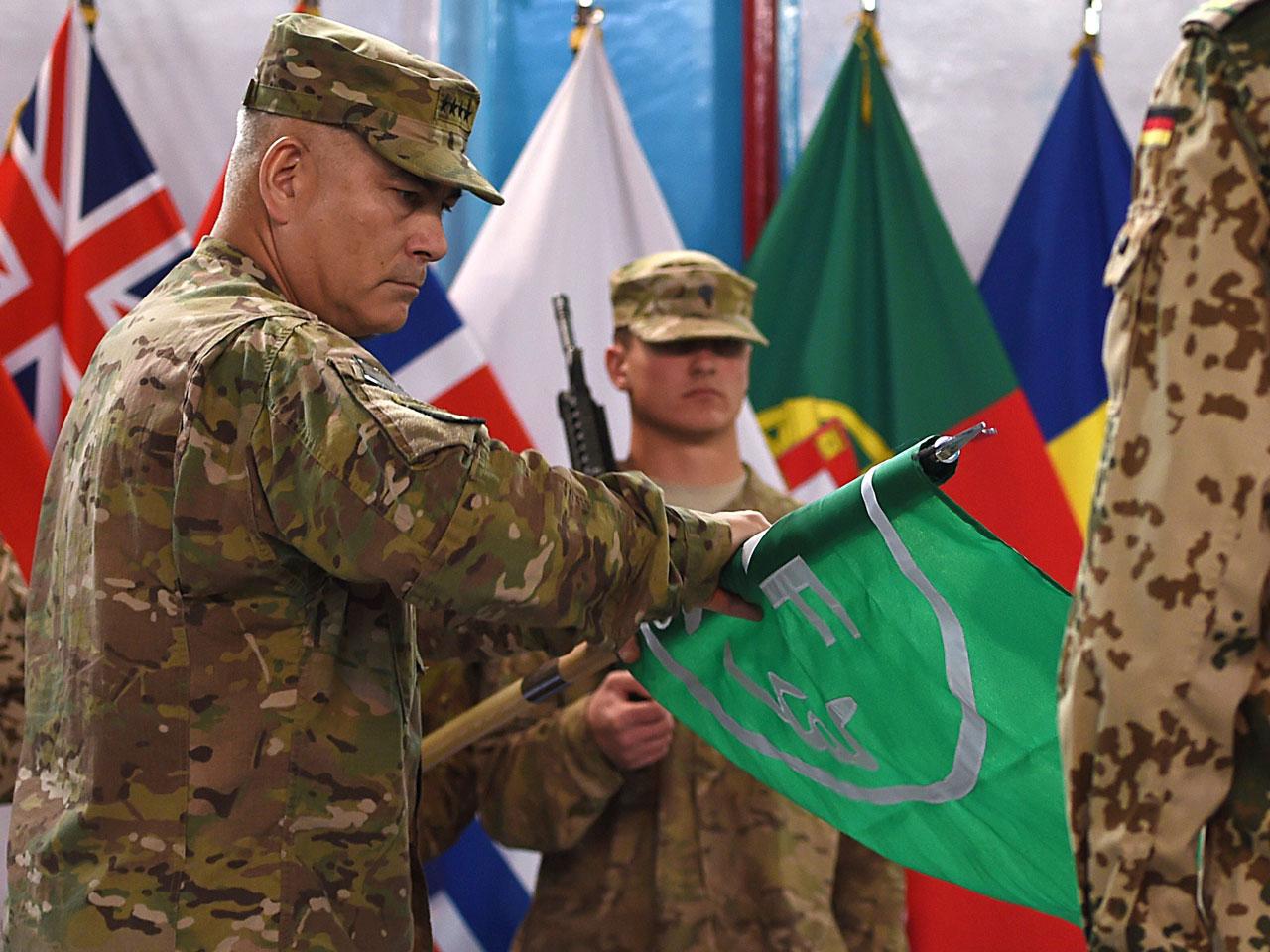
KABUL, Afghanistan - The United States and NATO formally ended their war in Afghanistan on Sunday with a ceremony at their military headquarters in Kabul as the insurgency they fought for 13 years remains as ferocious and deadly as at any time since the 2001 invasion that unseated the Taliban regime following the Sept. 11 attacks.


The symbolic ceremony marked the end of the U.S.-led International Security Assistance Force, which will transition to a supporting role with 13,500 soldiers, most of them American, starting Jan. 1.


Gen. John Campbell, commander of ISAF, rolled up and sheathed the green and white ISAF flag and unfurled the flag of the new international mission, called Resolute Support.


"Resolute Support will serve as the bedrock of an enduring partnership" between NATO and Afghanistan, Campbell told an audience of Afghan and international military officers and officials, as well as diplomats and journalists.


He paid tribute to the international and Afghan troops who have died fighting the insurgency, saying: "The road before us remains challenging but we will triumph."


From Jan. 1, the new mission will provide training and support for Afghanistan's military, with the U.S. accounting for almost 11,000 members of the residual force.


President Ashraf Ghani, who took office in September, signed bilateral security agreements with Washington and NATO allowing the enduring military presence. The move has led to a spike in violence as the Taliban have claimed it as an excuse to step up operations aimed at destabilizing his government.


Play VIDEO
The U.S. and NATO officially end combat mission in Afghanistan


ISAF was set up after the U.S.-led invasion as an umbrella for the coalition of around 50 nations that provided troops and took responsibility for security across the country.


It ends with 2,224 American soldiers killed, according to an AP tally, out of a total of some 3,500 foreign troop deaths.


The mission peaked at 140,000 troops in 2010 with a surge ordered by U.S. President Barack Obama to root the insurgents out of strategically important regions, notably in the southern provinces of Helmand and Kandahar, where the Taliban had its capital from 1996 to 2001.


Obama recently expanded the remit of the U.S. forces remaining in the country, allowing them to extend their counter-terrorism operations to Taliban, as well as al Qaeda, and to provide ground and air support for the Afghan forces when necessary for at least the next two years.


Afghans have mixed feelings about the drawdown of foreign troops, many believing that with the deteriorating security situation their presence is needed to back up the Afghan effort to bring peace after more than three decades of continual war.


"At least in the past 13 years we have seen improvements in our way of life - freedom of speech, democracy, the people generally better off financially," said 42-year-old shop keeper Gul Mohammad.


"But we do need the foreign troops to stay here at least until our own forces are strong enough, while our economy strengthens, while our leaders try to form a government," he said.


As Afghan forces assume sovereignty, the country is without a Cabinet three months after Ghani's inauguration, and economic growth is near zero due to the reduction of the international military and aid juggernauts. The United States spent more than $100 million on reconstruction in Afghanistan, on top of the $1 trillion war.


This year is set to be the deadliest of the war, according to the United Nations, which expects civilian casualties to hit 10,000 for the first time since the agency began keeping records in 2008. It says that most of the deaths and injuries are caused by Taliban attacks.


In the latest insurgent violence in eastern Wardak province, two teenage boys were killed late on Saturday, when a rocket was fired near a children's volleyball match in Nirkh district, an official said. Another five children, aged between 11 and 14 years old, were wounded by shrapnel, said the governor's spokesman Attaullah Khogyani. He blamed the Taliban.


In Kapisa, also in the east, Governor Abdul Saboor Wafa's office said eight insurgents were killed on Saturday night in an army counter-insurgency operation.


This has also been a deadly year for Afghanistan's security forces - army, paramilitary and police - with around 5,000 deaths recorded so far. Most of those deaths, or around 3,200, have been policemen, according to Karl Ake Roghe, the outgoing head of EUPOL, the European Union Police Mission in Afghanistan, which funds and trains a police force of 157,000.


NATO's Secretary General Jens Stoltenberg has said that Afghanistan's 350,000-strong security forces are ready to take on the insurgency alone, despite complaints by officials that they lack the necessary assets, such as air support, medical evacuation and intelligence.


Roghe said that while the Taliban have stretched their presence, the methodology has not changed, indicating a lack of insurgent military capacity despite the rise in attacks.


"They make a lot of damage, they send gunmen and suicide bombers to blow up the front wall and then they are immediately killed, so they achieve nothing," he said.

SOURCE: http://www.cbsnews.com/news/america-formally-ends-the-war-in-afghanistan/