Showing posts with label Pakhtunkhwa. Show all posts

Sunday, July 22, 2018

Pakhtunkhwa Police Reforms Myth and Reality


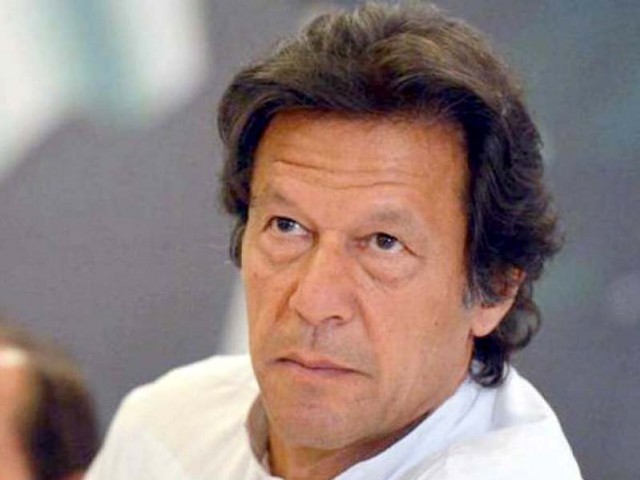
Imran Khan claims to have made KP police 'misali'. PHOTO: EXPRESS/FILE


Politics is the art of perception management. Politicians often employ the old tried and tested advertisement techniques of repeating certain phrases or sentences umpteen times till the listeners believe them as a matter of truth. “We made police misali in the K-P province” is one such piece of mythology that has become an essential part of list of achievements presented by Imran Khan. I am proud of serving the police department for almost 30 years but in my capacity as a former home secretary and having held senior positions in the K-P police, I deem it as my duty to put the record straight by differentiating the myth from reality.

The last two governments that served the province were of the PTI (2013-2018) and the ANP (2008-2013). I would, therefore, briefly review the nature of reforms introduced by these two governments and the financial injections provided in each of the tenures.

Let us first look at the situation that existed in the country and the K-P province in 2008. The Taliban outfits had established parallel governments in many districts of K-P province and were regularly attacking personnel and premises of the law-enforcement agencies. In such an environment of real and imminent danger, the then provincial ANP government rightly considered revamping and rebuilding of the police department its top priority. It, therefore, developed a “Comprehensive Development Strategy and Post Needs Crisis Assessment Programme” with the assistance of the World Bank. As money makes the mare go, the ANP government enhanced the budget of the police besides increasing its Annual Development Programme. We can notice that financial resource allocation reached its peak in 2010-11 during the ANP’s government. With more finances available, the police force acquired better human resource as the number of police personnel swelled to 75,000 in 2013 from 32,000 in 2006-7, which is a staggering increase of 134 per cent. In order to achieve reforms-related targets, a ‘Project Coordination Unit’ was also established which empowered the police force to initiate and run its developmental schemes.

Besides recruitment, capacity building was another important strategic priority for the-then ANP government. As the existing training centres could not accommodate such huge numbers, arrangements were made in collaboration with the Army for imparting training. Another strategic priority was to raise a counterterrorism force and within a short span of time a highly trained Anti-terrorism Elite Force was raised with 7,000 members. In the same period, a state-of-the art ‘Joint Training Centre’, with the assistance of the US Bureau of International Narcotics and Law Enforcement Affairs, was built in Nowshehra which is now the main training feeder for the anti-terrorism personnel. The Directorate of Counter Terrorism was established which played a crucial role in bringing hundreds of terrorists to justice and in preparing a database of 3,500 militants with 350 of them being the highly wanted terrorists. To improve the physical infrastructure, the damaged buildings of the police in the whole of Malakand were reconstructed under the US-assisted Rule of Law and Peace Building programme. In a nutshell, by 2013, a highly well-developed police system was in place to tackle the law and order situation.

Now let us turn to the 2013-18 period of the PTI government and examine what specific reforms were initiated and executed by this government. PTI leader Imran Khan, in his speeches, and also in the manifesto, had vowed that the Station House Officer (SHO) system would be replaced by the US-styled sheriff system where the SHOs would be elected by the local people. Nothing of such sort came about in the PTI’s era. We, however, did see some pictures being splashed on social media pages of the party showing a model police station on the pattern of police stations in the developed countries to create a perception that the K-P police have been modernised to an extent. The reality on ground is that the buildings of main police stations in Peshawar, let alone smaller cities, are still in dilapidated condition. People, however, did see greater presence of traffic police personnel but that was possible due to the additions made to the police force by the previous government. Therefore, the credit should go to whom it belongs. In the PTI’s tenure, the police force’s strength reached 82,000, thus registering an increase of 9 per cent which dwarfs in comparison with what the ANP government did in its tenure. The ‘Directorate of Counter Terrorism’ was renamed as ‘Counter Terrorism Department’ making it a focal agency against terrorism and thus relieving the police stations. Hence, the main channel of collecting intelligence and interaction with the community was absolved of its duties. The much-needed forensic lab got completely neglected while the safe city project did not either materialise for improving policing in the KP province.

In terms of financial support, we can see from figures that the growth momentum fell sharply and reached its lowest in 2015-2016 during the PTI’s government. Rather than introducing any substantive reforms, a high-pitched and well-organised propaganda was unleashed to create a perception that the previous government had done very little to provide peace and security to the people. The comparative analysis would, however, make it clear that myths can’t stand long when exposed to the light of facts and evidence.


Thursday, June 11, 2015

Ebola ( Congo Virus ) Strikes Hayatabad Medical Complex Peshawar

Health Services DG says govt prepared to prevent outbreak. STOCK IMAGE
Govt not prepared to prevent outbreak.


PESHAWAR: Two suspected Congo virus patients died in Hayatabad Medical Complex’s isolation ward. The deceased were Afghan nationals who had come to the city for medical assistance.

HMC medics said Muhammad Hashim was admitted to the facility on Tuesday. His blood samples were taken and he was shifted to an isolation ward where he passed away during the early hours of Wednesday. Similarly, 20-year-old Zahir, a resident of Jalalabad, Afghanistan was brought to HMC on June 5 and passed away on June 8 before he could be diagnosed with the virus.

The two cases push the tally of suspected Congo carriers brought to the hospital from the neighbouring country to four this year. The deaths have put the provincial government on alert as the province and tribal areas are at risk.


The Khyber-Pakhtunkhwa government has taken all preventive measures to counter Congo virus, however, the number of suspected patients arriving from Afghanistan has set alarm bells ringing.

Talking to The Express Tribune, K-P Health Services Director General Dr Pervez Kamal said no case of Congo virus has been reported in the province so far and that “all measures have been taken to ensure the virus does not spread.”

“All necessary steps have been taken. We have collected blood samples of patients as well as their family members and forwarded them to the federal capital for examination.” He said that while results are awaited, even suspected carriers are kept in isolation ward.

Over the past few months, the number of patients at HMC from across the border with symptoms similar to those of the virus has increased.

Earlier, 30-year-old Abdul Saboor, a resident of Kabul, Afghanistan, was shifted to an isolation room on similar grounds. Qudratullah, hailing from Mazar-e-Sharif, was also admitted and his blood samples were obtained. However he left the hospital soon after. Test results of both individuals are still awaited.

Published in The Express Tribune, June 11th, 2015.
source: http://tribune.com.pk/story/901458/in-isolation-suspected-congo-virus-carriers-die-at-hmc/

Tuesday, December 30, 2014

Pakistan refuses self-examination over Peshawar school Massacre after Failure of Army Operations.

Scores of children were killed in a recent Taliban attack on a school in Peshawar. But instead of re-evaluating its own flawed security policies, Pakistan's establishment is pointing fingers at neighboring Afghanistan.

Bereaving Mothers of Pashtun Kids Massacred . 


Those who were expecting a drastic shift in Pakistan's security policies after the heinous attack by the Taliban on a school in Peshawar will have to wait some time. The assault, in which 141 people were killed, provided a great opportunity for the Pakistani authorities to do some introspection and re-evaluate the country's decades-old security policies. Islamabad, however, chose to put the blame on "external elements," yet again.

The chief of Pakistan's ubiquitous army, Raheel Sharif, flew to Afghanistan on Wednesday, December 17, to meet the top military and civilian leadership in Kabul and discuss the Tuesday massacre. The Pakistani media claimed that Sharif demanded the Afghan government to extradite the head of the Tehreek-e-Taliban Pakistan (TTP), Mullah Fazlullah, who is wanted in terrorism cases in Pakistan.

Fazlullah took over the TTP in November 2013


Pakistan's Dawn newspaper has cited the country's security sources as claiming that a Taliban commander, Umar Naray, had masterminded the Peshawar attack from Afghanistan.

"His (Naray) communications have been intercepted as well which helped security agencies in tracing his location and whereabouts which was urgently shared not only with the Afghan army but also with NATO forces," a security source told Dawn.

Over 130 children were killed in an army-run school in the capital city of the northwestern Khyber Pakhtunkhwa province on December 16. The Pakistani Taliban claimed the responsibility for the school siege and attack and said the assault was a "response to military's 'Zarb-e-Azb' offensive, the killing of Taliban fighters and the harassment of their families."

The attack led to widespread condemnation of the Taliban both locally and internationally. A large number of Pakistanis demanded the government take decisive action against all Islamist groups in the country once and for all.

Prime Minister Nawaz Sharif, who declared a mourning period after the kilkings, also pledged to step up efforts against the insurgents. "The fight will continue. No one should have any doubt about it," Sharif warned. "We will take account of each and every drop of our children's blood."


Lost War ???? Failed  Pakistan Army Operation to Curb Taliban ??? 


The Pakistani military controls the security and defense matters

On Wednesday, Sharif convened a conference of the country's main political parties to devise a strategy against the militants. But before the civilian government reached a political consensus on how to deal with home-grown Islamists, a number of conservative political commentators, religious parties, and members of the security establishment had begun talking about the alleged role of New Delhi and Kabul in the attack.

Back to square one?

"Pakistan needs a long-term policy to eradicate terrorism. It might be true that Fazlullah was behind the Peshawar attack, but Islamabad needs to look internally as well," former DW Urdu journalist and Islamabad based analyst, Agha Sattar, told DW.

Sattar added that earlier this month when US officials in Afghanistan handed over the Taliban commander Latif Mehsud to the Pakistani authorities, many hoped that Washington, Kabul and Islamabad were finally on the same page over the Taliban issue. "But the recent surge in attacks in the Afghan capital, and the insistence of the Afghan government that the attackers were backed by the Pakistani spy agency, the Inter-Services Intelligence (ISI), showed that the conflict was far from over," Sattar said.

The Hague-based Pakistani human rights activist, Kamal Ayoub, says that India and Afghanistan too react to terror attacks by blaming Pakistan. "That's how all these countries try to conceal their own shortcomings and responsibilities," he told DW.

Zeenia Shaukat, an activist working for a labor rights institution in Karachi, does not find the Pakistani reaction surprising. "The 'Indian agents' thinking is deeply entrenched not only in the mindset of our policy-makers, but also among the general public. Unfortunately, the media too promotes the 'foreign forces-did-it' narrative," she told DW.

Targeting Pashtuns only ??? 


The gunmen stormed the Army Public School on Tuesday morning and started firing at random

Geo politics

The fact remains that most Pakistani politicians and military officials normally do not condemn the Taliban unequivocally. A number of them do not use the term "the Taliban" or "TTP" while commenting on terror attacks.

On Wednesday, Altaf Hussain, one of Pakistan's anti-Taliban politician who is currently in self-exile in London, lashed out at PM Sharif for "avoiding to hold the TTP directly responsible" for the Peshawar massacre.

Some experts say that Islamabad wants to use the Taliban in Afghanistan after the NATO drawdown in the coming days, while others assert that the Pakistani military hopes to regain the influence in Kabul it once enjoyed before the US and its allies toppled the pro-Pakistan Taliban government in 2001.

However, Pakistani analyst Abdul Agha is of the view that his country's powerful army is responsible for the continuing strength of the TTP. "They are nurturing and supporting a number of militant groups. The result is that they are still very active," he told DW.

Commenting on the Zarb-e-Azb army operation in Waziristan, Agha said that "the government is going after the [militant groups] that have turned against the state, or who don't agree with its long-term plans vis-à-vis Afghanistan. Pakistan wants to eliminate some and will preserve some for the future."


Political distraction

Zarb-E-Azab a Failure ??? 


The much-touted success of Operation Zarb-e-Azb is very much in question

Maqsood Ahmad Jan, an analysts based in Charsadda near Peshawar, criticized the government of the northwestern Khyber Pakhtunkhwa government, headed by cricketer-turned-politician Imran Khan's conservative Pakistan Tehreek-e-Insaf (PTI) party, for its pro-Islamist stance. "Khan has a soft spot for the Taliban. His party's provincial government has failed to protect the common people from the extremists. The school siege is proof," Jan commented.

Since August, the PTI has been holding country-wide demonstrations to topple PM Sharif's central government, which Khan and his party officials claim came into power in May 2013 through rigged parliamentary elections. Experts say that since the embattled premier is busy fighting a political war in the capital Islamabad, he is not in a position to focus on the terrorism issues.

"It is no secret that the PTI is a sympathizer of the Taliban insurgency as the party has repeatedly denounced military action against the extremists on the pretext of opposing American interference. Since Khan started demonstrations against Sharif's government, his party has remained largely silent on Zarb-e-Azb," Islamabad-based political commentator, Khayyam Mushir, told DW, adding that the ongoing anti-government protests were a major distraction for the PM Sharif who is further conflicted on what position to take on the terror issue.

SOURCE: http://www.dw.de/pakistan-refuses-self-examination-over-peshawar-attack/a-18137003

Friday, November 28, 2014

Catastrophic Failure of PTI In Education Failure in Pakhtunkhwa when it is Needed Most.


Lacking urgency: Educationists flay govt for failure to enact Article 25-A
By Asad Zia
Published: November 27, 2014
Civil society organisations and the education department prepared a draft bill for free and compulsory education in the province. 

PESHAWAR: Education activists expressed concern over the four-year delay in enacting Article 25-A and urged the Khyber-Pakhtunkhwa (K-P) Assembly to approve the draft bill at the earliest.

During a news conference at the Peshawar Press Club on Thursday, activists said after the 18th Amendment, civil society organisations and the education department prepared a draft bill for free and compulsory education in the province. However, both the previous Awami National Party (ANP) regime and the current Pakistan Tehreek-e-Insaf (PTI) failed to turn the bill into a law.


They pointed out 2.5 million children across the province were out of school and claimed the current government had not constructed a single school for them.

Addressing the audience, SPARC Regional Manager Jehanzaib Khan said although the government declared an education emergency in K-P, children lacked basic facilities and teachers at schools. “If there are no teachers or facilities, how can the children get an education,” he questioned.

ActionAid representative Aliya Rashid said the other three provinces enacted the law for free and compulsory education, while the draft had been pending before K-P lawmakers for the last four years. She said the previous government had done some work in this regard, but the current regime remained “motionless”. Rashid urged a swift approval of the draft bill for the 2.5 million out-of-school children in K-P.

“The government must enact the bill which will by law force parents to send their children to school,” said Advocate Noor Alam Khan. Financial constraints make parents send their children to madrassahs instead of schools, which are expensive, he added. This will force their hand, said Noor Alam.

Qaumi Watan Party MPA Miraj Humayun Khan stressed the government had doubled the education budget, but only spent Rs2 billion on education development. She said the province required 1,250 more schools, with five teachers per institute, to meet the needs of out-of-school children. However, the government claimed it lacked the resources to build schools in such large numbers, she noted.

ANP MPA Syed Jafar Shah said a draft bill was made at the end of the previous government, but could not be passed due to the lack of time. According to Shah, his party’s rule saw “record-breaking work” in the field of education.

He said the incumbent government had plenty of resources, but lacked political will due to which education was ignored.

Published in The Express Tribune, November 28th, 2014.

source: http://tribune.com.pk/story/798385/lacking-urgency-educationists-flay-govt-for-failure-to-enact-article-25-a/


Tuesday, November 25, 2014

Journalists of Pakhtunkhwa under PTSD and Severe Stress but Wont Seek Help.


Trauma centre to help Pakistani journalists, but stigma attached
By Reuters
Published: November 25, 2014
Psychology students study outside the Competence and Trauma Centre for Journalists inside a university's psychology department in Peshawar November 24, 2014.


PESHAWAR: Death threats, bombings and getting attacked is part of the job for many Pakistani journalists but they say one of the biggest barriers to seeking counselling to help cope is the stigma that they need it – and others in the business talking about it.

Immersion in the extreme violence and daily threats mean many journalists suffer from post traumatic stress disorder, health professionals said this week during the opening of the country’s first trauma centre for journalists.

The centre is supposed to help address Pakistan’s massive shortfall of trained counsellors and help journalists deal with the psychological fallout of reporting bombings, militancy and drone strikes.

Many of the problems that plague journalists also trouble frontline security forces, bomb technicians and civilians.

Few receive help – Pakistan has only 450 practising clinical psychologists for 180 million citizens, industry professionals said.

But many journalists say the fear of exposure by cutthroat colleagues keeps those in the industry from seeking help.

The competition for jobs is intense, and the country’s largest journalist union is split into feuding factions.

“The major challenge is your colleagues … They speak against you,” said Jamshed Baghwan, a television journalist for Express News.

His family home has been attacked three times but he doesn’t need counselling, he said.

That’s why the new German-funded Competence and Trauma Centre for Journalists, nestled amid the rose gardens and brick university buildings in Peshawar, says it keeps patient confidentiality absolute.

Dr Erum Irshad, head of the university’s psychology department, said that 14 of 20 journalists who participated in a pilot study suffered from severe stress. No larger studies exist.

Seven journalists had already sought help, she said.

Journalists at the opening told Reuters stories of being kidnapped by the Taliban, wading through hundreds of body parts at mass bombings, or witnessing decapitations.

But all said they would be reluctant to seek help.

Journalists who sought help privately say many counsellors are not equipped to deal with their daily exposure to violence.

One journalist told Reuters he saw three private psychologists and a psychiatrist after suffering severe panic attacks caused by death threats and violence he had witnessed.

Their advice: pray more.

“This is a very neglected field,” said Professor Syed Haroon Ahmed, head of the Pakistan Association for Mental Health.

“People are not dying, so it is not a priority.”

SOURCE: http://tribune.com.pk/story/796915/trauma-centre-to-help-pakistani-journalists-but-stigma-attached/

Bhatta to Taliban a New trend under PTI,s Militant Wing Taliban


By Manzoor Ali

Published: November 24, 2014


PESHAWAR: When the province’s law and order was discussed in the Khyber-Pakhtunkhwa Assembly on Monday, the government acknowledged that during its rule, incidents of grenade attacks and extortion have increased, but it also claimed that other crimes had decreased.

In response to an adjournment motion presented by Qaumi Watan Party (QWP) leader Sikandar Sherpao, Minister for Public Health Engineering Shah Farman told the house the number of suicide attacks, bomb blasts and vehicle-borne attacks has decreased during the current year as compared to the past two years.

According to the minister, the fact that parties which were under attack when they were in the government are now holding open public gatherings is an indicator of improving law and order under the PTI-led government.


Presenting some statistics in the house to support his claim, Farman said suicide attacks have reduced to 10 in 2014 from 21 and 18 in 2013 and 2012, respectively. Similarly, 218 bomb attacks have been reported in K-P so far when there were 284 and 271 such attacks in 2013 and 2012, respectively.

“Vehicle-borne attacks have decreased to three during the current year as compared to six in each of the past two years,” claimed Farman. “However, the deteriorating law and order issue is not specific to Khyber-Pakhtunkhwa; the entire country is facing the repercussions of the military operations in the Federally Administered Tribal Areas,” said the minister.

Earlier, when raising the motion, QWP’s Sikandar Sherpao informed the house a total of 109,449 crimes were reported this year between January 1 and October 15. According to Sherpao, 520 terror attacks, 291 extortion cases and 831 car theft cases were also reported during this period.

“Law and order is the fundamental right of citizens and is the provincial government’s responsibility,” stated Sherpao. Awami National Party’s Mian Jaffer Shah added the situation was deteriorating every day and the government should not hide the facts and go into a defensive mode.

On a point of order, opposition leader Maulana Lutfur Rehman also raised the issue of the deteriorating law and order. According to Rehman, incidents of extortion have risen by 900%, terrorism by 30%, kidnapping by 44% and crimes against women by 40%.

“Educated and well-off people of K-P are migrating to other provinces,” stated Rehman.

The opposition leader also touched upon the subject of increasing cases of polio, saying the situation can lead to international restrictions on Pakistan.

Rehman also condemned police violence against IPDs in Bannu a couple of weeks ago.

LG polls

Moreover, during Monday’s session, Minister for Local Government and Rural Development Inayatullah Khan informed the house the government was planning to hold local government (LG) elections by the end of April next year.

In response to a question, Khan said the Election Commission of Pakistan expressed its inability to conduct LG polls under biometric system before December 2015. Therefore, the provincial government has decided to go to the polls without the technology.

Published in The Express Tribune, November 25th, 2014.

source; http://tribune.com.pk/story/796529/up-for-discussion-govt-admits-increasing-extortion-incidents/

Saturday, November 15, 2014

PTI Now Officially a Corrupt Right Wing Party of Punjabi Establishment .


Ideological Pakistan Tehrik-i- insaf worker are worried about PTI going way of corruption and also and spending the charity money on , lavish parties and other luxuries while PTI has forgotten Pakhtunhwa and Pashtuns ,and thier problem.
Shamefully the Party is now Having a Lot of Corruption and Nepotism when lotas have been Elected in PTI that were Part of Generals Musharaff,s a Cruel Dictators  Cabinet 


Dear fellow Pakistanis,

As you know the deteriorating situation in Pakistan with poverty, bloodshed, lack of leadership and other similar heart wrenching conditions. We can't stay aloof with what's happening in Pakistan and it is our moral duty to help improve situation in Pakistan. Under, this context, we believed PTI (Pakistan Tehreek-e-Insaf) was well set to tackle these problems but unfortunately, there is corruption, gross mismanagement, and lack of accountability within PTI.  Various office-bearers were caught stealing party funds, rigging intra party elections, and selling party tickets with impunity. For example, please refer to the third party independent Forensic Audit Report below which has found party office bearers have embezzled atleast 19 million rupees over just the last two years with impunity. Similarly, refer to the independent third party reports such as Tasneem Noornai Review Committee Report and Justice(r) Wajjhuddin's Election Tribunal Report below. Both of these reports identify systematic rigging of the last intra party election. Similarly, multiple office bearers are convicted bank defaulter but keep higher party posts though rigging, For example, President Punjab is a bank defaulter of 34 million rupees of Bank of Punjab. Head of Chairman's Secretariat, Naeemul Haque is also convicted in 2000 for a bank default.

This embezzlement has not only been in PTI Pakistan, but PTI USA LLC officials have also been allegedly travelling & throwing lavish parties at their homes in the name of PTI; all with PTI donors monies. Our attempts to inquire PTI USA LLC audit reports have been denied in past. We request you, to please inquire these questions and ask for a detail audit of the account before you donate.

In these circumstances, we, the ideological workers, request you, the PTI's supporters to hold your local PTI leadership accountable. Please, insist on complete audit reports of your donated monies.

Dear fellow Pakistanis, you all helped PTI become what it is today. You must do your part in reforming this party. Time is running out for Pakistan, we must actively engage and make sure that we transform PTI into an institution, so that it is well equipped with the highest standards of excellence and honesty and help achieve our shared dream of a Naya Pakistan...Insha-Allah!!!

Sincerely,
PTI's Ideological workers

 
1)      PTI Special Forensic Audit Report

2)      TasneemNoorani Review Committee Report

3)      Justice Wajjhuddin Order Sheet

4)      Ejaz Chaudhry Bank Defaulter
https://docs.google.com/file/d/0B_KYH0JxvCTfeEZ5UFVNQlVDZmM/edit

Tuesday, November 4, 2014

Present Day Problems, Chapter Removed by Right wing Paltoo Parties of Punjabi Establishment.

Why Right wing Parties supported by Pakistani establishment like PTI + Jamaat Islami wants to promote, Jihalat and Backwardness just like thier militant wing Taliban wants to do on Pashtuns only in Pakistan is that a Policy of Pakistani eatablishment that forms favour with PTI and Jamaat Ialami who's founders were recently hanged a few days ago in Bangladesh for Inhuman and Unislamic Practices of Mass graves and rapes of thousand of women in East Pakistan in 1971 .


Imran Khan Aka Captian Taliban Khan 
Siraj Ul Haq also known as Subedar Sahib head of Jamaat Islami 

PESHAWAR: The Elementary and Secondary Education Department is set to remove a whole chapter from a school textbook highlighting the contemporary issues, their causes and veiled hints towards the invisible elements responsible for creating such issues that have made the lives of people miserable in the region, according to sources.

The chapter titled “Da Maujoda Dor Masalay” (problems of the present age) in the Pashto book for
grade-10 will be removed on the demand of Jamaat-i-Islami, they said. The chapter was included in the textbook by the previous ANP-led government to inform the students about the various issues engulfing the society for the last many years, said the sources in the education department.

In the third paragraph on page 65 of the chapter it is stated that due to political instability millions of
Afghans were compelled to migrate to Pakistan who brought with them many problems from Afghanistan that still existed in our society.

The text on page 66 conveys that “It is crystal clear that human beings have always used their
power and inflicted brutalities on others in the process to impose their religious, political, national
and economic supremacy on others. 

In history whenever any group in any area on the earth started ruling by adopting such practices has left examples of brutalities and inhuman practices that has bowed down the head of human beings in shame”.

Without naming any area or country, it is stated that the power game still continues which has
caused huge losses to the society, particularly to the poor people. It further says that rich countries
have been using all resources in the region for imposing their agenda and increasing influence in
the third world countries.

The students read in the chapter that the people of the third world countries getting financial support
to fulfil their daily needs of life are being exploited intentionally or unintentionally, consciously or
unconsciously at the hands of the rich countries for their agenda.

“Such acts are apparently good and pious, full of benefits in this world and the life after death, but
actually the planner behind such acts wanted to spread violence,” it is added. “As such, the society which couldn’t educate their children due to lack of resources is used at the hands of others for achieving their goals, causing unrest and terrorism in the country,” it states.

In the same chapter, the students are told that due to lack of education, some religious sects have been promoting their causes in the society through use of huge amount of money.

It has also been mentioned that in the race of leaving others behind, the religious extremism often causes differences, which is one of the big reasons for unrest in the society.

The writer has also listed the uncontrollable increase in population as one of the problems, stating that having more children and lacking resources most of the people couldn’t provide education
to their children. Resultantly, such children become child labourers or beggars.

The unchecked population growth results in rising joblessness, which leads to suicides, mental and psychological diseases and drug addiction in the society.

Everything mentioned in the chapter is based on the present day realities, said a senior teacher of a government school. “It will educate the students about the contemporary issues,” he said, adding such issues were discussed in the textbooks for the first time.

“Such issues should be also discussed in the English and Urdu textbooks to educate the students at larger scale,” another senior teacher told Dawn.

When contacted, a senior official in the education department told Dawn that the material given in the
chapter was based on reality, but it could create bad impression of the state among the students.

“Actually, different schools of thought are discussed between the lines which could increase hatred in the society,” said an activist of Jamaat-i-Islami, who was one of the members of the team which held meetings with the officials of the education department in this connection.

He said that distribution of resources was the real problem, not increase in population. “Linking problems with the population growth is the propaganda of the West,” he said.

Published in Dawn, October 26th, 2014

Sunday, November 2, 2014

Imran Khan PTI Avoids a Resolution in Praising First Pashtun Noble Prize Winner of Pakhutnkhwa Malalaa Yousafzai.


PESHAWAR: A resolution for Nobel laureate Malala Yousafzai has got stuck in the Khyber Pakhtunkhwa Assembly secretariat as Jamaat-i-Islami, a partner of the Pakistan Tehreek-i- Insaf-led ruling coalition in the province, has made its inclusion in the house’s agenda conditional on the tabling of a similar resolution for scientist Dr Aafia Siddiqui imprisoned in the US over links to terrorists.

Law and parliamentary affairs minister Imtiaz Shahid Qureshi told Dawn that PTI would support its coalition partner on the matter.

He expressed ignorance about keeping the resolution pending in the assembly secretariat.

The minister said some lawmakers had reservations about the resolution and was not sure if the Awami National Party would gather support of the opposition parties in favour of its pro-Malala move.

Notably PTI chairman Imran Khan had congratulated Malala on winning Nobel Peace Prize. However, the PTI-led provincial government did not issue any statement to praise the teenage activist for girls’ education.

ANP MPA Syed Jafar Shah had submitted the resolution to the assembly secretariat on October 20, which has so far not been brought on the house’s agenda.

Jafar Shah told reporters that he had requested Speaker Asad Qaisar to put the resolution on the agenda but the latter showed reluctance.

“It may create problems for us,” Jafar Shah quoted Speaker Asad Qaisar as saying during a meeting.
JI opposed to move until pro-Aafia resolution made part of house agenda

He said the Senate, National Assembly and Punjab and Sindh assemblies had passed resolutions to congratulate Malala Yousafzai on receiving Nobel Peace Prize.

The MPA said Punjab Chief Minister Shahbaz Sharif had announced to establish a university in the name of Malala. He said the young activist belonged to Khyber Pakhtunkhwa and therefore, the provincial assembly should take the lead.

“I don’t know why the government is so scared about the resolution,” he said, adding that he had suggested in his resolution that the Khyber Pakhtunkhwa government should set up university in the name of the Nobel laureate.

When the house began proceedings on Tuesday, Pakistan People’s Party MPA Nighat Orakzai through a point of order drew Speaker Asad Qaisar’s attention towards the resolution.

She said not only Malala Yousafzai was a national hero but she was an international icon as well.

Orakzai said Malala’s efforts for the promotion of education had been recognised around the world and that she was given the Nobel Peace Prize and other international awards in recognition of her courage and contributions for the promotion of education.

“This is very unfortunate that a resolution submitted by a member of the opposition has been intentionally blocked,” she said, asking the chair to bring the resolution for Malala on the house’s agenda.

The MPA said the treasury and opposition should unanimously pass resolution.

Lawmaker of Jamaat-i-Islami Mohammad Ali Khan said Dr Aafia Siddiqui was the daughter of the nation and that he had great contributions for Islam. He said the house should pass a joint resolution for Dr Aafia and Malala.

Speaker Asad Qaisar remained silent on the point of order raised by Nighat Orakzai and moved to the agenda.

Insiders said Jamiat Ulema-i-Islam-Fazl, which had been opposing Nobel Peace Prize for Malala, was also not in favour of the resolution.

A JUI-F MPA told Dawn in the assembly’s lobby that his party might not support the resolution.

“I have informed my friends (ANP lawmakers) that he will not support the resolution,” he said, adding everybody knew the motive behind the award of Nobel Peace Prize to Malala.

In January this year, the provincial government had stopped a civil society organisation from organising a ceremony at the University of Peshawar to launch the book of the Nobel laureate, I am Malala.

Similarly, the banned militant outfit, Tehreek-i-Taliban Pakistan, had warned leading booksellers against selling the book.

Also, the house admitted an adjournment motion about the prevailing law and order situation in the province for detailed discussion.

JUI-F member Mufti Syed Janan, who moved the motion, portrayed the worst scenario in the province.

He said 44 policemen and other officials were killed in Peshawar in 2013 and the number had reached 138 in the current year.

The MPA said the nighttime flight operations at the Bacha Khan International Airport had been suspended due to the recent firing incident. He said the government had failed to provide protection to citizens and that the government’s writ had been confined to the Civil Secretariat and Police Lines.

Later, the Delimitation of Local Councils Ordinance, 2014 and Local Government (Second Amendment) Ordinance, 2014 were tabled in the house.

The assembly passed the Khyber Pakhtunkhwa Civil Servants Retirement Benefits and Death Compensation Bill, 2014 after incorporating several amendments of the opposition in it.

Published in Dawn, October 29th , 2014
source: http://www.dawn.com/news/1141110/good-words-for-malala-stuck-in-kp-assembly-secretariat

Friday, October 31, 2014

Speaker Pakhtunkhwa Assembly PTI Asad Qasier Brother, Adnan Khan Beats up Deputy Commissioner in His Office for Taking Action Against Profiteers and Law Breakers .


Swabi Pakhutnkhwa : Officials from government departments and representatives of political parties went on strike and participated in a rally at Jirga Hall in Swabi on Thursday following Khyber-Pakhtunkhwa Assembly Speaker Asad Qaiser’s brother’s alleged hooliganism.

Adnan Khan is said to have manhandled Swabi Additional Assistant Commissioner Khaliq Dad Khan after a crackdown against profiteering.

According to Khaliq Dad, Adnan and his two bodyguards stormed his office on Wednesday. “They used foul language and beat me up,” Khaliq told the media. He said the Swabi Deputy Commissioner had been informed and a formal FIR had been lodged against the assembly speaker’s brother.

Khan claimed Adnan was unhappy over cases registered against some shopkeepers and butchers for overcharging and food adulteration. Adnan was told the cases were registered against the offenders and they should pursue legal recourse but he insisted on the cancellation of FIRs and retraction of cases.

Assistant Commissioner Altamash Janjua, Government Employees Coordination Council President Abdul Latif, Clerks Association representative Zakirullah Omarkhel, former nazim Ihsanul Haq Bamkhelvi and others addressed Thursday’s rally. They threatened a complete strike and further action starting Friday if Adnan is not taken to task for the misconduct. They warned relatives and aides of influential people to stay clear of the affairs of government functionaries.

Representatives of Awami National Party, Pakistan Muslim League-Nawaz and Jamiat Ulema-e-Islam-Fazl also addressed the protest and accused the Pakistan Tehreek-e-Insaf of promoting hooliganism in the province.

Bail before arrest

Adnan obtained bail before arrest from Swabi additional sessions judge on Thursday.

He claimed he had approached the officer after receiving complaints from poor shopkeepers. Before the court, Adnan accused the officer of using foul language against him.

Published in The Express Tribune, October 31st, 2014.

source : http://tribune.com.pk/story/783704/hooliganism-officials-take-to-the-streets-against-k-p-assembly-speakers-brother/

Friday, October 10, 2014

Wild Life smuglling from Pashtun belt of Pakhtunkhwa , Baluchistan , and FANA causing 50 % reduction in Wild Life .

LAHORE : Disturbing findings:
Illicit wildlife trade jeopardising biodiversity The report stressed the importance of adopting environmentally friendly
solutions to counter rising threats
to nature.  Worldwide Fund for
Nature-Pakistan (WWF-P) director-general Hammad Naqi Khan said on Tuesday that illegal wildlife trade had been negatively impacting Pakistan by compromising the country’s
biodiversity.

He was speaking to journalists at
an event held to release the
foundation’s 2014 Living Planet
report. Khan expressed concern
over the increasing smuggling of
black scorpions, freshwater turtles
and pangolins.

He said rising deforestation constituted anothervthreat. Khan said the fund was striving to overcome these challenges. He said it wasvcommitted to supporting
sustainable development in Pakistan.

Khan said risingdeforestation had endangered species like the common leopard by comprising their habitats.

He said Pakistan’s carbon footprint had been consistently getting larger.
Khan said a World Bank report on
air pollution had ranked urban air
pollution in Pakistan as severe.

He said this had negatively impacted
public health, quality of life, the
environment and the economy in
Pakistan.

The report stressed the importance
of adopting environmentally-
friendly solutions to counter rising
threats to nature.

According to the report, it was imperative to adopt these measures urgently as an alarming decline had been witnessed in wildlife populations.

The population of fish, reptiles,
birds, mammals and amphibians
had declined by 52 per cent over
the 40 year period surveyed in the
report.

The decline in biodiversity
witnessed in the Asia-Pacific region
was second over the period only to
Latin America.

The report highlighted the
consistent increase in the ecological
footprint. The footprint is a
measure of humanities’ demands
on nature.

According to the report, a marked rise was witnessed in Pakistan’s footprint due to population growth, growing per capita consumption and declining biodiversity.

It particularly mentioned climate change, fishing, hunting, habitat loss and degradation as the greatest
challenges to.

Published in The Express Tribune,
October 1 st , 2014.

Source : http://tribune.com.pk/story/769475/disturbing-findings-illicit-wildlife-trade-jeopardising-biodiversity/

Sunday, September 28, 2014

77 Rifles for Whole FR Peshawar - Who are Idiots Running it ?

Who are the Idiots who think they can Run whole District of Semi tribal FR Area with 77 Rifles while no Police , Frontier Corps Rangers  and  No FC Constabulary works there as it is Sent to Islamabad for VIP duties are 77 Rifles enough to Keep Criminals and terrorist away in FR Peshawar Embedded inside of Pakhtunkhwa . 

Government Policy of Denying Governance in FR Area  to help Taliban and Criminals as a Policy . 


Policing the frontier: Over 100 new levies to be recruited for FR Peshawar

Published: September 28, 2014

Officials familiar with the matter told The Express Tribune that at the moment 202 levies personnel are deployed in FR Peshawar. PHOTO: FILE
PESHAWAR:

In order to increase the strength of the levies force in Frontier Region (FR) Peshawar, the political administration will recruit 128 new personnel who will be trained by the security forces.

Management hurdles

Officials familiar with the matter told The Express Tribune that at the moment 202 levies personnel are deployed in FR Peshawar. However, they said, since the FR is a vast semi-mountainous area, it is difficult for a small force to manage it even with the help of the Frontier Constabulary and security forces which are also deployed there.

One insider said the levies are usually an ill-equipped force in the agencies and they face the same issue in the frontier regions.

For the 202 levies men deployed in FR Peshawar, there are only 77 AK-47’s available which speaks volumes of how neglected the force is, he said.

He added the levies force is also not paid on time which also causes hindrance in their performance. “Many people from poor families join the levies due to a lack of employment opportunities in the region,” he said.

Improving the force

Assistant Political Agent (APA) Muhammad Arif told The Express Tribune the region’s levies force is not active because all personnel cannot be armed. However, he maintained the administration has brought the matter to the interior ministry’s notice and has been promised that arms will be made available.

“We will recruit 128 men on merit by October 15 and the candidates will have to pass a physical fitness test,” said Arif.

Taken

He said 28 positions had been left unfilled since December 2012 when militants kidnapped and subsequently killed more than 20 levies personnel, and later five others quit. “We are recruiting one hundred more men and with the additions, the levies will become a proper law-enforcement authority,” added Arif.

Elaborating on training facilities for the force, Arif said previously new recruits were trained by the Frontier Corps, but now they will be trained by the army for six months.

The APA explained the basic salary of the recruits will be Rs5,000 but with the addition of allowances it will be increased to Rs12,000.

According to Arif, Governor Mehtab Abbasi is taking a keen interest in the affairs of the tribal areas and has decided the levies should be trained in traffic management, bomb disposal, investigation and evidence gathering techniques.

Published in The Express Tribune, September 28th, 2014.

source: http://tribune.com.pk/story/768215/policing-the-frontier-over-100-new-levies-to-be-recruited-for-fr-peshawar/

Sunday, September 21, 2014

Why Federalism is not Good for Pakistan

 Quest for federalism—perspectives from Khyber Pakhtunkhwa

By Professor Khadim Hussain

The demand for a genuine federal democratic republic of Pakistan in Khyber Pakhtunkhwa is as old as Pakistan itself and in some cases is even older than Pakistan. Initially, it was the Khudai Khidmatgar Movement and its various offshoots that struggled hard in the colonial era to win the status of a separate province with the right of adult franchise. The struggle that started for an autonomous province in the early 1920s culminated in the 1930s and as a result of which NWFP was made a separate province under the colonial constitutional framework of 1935. A separate NWFP assembly was formed after the elections held in 1937 in the united India.
After the inception of Pakistan, democratic secular nationalist entities from the then NWFP like Khudai Khidmatgars, and Balochistan, Sindh, the then Bengal and some leftists from Punjab formed People’s Party and later National Awami Party in the 1950s. The National Awami Party initiated its struggle in all parts of Pakistan on a three point agenda—separation of state and religion, provincial autonomy and an independent foreign policy. The National Awami Party started a mass movement across Pakistan, especially in NWFP, after General Ayub imposed martial law in the country and formed the notorious One Unit for the so-called parity between the Eastern and Western wings of Pakistan. The movement was later joined by the provincial chapters of Pakistan People’s Party, Jamiat-e-Ulamai Islam and Jamiat-e-Ulamai Pakistan.
In Khyber Pakhtunkhwa, the movement for autonomy of the provincial units of the federation for the political development of a genuine federal parliamentary democracy in Pakistan historically revolved around three major sets of grievances.
Besides long lasting struggle for identity, the first and the foremast on the agenda of the movement for autonomy and genuine federal democracy remained in Khyber Pakhtunkhwa to be the issue of ownership and distribution of natural resources. Though not limited to water only,  the grievance over water gained prominence after hydroelectric power generation and irrigation channels from the water owned by Khyber Pakhtunkhwa legally, technically and traditionally were used by the centre for Punjab without the consent of and due compensation to the province. Other resources that the people of Khyber Pakhtunkhwa historically agitated and protested for include natural gas, cess on tobacco grown in Khyber Pakhtunkhwa, precious stones, minerals and forestry besides tourism.
The second set of grievances pertains to economy that includes unequal development and investment in trade and commerce, infrastructure for trade and commerce, unequal development of industry and market, agriculture, fishery and poultry. The third set of issues that became the source of long lasting demands in Khyber Pakhtunkhwa includes public policy and governance. This set of grievances was assumed to be the direct consequence of the deprivations mentioned in the first and second sets of grievances. This was thought to be the result of the centrist mindset of state institutions.  Denial of justice, lack of the Rule of Law, bureaucratic hegemony, non-responsiveness of state institutions, and lack of basic facilities like sewerage, clean drinking water, due share in taxes and revenues continue to breed negative attitude for political, institutional and capitalist elite of Pakistan in the common masses of Khyber Pakhtunkhwa.
The landmark 18th Amendment passed and enacted in April 2010 not only resolved the issue of identity but also mitigated the grievance of resource distribution in Khyber Pakhtunkhwa to some extent. Abolition of concurrent list altogether and bringing of Federal Legislative List II in the purview of the Council of Common Interests might have resolved most of the outstanding issues between Khyber Pakhtunkhwa and the centre. There are still three irritants that continue agitating the governments and people of Khyber Pakhtunkhwa persistently.
Firstly, the issue of centralization of governance and distribution of power by the centre has continuously made relations between Khyber Pakhtunkhwa and the centre in jeopardy. Water and Power Development Authority (WAPDA) based in Lahore and managed by Islamabad is considered not only hegemonic but also a stumbling block in fulfilling the needs of electricity of the people in Khyber Pakhtunkhwa.
Secondly, there is a fear that devolution of certain institutions is being resisted by sections of the political, military and bureaucratic elite with lame excuses and invalid arguments. Resistance to allow devolution of Higher Education Commission to provinces is just one example to nourish the fear of the people of Khyber Pakhtunkhwa. The resurrection of the ministry of education and health with pseudonyms after the PML-N government was elected to power in Islamabad strengthens the fear of the people of Khyber Pakhtunkhwa that powerful sections of political, military and bureaucratic elite in Islamabad and Punjab are not sincere in realizing the dream of a genuine federal parliamentary democracy in Pakistan. As if it were not enough, the statement of the Federal Minister for Petroleum indicating review of the Article 158 of the constitution of Pakistan added salt to the injuries. Article 158 of the constitution of Pakistan had established the first right on the use of the natural gas and petroleum by the province where it is produced.
Thirdly, there is a strong demand by the people of Khyber Pakhtunkhwa that half ownership of resources ensured in the 18th  must be constitutionally converted to the full ownership of resources while share of the cost for administration of state and distribution of resources may be worked out  in the Council of Common Interests and National Finance Commission.
The third set of grievances mentioned above may be considered the domains of provincial governments exclusively after the 18th Amendment and 7th NFC Award. Responsibility for governance, law and order, education, health, socio-cultural development, women development, youth affairs, agriculture, tourism and local government must be taken up by the provincial government of Khyber Pakhtunkhwa. Abdication of this responsibility by the provincial government of Khyber Pakhtunkhwa will be deemed as complicity in revoking autonomy and decentralization. The civil society, academia, professional organizations, media and research organizations have to form networking for taking ahead the true spirit of federal parliamentary democracy in Pakistan.
(The writer is a political analyst based in Khyber Pakhtunkhwa. Email: khadimhussain565@gmail.comtwitter/@khadimhussain4

Collective Amnesia and Apathy

A scene from Gabriel Garcia Marquez’s Nobel Prize winning novel, One Hundred Years of Solitude, has vaguely remained my memory for a long time. The scene is about a gun battle  in 1967 between liberals and conservatives in Macondo city. The conservatives, being in power, have all the state resources to construct and disseminate propaganda. Leader and commander of the liberal force gets seriously injured and is left dying in pool of blood, perceived as dead after his force is defeated. Early next morning when the Colonel comes to consciousness, he is taken aback by the fact that there are no traces of a ferocious gun battle in the main square of the city. While moving to his house, he keeps asking about the gun battle last night but nobody in the city seems to be aware of the incident. The Colonel, severely injured, wishes to lose his memory but of no avail while on the other hand people around him start doubting him to have lost his mind . The people of the town keep arguing with each other regarding the claims of the Colonel while the Colonel himself starts showing signs of abnormality. The era in the novel seems to depict political and ideological wars in 17th and 18th Century Europe.
Since then , states around the globe have achieved sophisticated techniques to monopolize construction and dissemination of political and security narratives. The narratives mostly pertain to the prolonging of political arrangements to keep wielding, using and distributing power.
The events in Khyber Pakhtunkhwa, a north western province of Pakistan, and Federally Administered Tribal Areas of Pakistan (FATA) in the last three weeks provide an interesting case study as to how narratives are constructed, used, and disseminated through media that sideline the issues having direct bearing on the common masses.
On July 26 2013, twin blasts in Parachinar (Headquarters of Kurrum Agency) left almost 57 dead and 167 critically injured1.The locals on the other day expressed their emotions:
Hussain said almost all the dead and wounded were Shias. Moreover, Ali said at the time of the explosion the market was full of Shias, who were buying items for their evening meal that breaks the daytime fast during the holy month of Ramazan. ”We demand protection. We request the government to take action against those who routinely kill our people,” he told The Associated Press. One of the blasts was carried out by a suicide bomber while the other might have been a planted one, Political Agent Riaz Mehsud said.[2]
Target killing of Peace Committees, police officials and Shias has remained a routine matter in the meanwhile. On August 2, two policemen and a House Station Officer (SHO) were shot dead in Daudzai in the suburbs of Peshawar.[3] A member of the Peace Committee was shot dead in Kabal Tehsil of Swat distrct on July 24 2013.[4] These are just two of the dozens acts of target killings that continue in Peshawar and other parts of Khyber Pakhtunkhwa unabattedly.
On July 30, “As many as 243 prisoners escaped as militants carrying heavy weapons stormed Dera Ismail Khan’s Central Jail, holding as many as 5,000 prisoners including 250 inmates belonging to various banned outfits here on late Monday night, Geo News reported.”[5]
These unfortunate events would have been considered as part of the war the militant network has launched against the state and society of Pakistan, especially Khyber Pakhtunkhwa and FATA, had both the state and private electronic and print media of Pakistan not melted the story through other high profile stories that have little or no direct bearing on the citizens. Let me count the events that were hyped by media in the meanwhile which intentionally or unintentionally sidelined the terror events mentioned above.
A controversy on presidential election that was destined to be won by PML-N made banner headlines in print media and occupied more than 70% of time in electronic media which successfully marginalized killings in Parachinar.
After section of media started reporting target killings, news of the resignation of the Chief Election Commissioner of Pakistan started doing the rounds. The stories of target killings thus relegated to cold storage by mainstream media.
As if it were not enough, when media started analyzing various aspects of the DI Khan jailbreak, another high profile issue occupied almost the whole space of print and electronic media. Supreme Court of Pakistan issued a show cause notice to Chairman Pakistan Tehreek-e-Insaf (PTI), Imran Khan. This issue successfully engaged print media, electronic media and social media in a way unprecedented in this part of the world.
Is it demand of the consumers for a story as some media exponents would argue or depiction of a stark reality of the political economy of Pakistan? Is it information, education and entertainment as classical journalism envisages or monopoly on construction, distribution and dissemination of narratives that are related to power? Does this phenomenon indicate thirst for information by the common masses or does this signify hold of power by the political, corporate, and military and intelligence elite and urban middle classes in the state structures of Pakistan?
Academia in this part of the world has so far failed to analyze the above questions that have close relationship with the political economy of the state of Pakistan for three reasons besides lethargy. Firstly, most of the academia that resides in the urban centers has a share in the monopoly of the narratives and hence has some share in the hold of power by the elite and urban middle classes. Secondly, the overbearing state institutions on the one hand and the militant network on the other hand have successfully permeated fear with respect to evidence based analysis that might lead to a difference of opinion with respect to popular narratives. Thirdly, socio-cultural space for the dissenting narratives has been reduced to the extent that academia might not lay its hands on something that might touch the boundaries of non-conformism.

(The writer is a Peshawar based political analyst. Email: khadimhussain565@gmail.com , twitter@khadimhussain4