Showing posts with label Awami National Party. Show all posts

Sunday, July 22, 2018

Pakhtunkhwa Police Reforms Myth and Reality


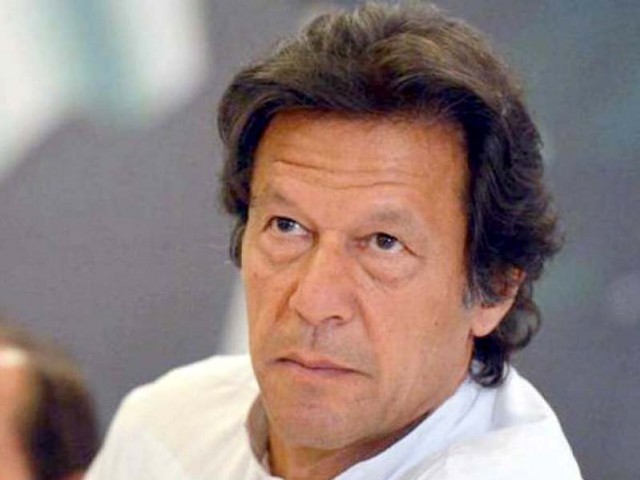
Imran Khan claims to have made KP police 'misali'. PHOTO: EXPRESS/FILE


Politics is the art of perception management. Politicians often employ the old tried and tested advertisement techniques of repeating certain phrases or sentences umpteen times till the listeners believe them as a matter of truth. “We made police misali in the K-P province” is one such piece of mythology that has become an essential part of list of achievements presented by Imran Khan. I am proud of serving the police department for almost 30 years but in my capacity as a former home secretary and having held senior positions in the K-P police, I deem it as my duty to put the record straight by differentiating the myth from reality.

The last two governments that served the province were of the PTI (2013-2018) and the ANP (2008-2013). I would, therefore, briefly review the nature of reforms introduced by these two governments and the financial injections provided in each of the tenures.

Let us first look at the situation that existed in the country and the K-P province in 2008. The Taliban outfits had established parallel governments in many districts of K-P province and were regularly attacking personnel and premises of the law-enforcement agencies. In such an environment of real and imminent danger, the then provincial ANP government rightly considered revamping and rebuilding of the police department its top priority. It, therefore, developed a “Comprehensive Development Strategy and Post Needs Crisis Assessment Programme” with the assistance of the World Bank. As money makes the mare go, the ANP government enhanced the budget of the police besides increasing its Annual Development Programme. We can notice that financial resource allocation reached its peak in 2010-11 during the ANP’s government. With more finances available, the police force acquired better human resource as the number of police personnel swelled to 75,000 in 2013 from 32,000 in 2006-7, which is a staggering increase of 134 per cent. In order to achieve reforms-related targets, a ‘Project Coordination Unit’ was also established which empowered the police force to initiate and run its developmental schemes.

Besides recruitment, capacity building was another important strategic priority for the-then ANP government. As the existing training centres could not accommodate such huge numbers, arrangements were made in collaboration with the Army for imparting training. Another strategic priority was to raise a counterterrorism force and within a short span of time a highly trained Anti-terrorism Elite Force was raised with 7,000 members. In the same period, a state-of-the art ‘Joint Training Centre’, with the assistance of the US Bureau of International Narcotics and Law Enforcement Affairs, was built in Nowshehra which is now the main training feeder for the anti-terrorism personnel. The Directorate of Counter Terrorism was established which played a crucial role in bringing hundreds of terrorists to justice and in preparing a database of 3,500 militants with 350 of them being the highly wanted terrorists. To improve the physical infrastructure, the damaged buildings of the police in the whole of Malakand were reconstructed under the US-assisted Rule of Law and Peace Building programme. In a nutshell, by 2013, a highly well-developed police system was in place to tackle the law and order situation.

Now let us turn to the 2013-18 period of the PTI government and examine what specific reforms were initiated and executed by this government. PTI leader Imran Khan, in his speeches, and also in the manifesto, had vowed that the Station House Officer (SHO) system would be replaced by the US-styled sheriff system where the SHOs would be elected by the local people. Nothing of such sort came about in the PTI’s era. We, however, did see some pictures being splashed on social media pages of the party showing a model police station on the pattern of police stations in the developed countries to create a perception that the K-P police have been modernised to an extent. The reality on ground is that the buildings of main police stations in Peshawar, let alone smaller cities, are still in dilapidated condition. People, however, did see greater presence of traffic police personnel but that was possible due to the additions made to the police force by the previous government. Therefore, the credit should go to whom it belongs. In the PTI’s tenure, the police force’s strength reached 82,000, thus registering an increase of 9 per cent which dwarfs in comparison with what the ANP government did in its tenure. The ‘Directorate of Counter Terrorism’ was renamed as ‘Counter Terrorism Department’ making it a focal agency against terrorism and thus relieving the police stations. Hence, the main channel of collecting intelligence and interaction with the community was absolved of its duties. The much-needed forensic lab got completely neglected while the safe city project did not either materialise for improving policing in the KP province.

In terms of financial support, we can see from figures that the growth momentum fell sharply and reached its lowest in 2015-2016 during the PTI’s government. Rather than introducing any substantive reforms, a high-pitched and well-organised propaganda was unleashed to create a perception that the previous government had done very little to provide peace and security to the people. The comparative analysis would, however, make it clear that myths can’t stand long when exposed to the light of facts and evidence.


Sunday, November 16, 2014

The Art of peace ANP stalwart launches anti-war book


The book is based on the proceedings of a two-day event held in April 2012. The talks held during the event were then compiled in written form by Lala. PHOTO: NNI

PESHAWAR: Veteran politician of the Awami National Party, Afzal Khan Lala, launched his book ‘Da Pukhtano Pa Khawra Praday Jhagarha’ (Ghost war on Pakhtun soil) at a ceremony held at Peshawar Press Club on Saturday.

“Pukhtuns have not stood united as a nation since 1893,” said Lala while speaking on the occasion, referring to the year the Durand Line was drawn. “People cannot win without unity and Pukhtuns can never become a great nation unless they exhibit unity among them.”

Lala said Pakistan, Afghanistan and India should work towards bringing peace to their respective countries.


Pashto scholars and intellectuals can play an active role in bringing peace by using the power of their pens, but unfortunately, they are not writing anything positive in this regard, he lamented.

The book is based on the proceedings of a two-day event held in April 2012. The talks held during the event were then compiled in written form by Lala.

The event was an international one with participants from Afghanistan also in attendance. Speakers stressed on how peace could be restored in Pakistan and its western neighbour.

Published in The Express Tribune, November 16th, 2014.
source: http://tribune.com.pk/story/791760/the-art-of-peace-anp-stalwart-launches-anti-war-book/

Tuesday, April 15, 2014

Bacha Khan, a Forgotten Pashtun Leader

 
Written by Spogmay Waziri Kakar


The only great leader whose name stands out in the history of Pashtuns is Khan Abdul Ghaffar Khan, also known as ‘Bacha Khan’, ‘Fakhr-e-Afghan’, and the ‘Frontier Ghandi’. Many Pashtuns observed his 26th death anniversary on January 20th–a day that coincided with Martin Luther King (MLK), Jr. Day. In the United States, this is a designated holiday to commemorate and celebrate the contributions of the civil rights champion who fought for the rights of African Americans. A social and political reformer, and a spiritual leader, Bacha Khan was an independence activist known for his non-violent opposition to British India. Both Martin Luther King, Jr. and Bacha Khan foughtagainst injustice and inequality through non-violent means, initiating non-violent movements, for their people in their respective regions. But while MLK’s struggles and speeches are kept alive in America 46 years after his death, ironically, Bacha Khan is turning into a forgotten hero in his own land and among the people he spent his entire life struggling for—the Pashtuns.
While Pashtuns are generally highlighted in the history as aggressive people, individuals like Bacha Khan are rarely mentioned. Bacha Khan was a champion of non-violent resistance to injustice and inequality, similar to Mahatama Gandhi and Martin Luther King Jr. However, today, Bacha Khan’s name is not included in the group of these non-violent resistance gurus. Bacha Khan and Gandhi were close friends, and they both shared similar philosophies and ideas. They both fought against injustice. While Gandhi is a household name and an international icon, Bacha Khan’s contributions are rarely acknowledged.
While Pashtuns on both sides of the border were quick to respond to Nelson Mandela’s death on social media, they were quiet on the death anniversary of Bacha Khan. When Americans marked the 50th anniversary of MLK’s famous “I have a dream” speech, many Pashtuns wrote about him and his famous quotes were circulated widely on different social media networks. Some of his famous sayings were even translated into Pashto on social media platforms. However, very few people shared Bacha Khan’s quotes.
Will Bacha Khan turn into a fictional character who will only be remembered in stories of those who knew him? Will the future Pashtun generations not know the great Pashtun leader they once had?
To understand why Bacha Khan is turning into a forgotten leader, it is important to know the history of the region he belonged to. In 1946, when the Indian congress accepted the British partition plan, the Khudai Khidmatgar (“Servants of God”), the Pashtun nonviolent resistance movement led by Bacha Khan, demanded inclusion of an option to establish an independent state of Pashtunistan. Yet, in August 1947, only India and Pakistan emerged from the British Indian Empire. Bacha Khan felt betrayed because he wasn’t consulted about the partition plan, which he opposed along religious lines. While Gandhi’s legacy was carried on by his people in his country, Bacha Khan, however, was left stateless, sandwiched between Pakistan on one side and Afghanistan on the other. Since Pashtuns live on both sides of the contentious border, Durand Line, Bacha Khan was forgotten due to the political policies of both countries.
The truth is that Bacha Khan was a stateless leader and a stateless leader is not recognized as a citizen by any country, let alone as a leader. It is the people within a country that make a great leader into a hero and carry on his legacy so that future generations can learn from him. Every single child in India knows about Mahatma Gandhi, just as every child in America knows about Martin Luther King, Jr. Bacha Khan carried out similar struggles against British India and played a critical role in the history of Pashtuns, but he is not mentioned in history books of the region he lived in.
Bacha Khan spent many years in prison first under the British rule as a result of his struggles against their injustices. Later, he spent many years in prison in Pakistan, where he was treated worse than he was in the British-owned prisons. In the early years, it was his educational activities that caught the attention of British who tried to prevent him. He knew education was the key to change the Pashtuns. He was imprisoned and ill-treated but still preached peace and harmony.
Since Bacha Khan was against the partition plan, he is generally viewed in Pakistan as an unpatriotic leader. He, however, changed his stance after the creation of Pakistan and fought against those who deprived Pashtuns from their rights. There was a push in Pakistan after its independence from British India to promote patriotism and any leader who didn’t fit their narrow definition of patriotism was left out, and Bacha Khan was one of them. Pakistan excluded any leader from the history curriculums who was associated with Pashtun nationalism because it feared that a rise in Pashtun nationalism could mean losing a part of the Pakistani land to Afghanistan since the Durand Line cut the Pashtun population in half and no Pashtun leader has officially recognized this border.
On the Afghan side, Bacha Khan is viewed as an outsider among non-Pashtuns. While he was highly respected during the communist regime in Kabul, he was forgotten during King Zahir Shah’s reign and then during the mujahidin and the Taliban era. Bacha Khan is not included in Afghan history books either because many other ethnicities fear it could promote Pashtun nationalism; this is because there is a push on the Afghan side as well to promote national unity among different ethnicities.
Bacha Khan always felt connected to his Pashtun population, no matter which side of the border they lived on. It was his will to be buried in Afghanistan, where he made several visits during his lifetime. Bacha Khan’s non-violent resistance movement offers a lot for Pashtuns to learn from. He suffered brutally in the hands of injustice, but he persevered and remained true to his principles and struggles.
The quotes, speeches, and civil rights struggles of MLK, Jr. and Ghandhi are taught in schools and colleges throughout their countries and abroad, and they are part of the history of their countries. Unfortunately, not even a small chapter is dedicated to Bacha Khan in either Pakistan or Afghanistan—where Pashtuns live. I attended an Afghan school from K-12 and not a single time were we taught about this great Pashtun leader. Instead, we were taught about many Arab heroes, who fought and conquered lands.
Bacha Khan was a man years ahead of his time who thought creating a Pakistan along religious lines might turn out to be problematic and who thought the only way for Pashtuns to succeed was through education. Bacha Khan continued his struggles to his last day through non-violent means. Just as Americans have a day to commemorate MLK, Jr. or Indians have many days to honor Gandhi, Bacha Khan needs to be remembered and honored for many things: for the many years of his life behind bars and still continuing to be non-violent and for all the sacrifices he endured and never turned to violence.
Source: http://www.pashtunwomenvp.com/index.php/2013-01-28-03-21-27/political/406-bacha-khan-a-forgotten-pashtun-leader