Thursday, July 30, 2015

Taliban leader Mullah Omar died in a Karachi hospital in 2013, From TB


By Tahir Khan / Reuters
Published: July 29, 2015
Mullah Omar 


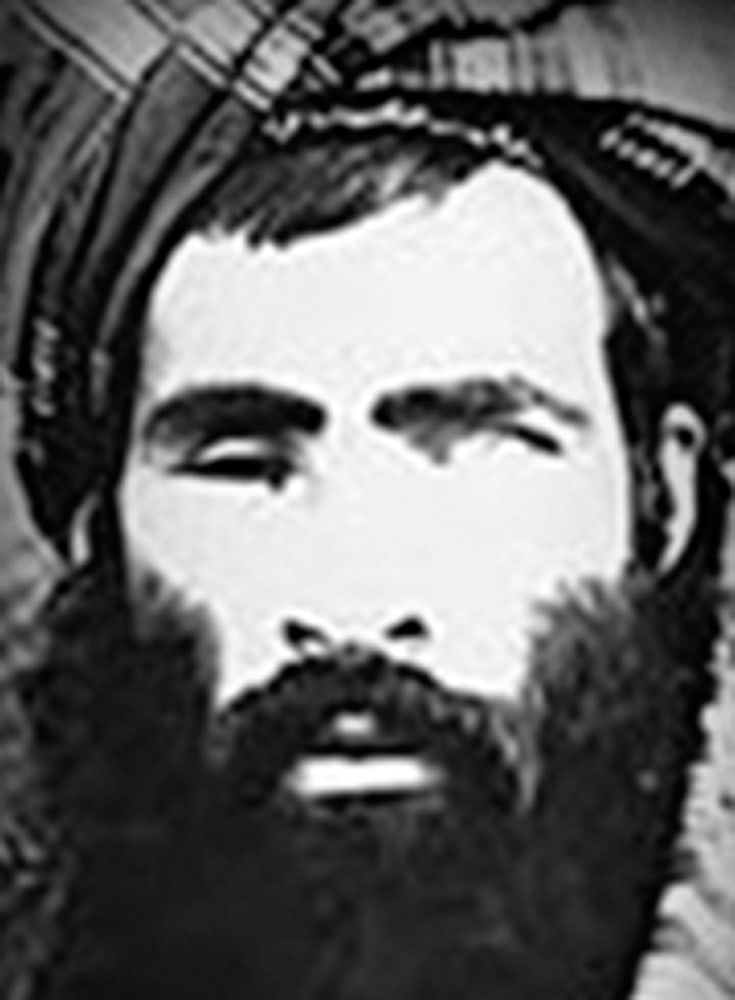
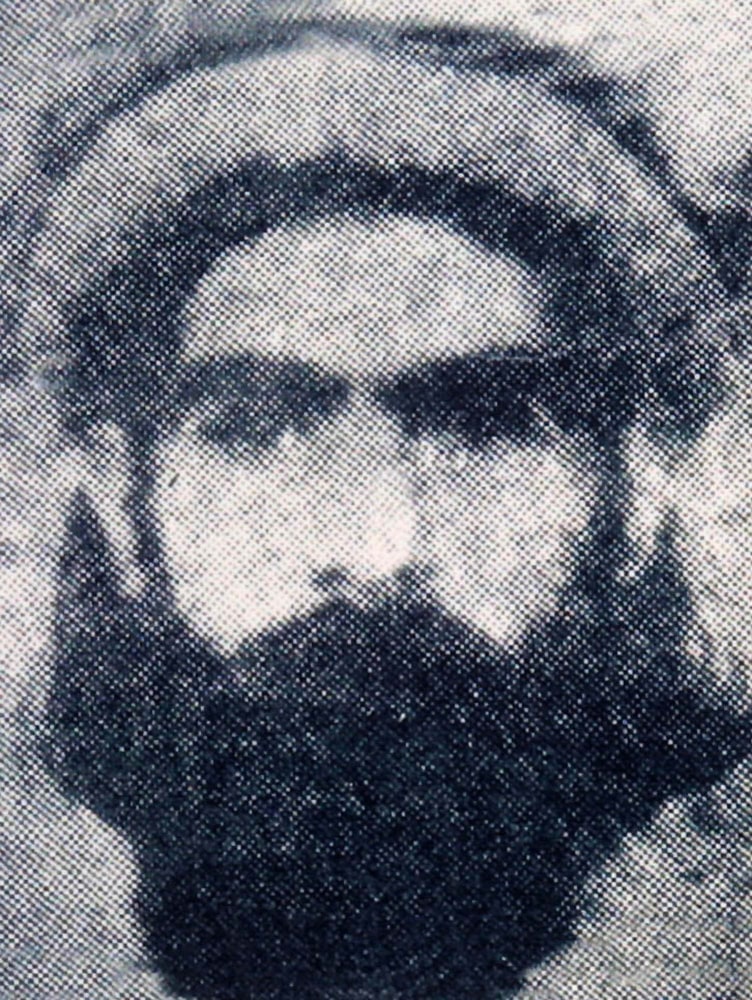
Taliban leader Mullah Omar. PHOTO: REUTERS

KABUL: Supreme leader of the Afghan Taliban Mullah Omar died suffering from tuberculosis two years ago in a Karachi hospital, Afghanistan’s top intelligence agency, the National Directorate of Security (NDS) confirmed on Wednesday.

“The Afghan government has received confirmed reports that Mullah Omar died nearly two years ago in Karachi,” NDS spokesperson Abdul Haseeb Siddiqui told BBC Pushto. “We are happy that now the foreign sources have also confirmed that Mullah Omar is no more alive.”

“We still have a lot of questions how Mullah Omar died,” he said, adding that, “We have been told that the Taliban leader died owing to an illness.”

The deputy spokesperson for the Afghan President also confirmed that Mullah Omar had died in 2013.

https://twitter.com/ZafarHashemi/status/626417739838681088

“The government of Afghanistan believes that grounds for the Afghan peace talks are more paved now than before, and thus calls on all armed opposition groups to seize the opportunity and join the peace process,” the statement added.

Earlier, a former Afghan Taliban minister and member of the central leadership council had revealed to The Express Tribune that Mullah Omar had died owing to Tuberculosis, however, he had not disclose the location of his death.

“Mullah Omar died two years and four months ago owing to Tuberculosis. He has been buried on Afghan side of the border,” the former minister had said on the condition of anonymity.

Further, he added, “Mullah Omar’s son had identified the body of his father.”

Read: Afghan Taliban release Mullah Omar biography amid growing frustration within ranks

Meanwhile, some Afghan government officials told the media in Kabul that the Pakistani government has also conveyed to them that Mullah Omar has died.

The Taliban have not yet commented on reports of Mullah Omar’s death, however, they are mulling a formal response to be release later today.

Read: Mullah Omar endorses ‘political endeavours and peaceful pathways’

Mullah Omar’s successor

The disclosure came as reports of the Afghan Taliban chief’s death sprung up yet again when the Afghan Taliban summoned a meeting on Wednesday to elect a new chief after some leaders of the militant group confirmed Mullah Omar’s death.

The former minister also disclosed that he was invited to attend the meeting.

Taliban sources told The Express Tribune that consultations for a new leader are under way and a successor will be announced before the next round of peace talks scheduled to be held in Pakistan on July 31.

Read: Afghan reconciliation: Mullah Omar’s aide likely to join peace talks

It is widely speculated that Mullah Baradar Akhund will succeed Mullah Omar as the supreme leader of the Afghan Taliban.

Mullah Omar had appointed Mullah Baradar and Mullah Ubaidullah Akhund as deputy leaders while he was alive.

Mullah Ubaidullah died in a jail in Pakistan, according to the Taliban which leaves Mullah Baradar next in line.

Mullah Baradar was reportedly released by Pakistan along with some other Taliban leaders in 2013; however, some Taliban leaders still insist he has not been allowed to rejoin his family.

Read: Doubts and divisions among commanders as Taliban talk peace

Some Taliban leaders told The Express Tribune that Mullah Baradar enjoys the support of Sayed Tayyab Agha, the head of the Afghan Taliban’s political office in Qatar.

Tayyab Agha himself was a close confidante of Mullah Omar. Further, sources say that Mullah Yaqub, the son of Mullah Omar, is also in favour of Mullah Baradar succeeding his father.

Read: Mullah Omar endorses Taliban peace talks

Other Taliban sources say that the incumbent Taliban acting chief Mullah Akhtar Mansoor, a former aviation minister, is also among the few aspiring for this position. However, sources added that Mansoor’s position in the Taliban has been widely damaged for spreading news of Mullah Omar’s death.

Read: The Taliban in Afghanistan

Another choice for Mullah Omar’s successor could be Mullah Yaqub, his son. Yaqub recently graduated from a religious school in Karachi. However, several Taliban leaders are of the view that Yaqub is too young and may be ‘unsuitable’ for the post. A Taliban leader told The Express Tribune that Mullah Omar never wished for someone from his family to succeed him.

Mullah Omar’s brother Mullah Abdul Manan has also been actively involved in Taliban affairs in recent years.

Afghanistan investigating reports of Mullah Omar’s death

An Afghan government official said that a press conference had been called on the subject of Taliban leader Mullah Omar, amid rumours of his death.

The official, who declined to be named because he was not authorised to give statements to the press, did not provide further details.

Further, the Afghan government is investigating reports of the death of Taliban supremo Mullah Omar, a presidential spokesman said.

The announcement from spokesperson Sayed Zafar Hashemi came after unnamed government and militant sources told media that the one-eyed leader died two or three years ago.

“We have seen reports in the media regarding the death of Afghan Taliban leader Mullah Omar,” Hashemi told a press conference.

“We are investigating these reports… and will comment once the accuracy of these reports are confirmed.”

The elusive leader of the militant group, which ruled Afghanistan in the late 1990s until it was toppled by a US-led offensive in 2001, has not been seen in public for years, leading to speculation he has been dead for some time.

The Taliban has been fighting an insurgency against the Western-backed government in Kabul since its ouster, killing thousands of civilians and security personnel and making significant territorial gains in recent months.

Tentative peace talks have begun aimed at ending the war, with the Taliban split between those who support dialogue and others who want to continue to fight for power.
source: http://tribune.com.pk/story/928571/afghan-taliban-leader-mullah-omar-is-dead/


Mullah Omar Father of Taliban Died inside of Pakistan in Karachi


Even in the prime of his life, at the height of his power, it was difficult for anyone to learn about, much less meet, Mullah Omar. He was simply the most reclusive, secretive leader in the world.

Word of his death Wednesday confirmed just how much of a phantom the father of the Taliban had become. Afghan officials said Omar has been dead for "a couple years."

"I can confirm that Mullah Omar is dead," the spokesman for Afghanistan's National Directorate of Security Abdul Hassib Sediqi told NBC News. "According to our intelligence Mullah Omar has died in a hospital in Pakistan a couple years ago."

Mullah Omar was rarely seen or heard. It's believed he was photographed only twice. But his legend was real enough.

He was famously one-eyed, having lost his right eye to a shrapnel injury, one of four he sustained fighting Soviet troops who occupied Afghanistan in the 1990s. He was so adept with an RPG rocket launcher against Soviet armor that he rose quickly.


Mullah Omar is shown in this undated photo from the U.S. National Counterterrorism Center. National Counterterrorism Center / Reuters

His experience as a Mujahadeen commander gave him the confidence to fight another superpower, the United States.

It also taught him to shun any easily traceable means of communication. He sent messages through trusted couriers on tiny, rolled-up pieces of paper, avoiding mobile phones, satellite phones, video recordings —anything that might identify him to an enemy.

The Taliban claim he was born in 1960 to a religious family who lost at least four members fighting the Soviets and Americans. His years fighting Soviet troops in the depths of Afghan winters led to ill health. Reports about his death suggest he had hepatitis, as well as chest and heart trouble.

Omar was one of the world's most wanted men — the U.S. government put a $10 million bounty on his head — because of his leadership of the Taliban insurgency against U.S. and coalition troops following the 2001 invasion of Afghanistan. The Taliban say his uncle was killed on the first day of the American bombardment in October 2001.

But before that he was a head of government, an enforcer and a spiritual leader.

The "Commander of the Faithful," as he became known, created the Taliban in the early 1990s to fight the warlords and the chaos tearing Afghanistan apart after the retreat of Soviet troops. Before the final victory in Kabul, Omar took a shroud thought to have been worn by the Prophet Mohammad and draped himself in it, receiving a rapturous response from fighters who, from then on, saw him as a spiritual and military leader."SIMPLE DRESS, SIMPLE FOOD, SIMPLE TALK, FRANKNESS AND INFORMALITY ARE HIS NATURAL HABITS"

He headed the Taliban council that invited Osama bin Laden, a fellow fighter against the Soviets, to be a guest of the nation in Jalalabad. After 9/11, the council met to decide how to respond to the U.S. demand to hand over bin Laden.

It decided — narrowly, it's believed — to refuse to give him up. That decision led to the overthrow of Omar's government just weeks later. He fled, first to Kandahar and then out of the country.

Little is known of his life after that. Afghan leaders and military commanders say they found it impossible to arrest or kill a man they couldn't identify. It's almost certain he lived in hiding in Pakistan, like bin Laden — probably in the city of Quetta, where he directed the council that led the insurgency against U.S. troops.

It's believed Omar lived humbly, rarely seeing visitors outside his close inner circle. Earlier this year, the Taliban produced a biography of him, claiming he had no home and almost no money but "a special sense of humor."


Mullah Omar in his Youth While in Training with ISI against Russians 

Any sense of humor was lost on a world that saw only a humorless, ruthless Taliban government that banned television, dancing and kite-flying, whose Ministry of Vice and Virtue patrolled the streets beating women for showing an inch of flesh in public.
This undated file photo reportedly shows Taliban supreme leader Mullah Mohammed Omar. ASSOCIATED PRESS, file

But some, especially Omar's fellow ethnic Pashtuns, yearn for the stability he brought as Afghanistan fails to emerge cleanly from decades of corruption and conflict.

For many in the West, Omar was a cartoon villain, one-eyed and blind to the modern world. For his followers, he was, as the Taliban described him recently, "a unique and charismatic personality":

"Contrary to (other) leaders, he does not want to show off. He is not eager or excited to speak if it is unnecessary to do so. And if needed, his words ... are keen, perceptive and logical. He has adopted a simple and plain style in all aspects of his life. Simple dress, simple food, simple talk, frankness and informality are his natural habits."

Omar had been reported dead many times in recent years. The rumors began when he failed to send audio messages, although they had never been frequent. The only evidence he still was alive was an occasional statement on a Taliban website, the most recent being a comment, purported to be from him, supporting recent peace talks between the Taliban and the Afghan government. Reports he died years ago cast serious doubt on the authenticity of those statements.

The latest claim that Omar was dead is equally contentious. It's claimed he died in Quetta two years ago, probably of hepatitis. A senior member of the Afghan Taliban in Pakistan said, "I am 100 percent sure Mullah Omar is dead, but will not share other information until we have chosen his successor."

Who will that be? There appears to be a succession battle, between Omar's eldest son, Yaqoob, and his deputy Mullah Mansour. Even this is disputed: Some say the reports are part of a CIA plot to destabilize the organization at a crucial moment in peace talks and to encourage factional fighting and defections from the Taliban. Several commanders have left this year to join ISIS.

In life and in death, like bin Laden, Omar was hated and hunted by the West while an inspiration and an icon to generations of his followers — a man who stood up to both the major superpowers of the modern era and who refused to betray the guest of his nation to one.

source: http://www.nbcnews.com/news/world/mullah-omar-dead-father-afghanistans-taliban-died-pakistan-n400451

Myth of Taliban Leader Mullah Omar and Was he Really a Leader ?


Mullah Omar
Mullah Muhammad Omar Taliban Founder of Nookar of Punjabi Establishment 

Whether or not Mullah Omar is dead or alive, his long absence from public view is posing a growing threat to the strength of his splintering Afghan Taliban movement.

"Where is Mullah Omar?" is a question sources say is being increasingly and angrily directed at the commander regarded as the acting head, Akhtar Mohammad Mansour.

Commander Mansour has long been reported to be fighting off threats to his authority from more hardline Taliban opposed to any peace talks, including Abdul Qayum Zakir.

The Taliban are also facing a growing challenge from the still small, but increasingly significant presence of the so-called Islamic State in Afghanistan. Videos have emerged of disgruntled Taliban fighters swearing allegiance to the IS's self-declared Caliph Abu Bakr al-Baghdadi.

The Iraqi cleric, who also declared a modern day caliphate in areas under IS control in Iraq and Syria, has publicly mocked the religious and political leadership of Mullah Omar.


Baghdadi ISIS Leader 


Abu Bakr al-Baghdadi, the leader of the Islamic State militia, has ridiculed Mullah Omar's leadership
Fragile unity

In a Taliban movement said to be founded on a pledge of allegiance to the Amir ul-Mumineen (Commander of the Faithful), Mullah Omar's authority was regarded as a binding force of political and military strength.

"I really hope peace talks are concluded before Mullah Omar dies," a former senior Taliban official nervously remarked to me several years ago with unexpected candour about the movement's leader. "When he's gone, it will be much harder to maintain Taliban unity," he admitted with palpable concern.

Our conversation, outside Afghanistan, took place at a time when Nato-led forces were killing many mid-level Taliban commanders in their operations in southern Afghanistan. That was raising concern that younger, more radicalised fighters, without a strong allegiance to the Taliban leader, would rise through the ranks and be hard to keep in line.

In 2010, when US diplomats first engaged in face-to-face talks with the Taliban through what later became known as the movement's Political Office in the Gulf state of Qatar, they first sought to establish that the Talibs were acting with Mullah Omar's authority. At the time, US diplomats involved in the process told me credible assurances were received that Syed Tayyab Agha, his former personal secretary, had his blessing.

That green light was, however, said to be strictly limited to negotiations with the Americans about Taliban prisoners and the presence of foreign troops in Afghanistan.

They eventually resulted in last year's swap of the remaining American soldier in Taliban captivity, Bowe Bergdahl, for five Taliban members held at Guantanamo Bay.


Taliban Office in Qatar 


Negotiations through the Taliban's political office in Qatar had to be approved by Mullah Omar
Seal of legitimacy

This year, in the midst of a series of unprecedented informal meetings between the Taliban's Political Office and Afghan government officials, Taliban sources emphasised they still did not have formal authorisation from Mullah Omar to negotiate officially and openly with the Afghan government.

That again raised the most salient issue: how to get a ruling from a leader who has not been seen in public since late 2001 when the Taliban movement was ousted in Afghanistan after the attacks of 11 September. Even his recorded messages stopped several years ago.

Taliban officials often insisted their leader had to keep an exceptionally low profile because of US efforts to kill or capture him. But he was widely rumoured to be in Pakistan, despite Islamabad's denials. A senior Afghan official told me a few years ago that the Americans had confirmed to him that Mullah Omar was living in the southern Pakistani city of Karachi.

This month, a written message from Mullah Omar suddenly appeared, to mark the Islamic Eid Festival. It did not directly refer to a new separate process of peace talks being organised by the Pakistani government which represented the first publicly recognised formal talks.

But the text said "peaceful interactions with the enemies is not prohibited" under Islamic tradition. It led to speculation over whether the message had been written by Mullah Omar himself, or someone who wanted his seal of legitimacy.

Reports of the Taliban leader's death have circulated for years but these latest ones have now emerged just days before another round of peace talks in Pakistan is about to get under way at the end of this month.

They also come at a time of disagreement over who should represent the Taliban in any negotiations with the Afghan government.

Sources say Pakistani military intelligence officers, who have long had close ties to the Taliban, are urging Taliban field commanders they have worked with to come to the table instead of members of the Political Office in Qatar with whom they have had difficult relations.
Powerful figurehead

Afghan President Ashraf Ghani, who has adopted a new policy of working closely with the Pakistan government and military on Taliban issues, is said to be giving Islamabad considerable leeway in a negotiating process making slow and indeterminate progress.

Before the first round of talks in the Pakistani hill resort of Murree in early July, Mr Ghani was said to be under mounting pressure to abandon his approach to Pakistan, which was markedly different from his predecessor Hamid Karzai's strained relations with Islamabad.

And there's the larger question of how committed Taliban commanders are to a political process when they continue to conduct bloody attacks not just against military and police targets but also brazen assaults on Afghan civilians everywhere from crowded markets to the country's national assembly.

Numerous countries are known to have been involved for years in secret and not so secret efforts to bring the Taliban to the table including China, Norway, Britain, and some private mediation groups.

The legitimacy conveyed by the mythical Mullah Omar was always regarded as essential even if the reclusive leader had long ceased to be involved in the day-to-day running of the movement.

Now the issue of who can replace such a powerful figurehead is emerging as one of the most significant challenges to its survival as a cohesive political and military force.

source: http://www.bbc.com/news/world-asia-33701790


Sunday, June 28, 2015

Punjabi Taliban Terrorist members Arrested in Rome for Peshawar Bomb Blast in Meena Bazar Killing Thousands

A Pakistani suspected of involvement in the Peshawar market bombing — one of the country's bloodiest attacks — has been arrested in Rome. — Reuters/File
Punjabi Taliban Arrested inn Rome for Peshawar Bomb Blast 

Lashkar Jhangavi and Lashkar Tayaba Punjabi Taliban Made by our Punjabi Establishment to Invade Afghanistan and Kashmir  who were part of Taliban who attacked Peshawar frequently as they were allowed space in FATA by Our Military Intelligence Agencies for the Purpose of Attacking Afghanistan were frequently found to Attack Peshawar and Would Spare Punjab as they belonged to Punjabi establishment . These Same Punjabi Taliban also were part of Al-Qaeda and Also Protected Osama Bin laden and also provided them Protection under State Patronage. 


ROME: A Pakistani suspected of involvement in the Peshawar market bombing — one of the country's bloodiest attacks — has been arrested in Rome, Italian police said on Friday.

The man, who has been living in Italy, is accused of taking part in the attack in 2009 in which 134 died, including many women and children.


He was held at Rome's Fiumicino airport after stepping off a flight from Pakistan.

Anti-terrorist police believe he also hid a “suspected suicide attacker who was supposed to carry out an attack” in Italy.

In April, Italy claimed to have dismantled an Islamist terror cell on the island of Sardinia led by two former bodyguards of Osama bin Laden who were plotting a possible attack on the Vatican.

Arrest warrants were issued for 18 people, several of whom are also suspected of being part of militant networks in Pakistan.

Nine were arrested across Italy, including three on Sardinia.

The Vatican has played down the threat to the pope's life.

source : http://www.dawn.com/news/1190574/italy-arrests-pakistani-accused-of-bloody-2009-peshawar-bombing

21st Amendment of Constitution and Defence of Pakistan was Needless Actions Army Had Enough Powers Already


SC questions need for amendment in Army Act in the presence of Article 245, says govt could have invoked Article 6 of PPC to invoke treason charges against terror suspects
Justice Khawaja says president’s accord prior to Parliament’s akin to signing decision after accused is hanged

Hearing petitions against the 18th and 21st constitutional amendments on Tuesday, a 17-member full court bench of the Supreme Court (SC), headed by Chief Justice of Pakistan Justice Nasirul Mulk, observed that the federal government could invoke treason charges under Article 6 of Pakistan Penal Code (PPC) relating to terrorism against the State instead of trying terror suspects in military courts.

During the hearing, Justice Asif Saeed Khosa remarked that “bringing certain matters under the military courts as administrative arrangements during a democratic era is also dictatorship”.

“How can we allow it? There was no need of the 21st Amendment after the military leadership had directed the federal government to make amendment for formation of military courts. What was the need to make amendment in Army Act in the presence of Article 245? It is said in the preface of 21st Amendment that this amendment is aimed at providing constitutional protection to military courts.”

Moreover, Justice Dost Muhammad Khan remarked, “The successful operation conducted in Swat was conducted under Article 245 and not under military courts. If the situation can improve in Swat, why not elsewhere? What is the need left for formation of military courts?”

Furthermore, Justice Jawwad S Khawaja remarked, “If the government can call in Army under Article 245 for fear of revolt, it could be done so now too. There was no need for formation of military courts. Signing by the president prior to approval of Parliament is as if any accused is hanged without trial.”

Chief Justice of Pakistan (CJP) Nasirul Mulk said that dictatorships have reigned over the country despite their way was blocked in the Constitution of 1973.

Earlier, Attorney General (AG) Salman Butt told SC that all the details of trial by military courts have been obtained and will be provided in the form of a video.

Butt said that military courts have been set up in order to speed up the trials of those accused of terrorism as in the previous year, 85 per cent of terrorism cases were left pending by civil courts. He contended that militants have spilled over to other areas thus demanding swifter action from the government.

“If 500 terrorists attack from behind Margalla hills, will the Army see towards the decision of high court and Supreme Court?”

The AG said amendment was made for formation of military courts keeping in view the situation of the country. “India also made temporary amendment in Article 59 of its Constitution. Amendment in Army Act and 21st Amendment were passed in National Assembly simultaneously. In Senate, the amendment in Army Act was approved first and 21st Amendment was passed later,” he said.

The AG said all the things had become clear in Liaquat Hussain case. “I will come to the fact on Wednesday and will provide the details about trial in military courts. These all will be in the form of a video,” he said.

The hearing was adjourned till today (Wednesday).

Military courts were agreed upon by the political leadership under the National Action Plan (NAP) against terrorism adopted in December after the Peshawar school tragedy in which 150 students and staff lost their lives.

The Parliament later amended the Constitution and the Army Act to pave the way for the establishment of military courts for a period of two years. The Army has set up nine courts — three each in KP and Punjab, two in Sindh and one in Balochistan.

SOURCE : http://www.pakistantoday.com.pk/2015/06/23/national/sc-renders-military-courts-needless/

Thursday, June 11, 2015

Ebola ( Congo Virus ) Strikes Hayatabad Medical Complex Peshawar

Health Services DG says govt prepared to prevent outbreak. STOCK IMAGE
Govt not prepared to prevent outbreak.


PESHAWAR: Two suspected Congo virus patients died in Hayatabad Medical Complex’s isolation ward. The deceased were Afghan nationals who had come to the city for medical assistance.

HMC medics said Muhammad Hashim was admitted to the facility on Tuesday. His blood samples were taken and he was shifted to an isolation ward where he passed away during the early hours of Wednesday. Similarly, 20-year-old Zahir, a resident of Jalalabad, Afghanistan was brought to HMC on June 5 and passed away on June 8 before he could be diagnosed with the virus.

The two cases push the tally of suspected Congo carriers brought to the hospital from the neighbouring country to four this year. The deaths have put the provincial government on alert as the province and tribal areas are at risk.


The Khyber-Pakhtunkhwa government has taken all preventive measures to counter Congo virus, however, the number of suspected patients arriving from Afghanistan has set alarm bells ringing.

Talking to The Express Tribune, K-P Health Services Director General Dr Pervez Kamal said no case of Congo virus has been reported in the province so far and that “all measures have been taken to ensure the virus does not spread.”

“All necessary steps have been taken. We have collected blood samples of patients as well as their family members and forwarded them to the federal capital for examination.” He said that while results are awaited, even suspected carriers are kept in isolation ward.

Over the past few months, the number of patients at HMC from across the border with symptoms similar to those of the virus has increased.

Earlier, 30-year-old Abdul Saboor, a resident of Kabul, Afghanistan, was shifted to an isolation room on similar grounds. Qudratullah, hailing from Mazar-e-Sharif, was also admitted and his blood samples were obtained. However he left the hospital soon after. Test results of both individuals are still awaited.

Published in The Express Tribune, June 11th, 2015.
source: http://tribune.com.pk/story/901458/in-isolation-suspected-congo-virus-carriers-die-at-hmc/

Saturday, June 6, 2015

RAW OR RAWHEEL SHARIF ???


The Pervaiz Rasheed affair

PERVEZ HOODBHOY — The writers teaches physics in Islamabad and Lahore.
PERVAIZ HOODBHOY 


When Information Minister Pervaiz Rasheed spoke at the Karachi Arts Council on May 3, he stated the self-evident. Without explicitly naming madressahs, he said large numbers of factories mass-produce ignorance in Pakistan through propagating “murda fikr” (dead knowledge). They use loudspeakers as tools, leaving well over two million young minds ignorant, confused, and confounded. The early tradition of Muslim scholars and scientists was very vibrant and different, he said. But now blind rote learning and use of books like Maut ka manzar — marnay kay baad kya hoga? (Spectre of death — what happens after you die?) is common.

That last reference made me sit up. A best-seller in Pakistan for decades, I had bought and read my copy some 40 years ago and have since re-read it from time to time. My fascination with it, as with Dante’s Inferno, comes from the carefully detailed, blood-curdling horrors that await us in the grave and then beyond. One part of the book reports upon conversations between the inhabitants of heaven and hell. Another section specifies punishments for grave dwellers guilty of treating one of two wives unequally, disobeying one’s mother, owning more houses than necessary, or urinating incorrectly. While doubtless of grave importance, the minister’s point is easy to see.

The speech was extempore, and the minister rambled. Yet he set off a firestorm. Accused of making fun of Islamic books and Islamic teachings, clerics across Pakistan competed to denounce him. Authored by an extremist sectarian outfit, the JASWJ, banners on Islamabad’s roads appeared. They demanded that Rasheed be publicly hanged. Taken down by the police, they reappeared elsewhere. The police accosted those putting them up, but withdrew after being confronted by youthful stick-bearing students from an illegally constructed madressah in Islamabad’s posh F-6/4 area — one of the scores of other such madressahs in the city. The police chief expressed his views frankly: he was not equipped to take on religious extremists and suicide bombers.
The episode involving the information minister illustrates the present condition of state and society.

The story gets curiouser. Mufti Naeem — the powerful cleric of Karachi’s Jamia Binoria who had issued the fatwa of apostasy on Mr Rasheed — was a guest on a TV television talk show broadcast live on May 24. He reaffirmed his fatwa at the outset of the conversation. The two other guests were the Punjab law minister, Rana Sanaullah, and myself. One might have expected the law minister to insist on the rule of law, and to challenge the extrajudicial sentence passed against a colleague who sits with him in the cabinet. On the contrary, Mr Sanaullah expressed his high regard for the mufti and the mufti duly returned the compliment, expressing his delight at the minister’s recent reappointment.

The pressure on Rasheed was unbearable. Many, including the minister of defence, rushed to offer explanations and excuses for his May 3 speech. Privately they agree with him but taking a public position is another matter. Mr Rasheed too has retreated since and apologised, claiming he has been misunderstood. He was later seen at a dastarbandi (graduation) ceremony at the Al-Khalil Qur’an Complex in Rawalpindi where he distributed prizes to madressah students who had memorised the Quran. By doing so, he showed his lack of keenness in following in the footsteps of governor Salmaan Taseer.

Irrespective of the final outcome, or the personality of the individual, the Pervaiz Rasheed episode starkly illustrates the present condition of state, society, and politics in Pakistan today. One takes from it some important conclusions.

First, the urban-based clerical establishment grows bolder by the day, believing it can take on even sitting ministers or, if need be, generals. They have many tanks and nuclear weapons but didn’t Islamabad’s Lal Masjid — now grandly reconstructed — finally triumph over the Pakistan Army? Even though the clerics lost 150 students and other fighters, the then army chief sits in the dock, accused of quelling an armed insurrection against Pakistan and killing one of its ringleaders. Chastened by this episode and others, the establishment now seeks to appease the mullah. Not a single voice in government defended the information minister. Like the brave Sherry Rehman, who was also abandoned by her own party in a similar crisis situation, he was left to fend for himself.

Second, by refusing to own the remarks of its own information minister the government has signalled its retreat on a critical front — madressah reform. This part of the National Action Plan to counter terrorism involves financial audits of madressahs, revealing funding sources, curriculum expansion and revision, and monitoring of activities. Some apparent urgency was injected after Interior Minister Chaudhry Nisar’s off-the-cuff remark earlier this year that about 10pc of madressahs were extremist. Even if one-third of this is true, this suggests that there are many hundreds of such seminaries. Plans for dealing with them have apparently been shelved once again.

Third, one sees that open television access was given to clerics and other hardliners who claimed that Mr Rasheed had forfeited his right to be called a Muslim. This is clear incitement to murder since a good fraction of society believes that apostates need to be eliminated. Such ideological extremism on TV is far too common these days to deserve much comment. Still, it is remarkable that a serving minister — and that too of information and communications — was allowed to be targeted. Has Pemra also fallen in the hands of extremist sympathisers?

For a while the Peshawar massacre had interrupted the deep slumber of Pakistan’s military and civil establishment. That those who slaughtered children at the Army Public School were not agents of India, Israel, or America came as a huge shock. It turned out that the killers were religious fanatics who saw their acts as paving their path to al-jannah. But dealing with this disturbing reality requires more wisdom and courage than Pakistan’s establishment can presently muster. It is lulling itself back to sleep by tossing more bombs into Waziristan, and lazily blaming five subsequent massacres upon RAW’s hidden hand. This is infinitely easier than dealing with the enemy within. Unfortunately it cannot work.

SOURCE : http://www.dawn.com/news/1186434

Friday, June 5, 2015

Taliban Khan PTI sets Malalaa Yousafzai Attackers Taliban Terrorists Free in Secretly

Malalaa Yousafzai 


Eight of the 10 men reportedly jailed for the attempted assassination of Pakistani schoolgirl Malala Yousafzai were actually set free, it has emerged.

In April, officials said that 10 Taliban fighters had been found guilty and received 25-year jail terms. But sources have now confirmed that only two of the men who stood trial were convicted.

The secrecy surrounding the trial, which was held behind closed doors, raised suspicions over its validity. The court judgement - seen for the first time on Friday more than a month after the trial - claims that the two men convicted were those who shot Ms Yousafzai in 2012.

It was previously thought that both the gunmen and the man who ordered the attack had fled to Afghanistan.

Muneer Ahmed, a spokesman for the Pakistani High Commission in London, said on Friday that the eight men were acquitted because of a lack of evidence.

Saleem Marwat, the district police chief in Swat, Pakistan, separately confirmed that only two men had been convicted.

Mr Ahmed claimed that the original court judgement made it clear only two men had been convicted and blamed the confusion on misreporting.

But Sayed Naeem, a public prosecutor in Swat, told the Associated Press news agency after the trial: "Each militant got 25 years in jail. It is life in prison for the 10 militants who were tried by an anti-terrorist court." In Pakistan, a life sentence is 25 years.

Source : http://nation.com.pk/national/05-Jun-2015/malala-attackers-secretly-acquitted?

Wednesday, June 3, 2015

Afghanistan Wakhan-China Transit Route to Enter Planning Stage


Tuesday, 04 November 2014 18:50Written by Anwar Hashimi


Agreement Signed to Connect Afghanistan to china By Passing Pakistan 


Afghan officials have said a delegation of Chinese officials will soon travel to Afghanistan to begin the planning process for the construction of a trade and transit route connecting Afghanistan to China through the northeastern Wakhan Corridor.

The Afghanistan Chamber of Commerce and Industries (ACCI) said that construction of a short and inexpensive trade and transit route between China and Afghanistan is something both countries have agreed to and plant to implement in the near future.

According to the ACCI, a tentative agreement was made between President Ghani and the Chinese government to build the route as part of their broader new initiative to increase trade and diplomatic relations, which was launched during Ghani's trip to Beijing over a week ago.

The Afghan delegation that visited China with Ghani included 27 representatives of the private sector, many of who have expressed optimism about the potential future for economic ties between the two countries.

The ACCI has touted China's interest in investing in mining, agriculture, infrastructure, banking, energy and trade in Afghanistan. The delegation expected to arrive in Afghanistan soon, which will assess the Wakhan-China route plan, will also consider other investment opportunities while on their visit.

"The agreement was signed by the Afghanistan Chamber of Commerce and Industries and the Federation of Trade Recourse of China and the issues were discussed and will be implemented soon," said Atiqullah Nasrat, the Acting Chief of ACCI.


Route Will By Pass Pakistan which is trying to Delay the Western Corridor 


Meanwhile, Afghan investors have said they hope the Afghan government will be able to see through the commitments it has made for opening up trade with China. "We hope that the government of Afghanistan will be able to implement the agreements soon," an investor named Sakhai Payman said.

Others called for a more cohesive, comprehensive strategic plan from the government. "A strategic policy should be announced in Afghanistan then anyone will be able to see the strategy of Afghanistan and they will feel safe and then they will invest," another investor named Abdul Jabar Safi said.

But officials at ACCI and other experts have warned that insecurity remains a major concern for foreign investors from China and elsewhere. Before any implementation can take place, they say, security for investors and their projects must be guaranteed.
source : http://www.tolonews.com/en/afghanistan/16998-bussiness-today


Monday, March 2, 2015

PushKalavati Museum Peshawar made in the House of Ghani Khan Son of Bach Khan

Pushkalavati Museum Peshawar Made in Donated House of Ghani Khan son of Bacha Khan  

Sher Alam Shinwari Published Mar 15, 2014 07:00am


BUILT in 2011 at a huge cost, Pushkalavati Museum and Ghani Khan Art Gallery in district Charsadda is yet to be handed over to the Directorate of Archaeology and Museums, Peshawar.

Earlier, Ghani Derai Complex comprising a public library and hall was built in 2002 at a cost of Rs7.5 milliaon over a hollow sandy mound, however, it collapsed due to loose-filling and excessive seepage.

The Ghani Derai Complex was handed over by the Directorate of Archives and Libraries to the Directorate of Archaeology and Museums in 2006 in the shape of a liability.

A huge amount was allocated for repair and renovation of Ghani Derai Complex but soon it crumbled down. An inquiry was initiated against the contractor but it was also shelved. The public library had to be shifted to Pushkalavati Museum’s basement two years ago.

“The Ghani Derai Complex is still in ruins and the Directorate of Archaeology and Museums has taken no step in this regard,” said Muflis Durrani, the vice president of Ghani Khan Adabi Au Saqafati Jirga.

About 60 members of the Jirga, he said, held various literary and cultural events on different occasions every year at the site. He said that the officials concerned should take interest in rebuilding and restoration of both the sites.

According to local people, two watchmen, one gardener, one peon and one sweeper, appointed on permanent basis for Pushkalavati Museum and Ghani Khan Art Gallery, are getting salaries at their homes because the structure has not been commissioned by the Directorate of Archaeology and Museums.

The newly built museum has not been commissioned by the Directorate of Archaeology and Museums from the communication and works department owing to its reservations regarding the faulty construction and seepage problem.

Local people say that seepage is damaging the walls of the complex and its three display halls comprising 96 shelves are also lying empty as no artifacts are exhibited in them.

The Ghani Derai Complex, which has no permanent staff, is being run through a grant in-aid of Rs5 million approved by the provincial finance department.

Currently, an 11 grade assistant librarian is running the public library with a total membership of 300 while the grant in-aid has been increased to Rs8 million.

A senior official at the Directorate of Archaeology and Museums on the condition of anonymity told this scribe that the fate of Pushkalavati Museum and Ghani Art Gallery seemed to be no different from that of Ghani Derai Complex for want of interest of the authorities concerned.

“We have written a detailed letter to the communication and works department to remove our reservations and hand over the structure so that it could be made operational otherwise it would be crumbled down. Also, we have asked them to restore Ghani Derai Complex but unfortunately nobody is taking interest,” he said.

The official said that the inquiry was also dumped because the contractor belonged to the then ruling political party.

Director Archaeology and Museums Prof Mohammad Nasim Khan, when contacted, said that being an archeologist he would not recommend reconstruction of Ghani Derai public library and hall on hollow deposit, however, it could be shifted to another site.

“The permanent employees have been deputed to perform duty at other sites scattered in the district till the Pushkalavati Museum comes under our control,” he said.

He said that the directorate would arrange a visit to the site in near future.

“Filling empty shelves with display items is no issues. We have lots of items being kept in our stores of directorate. We have also sufficient funds for purchasing more display items for Pushkalavati Museum from amateur local collectors. Once it gets properly commissioned and our reservations regarding seepage are removed, the directorate can make it operational,” Prof Khan said.

The post of assistant curator for the said museum was still lying vacant while two watchmen, one peon, one gardener, and one sweeper were appointed on permanent basis, he said. However, the services of two watchmen, a peon, one sweeper and one gardener already serving since 2002 at Ghani Derai Complex were yet to be regularised, he added.

The director said that a post for a 16 grade assistant librarian for the public library would be advertised soon.

An office-bearer of Ghani Khan Adabi Au Saqafati Jirga said that they had formed a committee comprising senior writers, intellectuals and poets to meet Chief Minister Pervez Khattak to resolve the issues regarding both the structures.

“We want Ghani Derai to be rebuilt on firm foundations so that literary and cultural activities can be restarted here,” he said. He said that senior members of the Jirga should also be included in the staff to ensure its faultless reconstruction and smooth running of its affairs.

Different literary and cultural organisations plan to commemorate the 18th death anniversary of noted Pashto poet, painter and sculptor Ghani Khan today (Saturday).
source : http://www.dawn.com/news/1093190