Showing posts with label Father of Taliban. Show all posts

Sunday, February 1, 2015

After the Dead Saudi King Grandson of Mullah Wahab ( Father of Wahabism ) What,s Next ?


The king is dead being grandson of Mullah Wahab father of Wahabism ( Deobandism in Indian Sub Continent ) and being Kinds from Daughter of Mullah Wahab who Married Ibn-Saud, Guarantees being a King of a Dictator saudi state an committing Human Rights Abuses on its citizen and Women Particularly . Tale of Abuses and Corruption and its Support by USA and Israel in Particular . 


Grand son of Mullah Wahab and King of Saudia Abadullah 


IT COULD hardly have come at a more challenging time for Saudi Arabia. On January 23rd Saudi state television announced that the 90-year-old ruler King Abdullah had died, nearly a month after being hospitalised for pneumonia. De facto ruler for two decades, Abdullah had nominated his successor, his half-brother Salman (see picture below), who was quickly elevated to king. King Salman's rule may not be long: he is 79 and, some say, suffering from dementia—though the palace vehemently denies this.

Ruling the kingdom is no small job. King Salman has inherited a realm that is the world’s top oil exporter at a time when prices have plunged; is home to Islam’s holiest sites of Mecca and Medina at a time when jihadist violence is at a peak; and has been dragged into turmoil in the region. At home, things are scarcely better: the country of 30m is the only one in which women cannot drive thanks to the struggle between reformists and conservatives. And the public accounts no longer balance without dipping into the country's, admittedly huge, reserves.


Sick Demented 79 Year old current Great Grand son of Mullah Wahabi King of Saudia 


Few reckon the new monarch will rock the boat. A former governor of Riyadh, he is thought to be similarly minded to Abdullah, albeit a little more conservative, and will be advised by the same people.

But challenges abound. Abroad, Saudi has taken a more activist stance of late, and not always with much success. The attempt to build a rebel army to oust President Bashar al-Assad of Syria failed; and Saudi Arabia is now involved in a war against the jihadists of Islamic State. Officials are particularly alarmed by America’s attempts to strike a deal with Iran, with which it vies for power, over its nuclear programme. Iran, champion of the Shia minority, has been expanding its influence in Syria, Iraq and Lebanon. The new king will have instant decisions to make after Yemen’s government fell to Houthi rebels, backed by Iran, overnight. Saudi Arabia had led attempts for a peaceful transition in the country after the toppling of Ali Abdullah Saleh in 2011.

Saudi citizens are worried about blowback at home from Yemen, Islamic State and Iran. The Shia regime in Tehran has been critical of Saudi Arabia for guarding its market share of the oil trade by refusing to cut production to stop the price fall. This is starting to cause a pinch at home. In December Saudi Arabia said its budget deficit would rise to $39 billion in 2015, almost 5% of GDP. Thousands of graduates need work, and most seek jobs in the bloated public sector rather than in the fledgling private one. Decades-old talk of diversifying the economy has risen again.

Indeed domestically the obstacles are greater. By Saudi standards, Abdullah was a moderniser, appointing the first female government minister and in 2013 appointing 30 women to the Shura Council. These moves drew protests from the puritanical Wahhabi clerics and parts of the devout population, as well as reformers who point out that women are still unable to drive or fraternise with men who are not relatives. Free speech is curbed. A number of Saudis are pushing for religion to have less of a grip on the public sphere, the results of which are strict laws on blasphemy and a ban on cinemas.

After the Arab protests, Abdullah sent armoured vehicles to help crush Bahrain’s uprising by the island's mainly-Shia population against the Sunni ruling family. He kept his own population, especially the Shia in the east, quiescent by spending millions on government wages and housing, and setting up a Facebook page for citizens to air their grievances. How long Saudi Arabia's ageing rulers can continue such tactics is in question, and not just because of the cost. One of Abdullah’s great legacies has been funding scholarships that have sent thousands of young Saudis to study in Western universities where, some at least, have picked up democratic ideals.

By appointing Salman as his crown prince, Abdullah also avoided the looming difficulty of passing the crown down a generation in a system where power has been handed down between the sons of Abdel Aziz bin Saud, the founder of the modern state of Saudi Arabia in 1932. On taking the throne King Salman affirmed that his crown prince will be the youngest brother of the generation, Muqrin, a 69-year-old former pilot, intelligence chief and governor of Medina, who was last year appointed deputy crown prince by Abdullah.


Family Tree of Grand Sons of Mullah Wahabi from His daughter Married to Ibn-Saud 


Perhaps to avoid the next generation jostling for power, Salman quickly moved to appoint a nephew (descended of the his own Sudairi line) as deputy crown prince: Muhammad bin Naif, the interior minister, who has shown an iron fist when dealing with terrorism. To deal with the inevitable struggle for the crown, Abdullah in 2006 set up an allegiance committee composed of representatives of each of the sons of the founder. Unlike the current generation, who recall their Bedouin roots, many see many of the next generation as profligate, flashy and irresponsible, having grown up in times of great wealth. During his rule Abdullah cut the allowances to the thousands of princes and princesses, much to their chagrin.


Oil Status 

Oil Production over the Years and Budget of Saudia 


For both Saudis and foreign allies such as America, perhaps the toughest issue facing Saudi Arabia is the puritanical Wahhabi form of Islam that it has fostered; the Al Sauds rule in a pact with the Wahhabi clerics. Abdullah removed the most extreme teachings in school textbooks after the September 11th 2001 attacks on America, in which 15 of the 19 hijackers turned out to be Saudis. But recently voices near and far have been pointing out the contradiction between Saudi joining the coalition against Islamic State while implementing harsh punishments at home for transgressions of its devout religious strictures. The most striking example is the 1,000 lashes handed down to Raif Badawi, a liberal blogger who called for more freedom of thought (the flogging has been suspended after the first 50 lashes, on health grounds). The question for the outside world is whether the Saudi ruling family is part of the problem, or the best defence against the extremists.

Clarification: This article was changed to include the views of the Saudi palace.


source: http://www.economist.com/news/middle-east-and-africa/21640601-middle-east-after-abdullah-king-dead?zid=308&ah=e21d923f9b263c5548d5615da3d30f4d


Wednesday, September 24, 2014

THE FATHER OF TALIBAN –USA Funded Jihadist Textbooks Created in University of Nebraska

1984-1994: CIA Funds Militant Jihadi Textbooks for Afghanistan and Pakistan : 
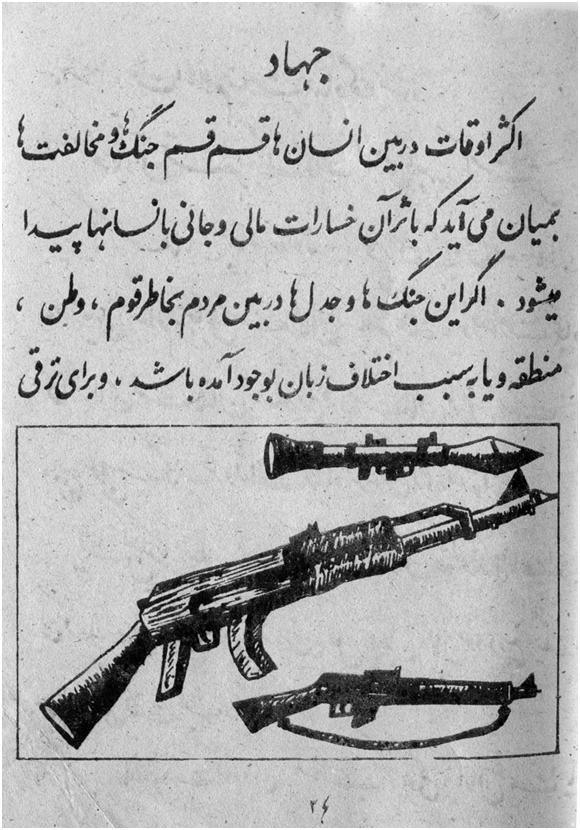
The US, and CIA through USAID and the University of Nebraska, and through Thomas Gouttierre,( Father of Taliban and thier Jihadi literature ),  spends millions of dollars developing and printing textbooks for Afghan schoolchildren. The textbooks are “filled with violent images and militant Islamic teachings, part of covert attempts to spur resistance to the Soviet occupation.” For instance, children are “taught to count with illustrations showing tanks, missiles, and land mines.” Lacking any alternative, millions of these textbooks are used long after 1994; the Taliban will still be using them in 2001.
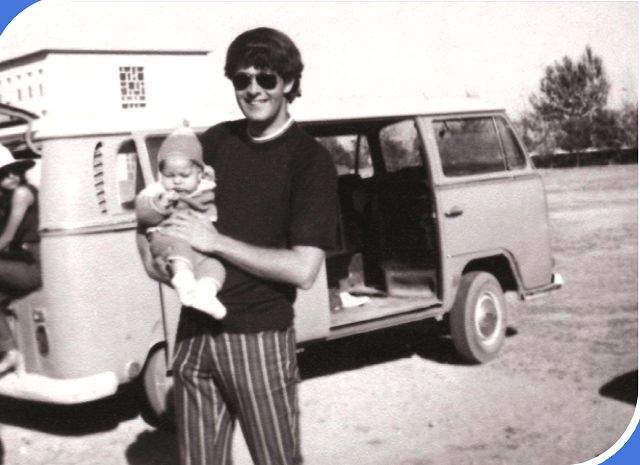
Dr Thomas Gouttierre with His Wife and Son in Afghanistan while in Peace Corps 1964-74.
Dr Thomas Gouttierre with His Wife and Son in Afghanistan while Peace Corps 1964-74.
Thomas Gouttierre went to Afghanistan in 1964 as a Peace Corps volunteer. He returned to the United States in 1967 and earned a master’s degree in Islamic Studies at Indiana University. In 1969 he went back to Afghanistan as a Fulbright Scholar. He stayed on to work for the Fulbright Foundation’s Afghan-American Education Commission after the conclusion of his two-year fellowship. In 1974 Gouttierre became director of the Center of Afghanistan Studies at the University of Nebraska at Omaha
Dr Thomas Gouttierre Served in Afghanistan in 1964-69 in Peace Corps and Had Links with Taliban since then .
In 2002, the US will start producing less violent versions of the same books, which President Bush says will have “respect for human dignity, instead of indoctrinating students with fanaticism and bigotry.” (He will fail to mention who created those earlier books.) (Stephens and Ottaway 3/23/2002; Off 5/6/2002) A University of Nebraska academic named Thomas Gouttierre leads the textbook program. Journalist Robert Dreyfuss will later reveal that although funding for Gouttierre’s work went through USAID, it was actually paid for by the CIA.
Af-Pak Jihadi Text Book Printed in  Pakistan ISI  via Afghan Lyceum and Supplied to Afghan refugees to Develop Jihad for Great Game
Af-Pak Jihadi Text Books About 13 Million in last 30 Years Printed in Pakistan via ISI and Afghan Lyceum and Supplied to Afghan refugees to Develop Jihad for Great Game
These Book were distributed in Afghan refugees camps in peshawar and FATA and Pakhtunkhwa area from a office in Peshawar run by Mujahideen and Al-qaeda Memeber under ISI and CIA , Project known as Afghan Lyceum and it was still running now in Islamabad even today .
Enron Gives Taliban Millions in Bribes in Effort to Get Afghan Pipeline Built .
Unocal will pay Gouttierre to work with the Taliban (see December 1997) and he will host visits of Taliban leaders to the US, including trips in 1997 and 1999 (see December 4, 1997 and July-August 1999). (Dreyfuss 2005, pp. 328) 1996-September 11, 2001:
The Associated Press will later report that the Enron corporation bribes Taliban officials as part of a “no-holds-barred bid to strike a deal for an energy pipeline in Afghanistan.” Atul Davda, a senior director for Enron’s International Division, will later claim, “Enron had intimate contact with Taliban officials.
” Presumably this effort began around 1996, when a power plant Enron was building in India ran into trouble and Enron began an attempt to supply it with natural gas via a planned pipeline through Afghanistan (see 1995-November 2001 and June 24, 1996). In 1997, Enron executives privately meet with Taliban officials in Texas (see December 4, 1997). They are “given the red-carpet treatment and promised a fortune if the deal [goes] through.” It is alleged Enron secretly employs CIA agents to carry out its dealings overseas.
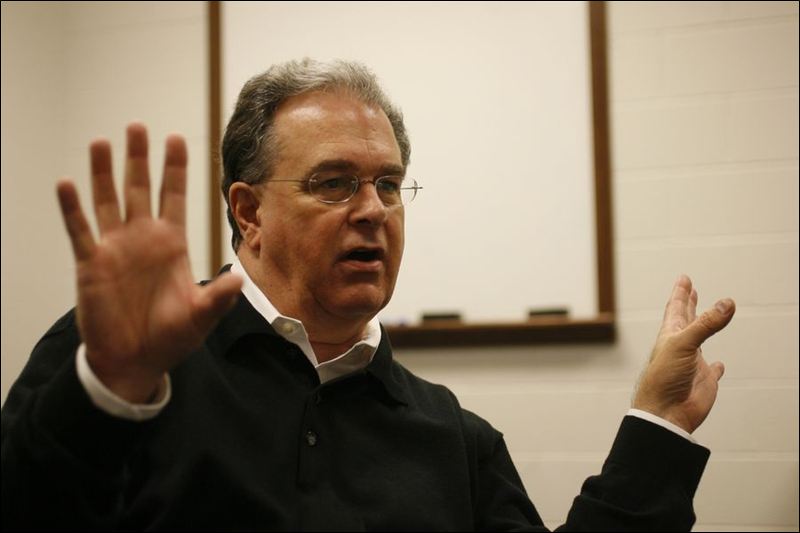
Dr Thomas Gouttierre of University of Nebraska USA .
According to a CIA source, “Enron proposed to pay the Taliban large sums of money in a ‘tax’ on every cubic foot of gas and oil shipped through a pipeline they planned to build.” This source claims Enron paid more than $400 million for a feasibility study on the pipeline and “a large portion of that cost was pay-offs to the Taliban.” Enron continues to encourage the Taliban about the pipeline even after Unocal officially gives up on the pipeline in the wake of the African embassy bombings (see December 5, 1998).
An investigation after Enron’s collapse in 2001 (see December 2, 2001) will determine that some of this pay-off money ended up funding al-Qaeda. (Barrett 3/7/2002)
June 24, 1996: Uzbekistan Cuts a Deal with Enron :
Uzbekistan signs a deal with Enron “that could lead to joint development of the Central Asian nation’s potentially rich natural gas fields.” [Houston Chronicle, 6/25/1996] The $1.3 billion venture teams Enron with the state companies of Russia and Uzbekistan. [Houston Chronicle, 6/30/1996] On July 8, 1996, the US government agrees to give $400 million to help Enron and an Uzbek state company develop these natural gas fields. [Oil & Gas Journal, 7/8/1996]
Unocal Establishes Pipeline Training Facility Near Bin Laden’s Compound: 
Thomas Gouttierre. [Source: University of Nebraska] Unocal pays University of Nebraska $900,000 to set up a training facility near Osama bin Laden’s Kandahar compound, to train 400 Afghan teachers, electricians, carpenters and pipe fitters in anticipation of using them for their pipeline in Afghanistan.
Dr Thomas Gouttierre of University of Nebraka Omaha who Wrote these Jihadi Books for Mujhaideen and Taliban
One hundred and fifty students are already attending classes in southern Afghanistan. Unocal is playing University of Nebraska professor Thomas Gouttierre to develop the training program. Gouttierre travels to Afghanistan and meets with Taliban leaders, and also arranges for some Taliban leaders to visit the US around this time (see December 4, 1997). (Lees 12/14/1997; Coll 2004, pp. 364)
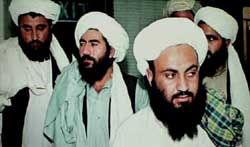
December 4, 1997: Taliban Representatives Visit Unocal in Texas Taliban representatives in Texas, 1997: 
It will later be revealed that the CIA paid Gouttierre to head a program at the University of Nebraska that created textbooks for Afghanistan promoting violence and jihad (see 1984-1994).Gouttierre will continue to work with the Taliban after Unocal officially cuts off ties with them. For instance, he will host some Taliban leaders visiting the US in 1999 (see July-August 1999).
[Source: Lions Gate Films] Representatives of the Taliban are invited guests to the Texas headquarters of Unocal to negotiate their support for the pipeline. Future President George W. Bush is Governor of Texas at the time. The Taliban appear to agree to a $2 billion pipeline deal, but will do the deal only if the US officially recognizes the Taliban regime.
The Taliban meet with US officials. According to the Daily Telegraph, “the US government, which in the past has branded the Taliban’s policies against women and children ‘despicable,’ appears anxious to please the fundamentalists to clinch the lucrative pipeline contract.” A BBC regional correspondent says that “the proposal to build a pipeline across Afghanistan is part of an international scramble to profit from developing the rich energy resources of the Caspian Sea.” (BBC 12/4/1997; Lees 12/14/1997)
It has been claimed that the Taliban meet with Enron officials while in Texas (see 1996-September 11, 2001). Enron, headquartered in Texas, has an large financial interest in the pipeline at the time (see June 24, 1996).
The Taliban also visited  Thomas Gouttierre,( Father of Taliban and thier Jihadi literature )  an academic at the University of Nebraska, who is a consultant for Unocal and also has been paid by the CIA for his work in Afghanistan (see 1984-1994 and December 1997). Gouttierre takes them on a visit to Mt. Rushmore. (Dreyfuss 2005, pp. 328-329) July-August 1999: Taliban Leaders Visit US About a dozen Afghan leaders visit the US. They are militia commanders, mostly Taliban, and some with ties to al-Qaeda. A few are opponents of the Taliban. Their exact names and titles remain classified. For five weeks, they visit numerous locales in the US, including Mt. Rushmore.
All their expenses are paid by the US government and the University of Nebraska. Thomas Gouttierre, an academic heading an Afghanistan program at the University of Nebraska, hosts their visit.
Gouttierre is working as a consultant to Unocal at the time, and some Taliban visits to the US are paid for by Unocal, such as a visit two years earlier (see December 4, 1997). However, it is unknown if Unocal plays a role in this particular trip. Gouttierre had previously been paid by the CIA to create Afghan textbooks promoting violence and jihad (see 1984-1994).  (Berens 10/21/2001)
July-August 1999: Taliban Leaders Visit US
About a dozen Afghan Taliban Leaders visit the US. They are militia commanders, mostly Taliban, and some with ties to al-Qaeda.
A few are opponents of the Taliban. Their exact names and titles remain classified. For five weeks, they visit numerous locales in the US, including Mt. Rushmore. All their expenses are paid by the US government and the University of Nebraska.Thomas Gouttierre, an academic heading an Afghanistan program at the University of Nebraska, hosts their visit.
Taliban in Texas as Guest of George Bush Governor Texas and Unicol
Gouttierre is working as a consultant to Unocal at the time, and some Taliban visits to the US are paid for by Unocal, such as a visit two years earlier (see December 4, 1997).
However, it is unknown if Unocal plays a role in this particular trip. Gouttierre had previously been paid by the CIA to create Afghan textbooks promoting violence and jihad (see 1984-1994). It is unknown if any of these visitors meet with US officials during their trip. [Chicago Tribune, 10/21/2001]
source:  http://www.historycommons.org/context.jsp?item=a84textbooks&printerfriendly=true